Sylvia Pankhurst
Recently I’ve been really getting into the history of the women’s suffrage movement in Britain. There are professional reasons for this, but the reality is it’s been a simmering interest for a very long time. I don’t remember what grade it was, but I know I did a research essay on Emmeline and Christabel Pankhurst at school – to my teacher’s complete not-surprise – and was quite inspired. It was probably the first time I had felt that voting was actually something I ought to be interested in. And every now and then when I get discouraged by Australian politics and wonder whether it’s worth voting… well, I remember that although it was easier in Australia, women all over the world fought incredibly hard to get someone like me the opportunity to cast a ballot. Who the heck am I to throw that back in their historical faces?
One of the books I got in a rash of purchasing last year was Sylvia Pankhurst: A Life in Radical Politics. I knew Sylvia had fallen out with her mother and sister, and she went on to form her own (somewhat amusingly named) suffrage organisation, ELFS (East London Federation of Suffragettes). Thanks to a biography of Emmeline Pankhurst I knew a bit more about her politics, and her daring/disgraceful child out of wedlock. I also knew, although I don’t remember why, that she was incredibly important to mid-century Ethiopia, of all (seemingly surprising) places. There is, though, a whole lot more to her than these nuggets.
Mary Davis states right out that her intention is not to write a standard biography. Instead, she is aiming to look particularly at feminism and socialism in Britain in the first half of the 20th century via Sylvia. (She calls her Sylvia throughout, and justifies this with pointing that there were four Pankhursts active at the same time as suffragettes, and Sylvia was not the most famous. She also acknowledges that this is a problematic choice, which delighted me for its frankness.) What this book does then is look first at the development of the WSPU (created by Emmeline and Christable Pankhurst, Sylvia also involved); and then how/why Sylvia broke away as her socialist views conflicted with her increasingly right-wing mother and sister. Sylvia worked to meld her feminism and socialism, although this was incredibly difficult – a whole bunch of trade unions wanted nothing to do with feminism or helping oppressed women. As in so many cases, some of the oppressed don’t want to change the system; they want to get to the top of it and take advantage of it. When women eventually got the right to vote (some in 1917, all in 1928) Sylvia was changing her focus to the proletariat – she was a firm supporter, early on, of the Russian Revolution, and was involved in the Communist Party (well, one of).
Socialism and feminism were, if not acceptable causes, at least ones that other people clearly identified with. But Sylvia was also committed to more intriguing causes, which had fewer proponents in Britain at least: like anti-racism, anti-imperialism and anti-facism. Her newspaper was apparently the first in Britain to have a black journalist write for it. She spoke out on Ethiopia’s behalf when Italy invaded. These things got her some flak, as can be imagined, in Britain. But Ethiopia invited her to live there in the 1950s, and Addis Ababa has a street named after her, and her son still lives there (or did in 1999 when the book was published).
I love a good bio. Sometimes they can wander aimlessly, and sometimes they can focus too much on one aspect of a life. Davis’ approach seems, to me, to be the best of both worlds. It doesn’t pretend to be exhaustive; it does focus on one aspect, but that’s the whole point. And I really liked that it pointed out some aspects of British history, too, like bits of labour history that don’t often make it into mainstream historical narratives. In fact this is pretty much a checklist for the history of oppression: workers and women and black people are all covered, and all shown to have vital and real histories. Who knew? This book is a really great way into these areas of history, especially the suffrage/socialism aspect (and it’s only 120 pages long!).
Riddick

Some people will probably find this unbelievable, but I was disappointed by Riddick, the third in the Richard B. Riddick series.
Did Diesel and Twohy realise that Riddick was going to be such a badass when they named him Richard B. Riddick? It makes him sound like a cartoon character.
There are spoilers below, if you care.
I was disappointed to be disappointed, because I really like the first two films. I am so not the target audience of Pitch Black; I do not like horror, I do not tend to like creature features, I do not enjoy being scared. But Pitch Black… well, it has Claudia Black and Radha Mitchell, which helps. The planet and its creepy inhabitants are just so crazy that I liked them, and I found the interaction between the different sorts of characters – the scared, competent pilot; the wine snob; the drug-addicted cop; the imam; and the Riddick – quite enthralling. As for Chronicles of Riddick, I’m only a little embarrassed to say that I love this insane b-grade dystopic over-the-top sf action film. Hell, it has Karl Urban in awesome makeup, and it has mad sets, and Crematoria is spectacularly nuts as a planet. So going into Riddick, I thought – well, how bad can it be? From the ads it was clear they were taking the franchise back to the Pitch Black model, which is fine; I was expecting some equivalent fight scenes against humans and weird aliens, some snappy dialogue, maybe a plot. Also Katee Sackhoff!!
There were some entertaining bits, I’ll admit. That Riddick is now so notorious that mercenaries know his name, and the smart ones know to be terrified, allowed for some pretty amusing scenes. The aliens were indeed as weird and unlikely as I expected. There was a brief shot of Karl Urban in his eyeliner. Sackhoff (whose character is Dahl, which is a very unfortunate name) is kickass with a sniper’s rifle. That one of the mercenaries was actually there in order to get information about the drugged-up Johns from Pitch Black gave it something of a Die Hard 3 feel, which I really liked, and meant that it did actually tie into both parts of Riddick’s past. I was intrigued by the back-to-basics appearance of the film, back to the first appearance of Riddick; it seems to suggest that Riddick makes more sense in a mostly-fighting-animals world, rather than even pretending to fit in, or interact, with humanity like in the second. And that’s an idea worth exploring.
But.
Oh, but. The first third or so of the film is basically Riddick-as-Robinson Crusoe, which was weird. Especially the bit where he domesticates a canine because… does that kind of make the dog a replacement for Jack/Kyra? Also, Riddick with a dog? That he feeds and cares for? ?!?!? That was all a bit odd. And then the movie proceeds to the fighting-the-mercenaries bit, which is where the vague plot actually starts. And Dahl arrives. In a very tight outfit, with belts and straps that emphasise her bust even more. And half the time when the dialogue involved her, it was someone being sleazy. Even Riddick himself gets in on it, which shocked me enormously. The merc on the other team – fine, I understand, he’s a douche; that’s been established already, he doesn’t like a woman being in authority over him, and she can deal with him. It’s not nice, but the writers seem to think that that helps to establish him as being Super Bad. However, I honestly don’t remember Riddick being sleazy or misogynist in the other films. Did I miss something? He’s totally big-brother to Jack/Kyra – actually, not even that to Jack, he’s completely dispassionate. Maybe there’s a moment of maybe-electricity with the pilot, Fry, but no suggestion that they make out, as far as I recall. The comment that Riddick makes towards Dahl is just so crude that I was disgusted. Over at The Mary Sue, the argument is that Dahl – established as lesbian early on, in a moment that impressed me – uses her last line as a come-on to Riddick. I actually didn’t read it this way; for me, it seemed to reflect the situation they were in (a very intimate embrace on a rope hanging from a plane). Maybe I’m just in denial.
I am glad I did not pay to see this, but got to see it at a friend’s house. That said, Diesel has just announced the fourth movie… which makes my prediction of Riddick: the Search for Furya (based on the final 60 secs of this film) all the more likely. If they can get Karl Urban back into his eyeliner, I probably will go and see it. Because I am weak like that.
From Russia with Love
This review is part of Project Bond, wherein over the course of 2014 we watch all of the James Bond movies in production order.
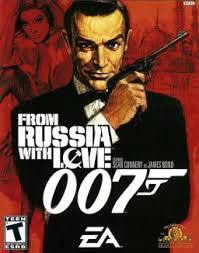 Summary: Bond is lured to Istanbul to help SPECTRE steal a Russian encryption machine. Also, there is bellydancing. And stroking of a cat.
Alex: I’ll start by talking about the gender stuff, because the representation of women’s sexuality is quite interesting in this movie. Two women throw themselves at Bond – which is not exceptional in the canon, but in Dr No Honey Rider was quite reticent and Sylvia wasn’t immediately ripping his pants off, so in 1963 there’s no precedent. Additionally, Kerim Bey – Our Man in Istanbul, and not an especially handsome one – has women dragging him off to bed, and two women in the gypsy camp have a fist-fight over who gets to marry the chief’s son (who as far as I can tell, is never seen). So women are sexual creatures, mostly; the only other woman we really see is Rosa Klebb, but she’s old so clearly she doesn’t count (sarcasm!), because she sure doesn’t do sexy. The young women 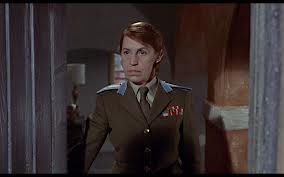 are passionate; in fact, they can barely contain themselves. Bond is generally happy to go along with it; while he doesn’t really initiate anything he does take over when he goes along with it. Bey seems to see pleasing his women as a chore (he actually sighs and says “back to the salt mine” when he agrees to canoodle with one), but has an endless number of sons and extols the virtues of big families. From this I guess we learn that women are ruled by their passions and men are ruled by cool intellect? Or something to that effect. Also, of course, in Bond we have an example of the Magical Penis trope (I really wanted to find a link to explain that, but it wasn’t obvious on TVTropes and NO WAY was I going to google it) – he turns Tatiana into a Good Woman through sex.
The mechanics: we get a prologue! In which Bond appears to be hunted and killed, but it all turns out to be a training exercise for Scary People. From which we learn that Bond is already a force to be reckoned with. There is also clear continuity with past movies: Bond is canoodling with Sylvia, the woman from the opening of Dr No, in his first scene here; and SPECTRE are very keen for Bond to be the agent they lure to Istanbul not least to take revenge for his killing of Dr No. Also, SPECTRE! Whose name is not explained in this film so if you weren’t paying attention the one time the acronym was explained in Dr No, sucks be to you.
I was intrigued by SPECTRE, actually. I had forgotten that the face of Number 1 is never shown: just his hand, stroking the white cat, thus spawning ever so many copycats (Baron von Greenback in Danger Mouse, Claw in Inspector Gadget, the villain in Austin Powers… who have I forgotten?). We don’t know his name, and it’s not given in the credits. SPECTRE as an organisation is clearly well-organised (they have a secret training base! Number 5 is a chess champion! They use live targets in training!), and the movie wants us to be aware of their power: it devotes the prologue and then the first maybe 10 minutes to them, showing them as focussed and driven. Conversely, when we finally do get to Bond, he’s relaxing on the banks of a river with a woman. Where Tatiana has just said she is willing to use Feminine Wiles to serve Mother Russia (she’s an unwitting agent of SPECTRE), Bond is using Masculine Wiles just to enjoy himself. A nice dichotomy is set up, which is somewhat undercut by Bond’s willingness to jump at M/Moneypenny’s orders… until Sylvia persuades him to stay just a little longer.
It should of course also be mentioned that this movie sees the introduction, albeit all too briefly, of Q – the eQuipment Officer. Who gives Bond some gadgets, but they are disappointingly low tech and there is a tragic lack of snark from him.
 Other things confirmed by this film: being Bond’s associate is a dangerous business, as Kerim Bey ends up dead. Hmmm… given Quarrel in the previous film, perhaps it’s only dangerous if you’re not white? OK, maybe two films isn’t quite enough to make this generalisation.
Things I did not know until I went to IMDB: Daniela Bianchi, who played Tatiana, was dubbed for this role because her English was so poor! But she was 1960’s Miss Rome so I guess that makes… no, it doesn’t make sense at all.
James: First a note to the editor, if the phrase ‘Magical Penis’ is used in another review my subscript notes will cease.
Alex: it’s a real trope! Happens all the time!!
James: Another tip of the hat to the negative restoration and transfer quality for the Blu Ray nerds. So much of this film has been filmed on location in Istanbul and it really shows, much less blue screen etc. Compared to future Bond the majority of the film centres around one city and few locations, the two embassies and some tourist highlights in Istanbul (The Blue Mosque, Basilica Cistern, Hagia Sophia and the Bazaar). One thing that doesn’t really make sense is that all film the good guys know the bad guys are lurking and yet they are so casual about security … For example on the train Bond tells Tatiana ‘Lock the door, I’ll knock three times’ as the bad guys walk up and down the corridor and occupy the cabin at the end of their carriage. I did enjoy that Bond marks the major villain who’s been stalking him all film by his choice of red wine with fish, and not a million other more obvious things he’s done. 2.5 Martinis (which curiously don’t feature in this film at all).
Battlestar Galactica
… the third run-through.
My husband is, amazingly enough, an even bigger fan of BSG than I am (even though he hates Felix, which is SO WRONG). He had been pushing for a re-watch since the start of last year, and I kept claiming that it was TOO SOON – and it really was. I eventually gave in around… October maybe? Something like that. And last night we watched the last three episodes. And we are done. Again.
It’s not an easy show to watch, even when you’ve seen all four seasons more than once in the past and you KNOW what’s coming up. In fact, for a show with as much emotional manipulation and as many highs and lows as BSG, knowing what’s coming up may actually make it more excruciating to watch. And even though I remembered most of the beats, I still refused to watch that spoiler bit at the start of every episode – partly from habit, and partly from a desire to have at least a few surprises.
… Of course, there were fewer surprises for me than might have been, because not only have I seen it all before, I’ve also been following The Mary Sue as an SF-fan watches and reviews each episode for the first time. Which has given me some new insights, as well as a new appreciation of some aspects. Like Gaeta. And Tigh. Tigh’s giggle is one of the best parts of the whole show.

There are a lot of best parts, actually. I adore Starbuck in all her screwed-up-ness; one of my favourite scenes is just her standing with her thumbs in belt loops, with one eyebrow saying “bring it.” I also love Roslin. Well, I don’t love her, a lot of the time; but I do appreciate just how  complicated and complex and light/dark she is as a character. I think she’s far more rounded and intriguing than Bill Adama – and Starbuck is way more interesting than Lee. Just saying. (Also, how similar is she to the original Starbuck?? Very clever.) I even – gasp – appreciated Baltar more this time around. He is truly fascinating, and through all his reinventions he was totally believable. Also, the hair.
Of course, there are bits that I don’t like. Last time we did a watch-through I remember reading somewhere about how many girls die. And I did a count-back last night, and… well, ALL of the girls die. Like, actually all of the female characters. Dead. The only females alive at the end are two who have already died (oops, spoilers! They’re cylons!). Literally NO other women that the show has focussed on get to live. That… is crap. Utter, utter bollocks. And makes me very sad about this show that otherwise counts as some of the greatest tv ever.
Will I watch BSG again? … I dunno. It sure won’t be this year. I am definitely over it for now. In 18 months? Well… maybe. The cool thing about this show is that it looks like it should age well. I’m sure people said that of the original Star Trek, too, but hear me out. It doesn’t rely on a lot of fancy SFX. The Galactica is meant to look beat up and old – because it is. I don’t think there are too many social assumptions implicit (as opposed to explicit and explored) that will make it cringeworthy – although hey, I’m living in it and part of the dominant culture, so maybe I’m totally wrong there (yes there could and should have been more non-white characters, but racism – or colony-ism in this context – IS dealt with, if briefly). So it may well be that I watch it again. But not any time soon, dear, so don’t ask for another twelve months.
Local suffrage history
This is quite impressive, for me: my mother bought me a book that I read before it got dust on it! (Think I’m exaggerating? See this review and this one for how I am a bad daughter.)
 Anyway, knowing that I am developing a keen interest in the history of women’s suffrage in Britain, Mum found me Burning to Get the Vote, a history of the suffrage campaign in Buckinghamshire.
There were two things that did not work for me in this book; one substantive, the other a niggle. The first is that I don’t know the area, and that definitely had an impact on my enjoyment. This is not really a reflection on the book itself, although a map would have gone some way to alleviating that issue and made it more accessible for non-Bucks readers, and especially non-UK readers. Instead it’s a reflection that probably, this history wasn’t imagined to have a general readership outside of the locality, and an academic one a bit more broadly. So I lived with that; I skimmed over the bits where Cartwright goes into detail about the actually location of various meetings – which is probably a delight to those people who know High Wycombe or Wendover or Aylesbury. The second, the niggle, is a style thing. There were a lot of commas that I felt were misused.
Those things aside, this volume has a lot going for it. Cartwright has clearly undertaken a monumental task in sifting through local newspapers to find references to suffrage (and anti-suffrage) activities in his area, as well as digging up minutes from meetings and some correspondence as well. This in itself I find fascinating: the suffragettes and suffragists (the terms, sometimes interchangeable, were often used to differentiate between militant and constitutional approaches) were often holding important enough meetings that they did feature in the media – despite not always getting big numbers to those meetings, and perhaps sometimes because of the opposition they met.
What this history does is set the national women’s suffrage campaign in a local context. So much of this story that gets popularly talked about is London, or perhaps Manchester, based – which is unsurprising because it’s where the Big Names (Pankhursts, Fawcett) were, and where a lot of the eye-catching activities (pilgrimages to Hyde Park, chaining to gates) occurred. But as I’m increasingly realising, this doesn’t cover the entire campaign. And how could it? Of course it is important to convince non-capital city residents of the righteousness of your cause! The leaders of the WSPU and other organisations all travelled around the country, drumming up support. They corresponded with the women (and men) organising local branches in small towns. Sometimes, they retreated to the countryside to recover from hunger strikes and force feeding. So this book should help Buckinghamshire people to understand their contribution to an important national movement, and it should make everyone else realise that history does occur in small towns, too. It should also be seen as a spur to people who are running similar campaigns at the moment. There is no doubt that many of the people (especially the women, I would suggest) who were involved in Buckinghamshire probably got quite disheartened over time; their numbers were never huge, the number of supporters was varied, there was active dislike and vitriol from the community… and it took a really long time. Cartwright believes that the first 20th century women’s suffrage meeting in the county was held in 1904 – although there was some action in the nineteenth century too; women got limited rights to vote in 1918 (over 30, married to a householder) and then voting rights on the same terms as men in 1928.
I liked that Cartwright went to some lengths to find out details about many of the women involved, which often involved finding their obituaries. I appreciated the extensive quotes – from newspapers largely – from the speeches made, and in debates with anti-suffrage campaigners. (The notion that the newspaper would quote so extensively from speakers is awesome.) And I also liked that he included a chapter on those anti-suffrage activities, to demonstrate the arguments that were being made and to show that the suffragists weren’t just battling indifference but serious opposition.
This book is not for the general reader – unless you’re from central Buckinghamshire, in which case definitely read it since you might be living in a house that was used for meetings! But it’s great if you want to see how local history can and should be interesting, or if you’re interested in suffrage history more generally. There is also a bonus for Australian readers: Muriel Matters, an Australian suffrage campaigner, worked quite a lot in the area and is mentioned several times.
Galactic Suburbia 92
 In which we get the band back together again, just before we go on our summer holidays!
Culture Consumed:
Alisa: Doctor Who; The Fall; Orange is the New Black, Black Mirror Season 1
Tansy: Adventures in Space and Time; Cranford by Elizabeth Gaskell, Apex Issue 55
Alex: Snuff, Terry Pratchett; Thor: the Dark World; Tooth and Claw, Jo Walton
Pet subject: The Year in Review
Alisa: PhD, Conflux, Nancy Kress’ After the Fall, Before the Fall, During the Fall, Twelfth Planet Press (Trucksong, A Trifle Dead, Twelve Planets, Shirley Jackson/WFA), made a SF fan
Tansy: Hawkeye; The Almighty Johnsons; A Song of Ice & Fire; reading with Raeli (Edward Eager & Diana Wynne Jones); Doctor Who
Alex: Saga; Doctor Who; Naomi Novik’s Temeraire; re-reading; Lizzie Bennet Diaries.
This is our last episode of the year, because we’re going on a summer hiatus… but we will back in 2014!
Please send feedback to us at galacticsuburbia@gmail.com, follow us on Twitter at @galacticsuburbs, check out Galactic Suburbia Podcast on Facebook and don’t forget to leave a review on iTunes if you love us!
Thor 2: a spoilery discussion
SPOILERS, right? You’ve been warned.
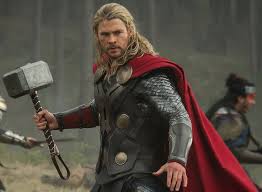 Let me get this out of my system: oh my GOODness WTH Greenwich? GREENWICH? ARE YOU FOR REAL??
Ahem.
So. Thor’s second solo(ish) outing. I think it’s got a slightly better plot than the first. It’s still a crazy romp (see here for The Mary Sue’s review that suggests it’s not as crazy as it could/should be – too caught up with realism for a story that is hello, based on Norse mythology – which I agree with). There’s going to be a conjunction of the nine worlds (which makes me think that Lara Croft should be finding something awesome, amiright?), and this is causing all sorts of gravitational ructions between the worlds… and the Dark Elves are waking up, having been totes smashed by Odin’s dad a while back, and they want reveeeeeeenge. Also the Aether, a magic substance that will help them bring about everlasting darkness (which raises all SORTS of questions about why they have eyes, etc, but this movie is not the place for a discussion of evolutionary biology (insert joke about Chris Hemsworth’s abs here)). Things go wrong for everyone, surprise! There are battles, there is science, there are monsters, and there is kissing.
Things I liked:
Sif is awesome.
Jane was science-y! (And thanks to a science discussion early on with Darcy, the movie passes the Bechdel test.)
Friga was brilliant. With a sword. Also the tricksiness.
The relationship between Thor and Loki. Prickly but sad, angry but wanting-to-be-hopeful… more nuanced than I was expecting, to be honest. Not knocking Hemsworth but I think a lot of that was down to Hiddleston, because as the wrong-doer he had a harder job making Loki both unrepentant and dismayed at the outcome of his actions. That moment when you realise that everything you’re seeing in Loki’s cell is a trick? – sheer brilliance.
The end! (of the movie itself that is, not the stingers). I was pretty sure I knew what was going down, but it was nice to see it actually happen.
Things I was sad about:
There is not enough Sif.
 I will never get the image of Stellan Skarsgard in y-fronts out of my brain.
GREENWICH. You cannot be serious about using Greenwich as as the locus of the nine worlds’ conjunctions. And you really cannot be serious about drawing lines that converge there that start at Stonehenge, Snowdon and… other unnamed places because if you named them it’d be even more obvious how STUPID this is…. And in conjunction with this, you really, really cannot be serious about the ancients having left messages for us from “last time”: the Egyptians, the Chinese, the Mayans… the MAYANS? The Mayans were not building monumental structures at the same time as the Egyptians and the Chinese! I… I have no words. Look, even Skarsgard is dubious about his own words!
Darcy and the intern getting it on. Yes I was expecting it, but still.
I liked it. I love superhero movies (except for Spiderman. It just hasn’t worked for me). So… there are explosions and fight scenes and some delightful snark. And Loki. It’s exactly what I expected.
Galactic Suburbia 91
 In which Alisa has a baby, and Alex & Tansy put a bow on it. Not the baby. The podcast!
Birth Announcement: Welcome to Mackenzie Charlotte & all our love and best wishes to the recovering and delighted new parents, Alisa and Chris.
World Fantasy Awards
British Fantasy Awards
Culture Consumed:
Alex: Feminist Frequency’s Tropes vs Women in Video Games; Ancillary Justice, Ann Leckie; Menial: Skilled Labor in SF, Kelly Jennings and Shay Darrach
Tansy: Nanowrimo! Cranford, Elizabeth Gaskell; Horrible Histories; Wife in Space by Neil Perryman, The Time Machine (Destiny of the Doctor), 1963: Fanfare of the Common Men, The Space Race, The Assassination Games; Night of the Doctor
INK BLACK MAGIC BY TANSY RAYNER ROBERTS available now from Fablecroft, Amazon & bookshops who order it in.
GOODREADS GIVEAWAY FOR INK BLACK MAGIC
Doctor Who Women on the Radio including Tansy
Pet subject: SFF for children (they cross genres more easily than adults, basically)
Alex: Victor Kelleher (especially Taronga); Playing Beatie Bow, Ruth Park; Riddle of the Trumpalar, Judy Bernard-Waite; The Hobbit, JRR Tolkien
Tansy: Diana Wynne Jones; Robyn Klein (Halfway Across the Galaxy and Turn Left); Which Witch, Eva Ibbotson; Margaret Mahy, Aliens in the Family and all her books about pirates; Ruth Chew; Five Children and It, E. Nesbit; Edward Eagar (Half Magic and Seven Day Magic – stories for kids who love to read and know how to manage a magical adventure!); comics like Gunnerkrigg Court, Zita the Space Girl, Betty & Veronica spin-offs. The Case of the Origami Yoda bridging fantasy and reality!
Also Possum Magic, Magic Pudding, and other Australian picture-book classics! From England, Charlie and Lola by Lauren Child and various books such as Fairy Shopping by Sally Gardner are appreciated for their gorgeous collage art as much as the stories.
Please send feedback to us at galacticsuburbia@gmail.com, follow us on Twitter at @galacticsuburbs, check out Galactic Suburbia Podcast on Facebook and don’t forget to leave a review on iTunes if you love us!
Adventures of Alyx
No, I did not misspell my own name (although someone at work did yesterday…) – Joanna Russ called her character Alyx, and I have finally read the collection of four short stories + one novella about said adventurer.
The thing you have to know about Alyx is that although the name stays the same, and some aspects of the character remain the same, trying to establish an internal chronology for these stories is likely to bust your brain. It doesn’t work, and it doesn’t have to work. Maybe it’s the same woman, maybe she’s a time traveller, maybe the name lends certain characteristics (like Julias in Tansy Rayner Roberts’ Love and Romanpunk) … or maybe Russ is playing, and it actually doesn’t matter. Although once you accept that it doesn’t necessarily work, making connections is a lot of fun.
These stories are different genre, with different approaches to narrative – what makes a narrative – so don’t go in expecting a cohesive whole. Of course, it is a whole in that Russ is doing confronting things with her female character: making her the lead, and not making romance important, and exploring reactions to women. That’s still a bold thing to do, and my edition of these stories was published in 1983; they originally came out between 1967 and 1970. I really wish I was alive to experience Russ As She Happened. And it makes me wonder who, if anyone, fills a similar niche today – and whether I am completely missing their stuff, for whatever reason.
I feel like a barbarian myself to admit that I did not love the first two stories. In fact, it took me ages to get through this slim volume because I was so not in love with the first one, and then the second, that I was worried I wouldn’t enjoy the rest. I persevered though, partly from an admittedly perverse desire to be able to say that I had read it, and partly because I knew that the stories changed up so I was hoping that I would come across stories more to my taste later on. And I did. Some of what comes below is my analysis of my own reactions to the stories, rather than a pure review. This might be dismissed as navel gazing; for me, it’s a way of working out how I work with Joanna Russ, such a powerful influence over what I’m interested in.
“Bluestocking” begins in a very self-deprecating way – “This is the tale of a voyage that is on interest only as it concerns the doings of one small, gray-eyed woman.” Not a great start? It gets subversive within moments, though, suggesting that the first man was created from the sixth finger of the left hand of the first woman… but our lady, Alyx, has all six fingers. Alyx is a pickpocket; she gets hired to look after a spoiled young woman. Then there are adventures, of a sort. There’s travelling, and bickering, and a sword fight. It is also supremely brief. I’m not sure whether it was that aspect that most didn’t work for me, but it certainly contributed – I found this story quite frustrating, with all its lacunae and its teasing and… something. “I Thought she was Afeard till she stroked by Beard” worked similarly on me. In this case, Alyx escapes an unhappy marriage; gets on board a ship and has a complex relationship with the captain; and is frustrated by the place of women in the world. I think it’s clever, but for mine there’s just not enough.
I should say at this point that there is more going on here than ‘just’ a narrative, especially in narrative connections; I know Russ is addressing Fritz Lieber, and others. I haven’t read any Lieber. Perhaps this is a fault in me, and the stories would be greatly improved with that background knowledge. But I know Terry Pratchett riffs off Lieber too, and I enjoy those stories; I know Mieville and Reynolds are riffing off others, but I still enjoy theirs too. So… perhaps it’s ok that I don’t enjoy all of Russ’ work? Maybe?
“The Barbarian” is a story that Gary Wolfe, in his essay in On Joanna Russ (… I think?? eep maybe I’m wrong…) suggests is the switch for Alyx between fantasy and SF, which is an intriguing way of seeing it. Here Alyx is again a crim-for-hire, but she doesn’t like what she’s hired to do and things go downhill from there. For me as a reader, though, things started going up. This story appealed more, although I’m not sure why. Maybe it’s a simpler story but with more flesh, more detail?
Then – next – oh, delight: “Picnic on Paradise.” This was originally published alone, as a novel; I guess it’s a novella, by today’s standards? 90 pages in my little pocketbook edition. Alyx, a Trans-Temporal Agent brought from the ancient Mediterranean world to both the future and a different planet. She’s being used to guide a disparate group of tourists across a war-ravaged planet, to keep them safe in the most horrific of circumstances: no access to their technology. There’s an incredibly profound moment at the start, where one of the women asks why Alyx is “covered up” – wearing clothes. So Alyx takes off her shift, therefore mimicking those around her, which group promptly have apoplexy. Alyx is confused, naturally; one of them says that she is wearing her history, which they are not used to. This goes a long way to demonstrating some of the rather large differences between Alyx and her charges. The story is a straightforward one of flight, and fighting for survival: getting lost, getting hungry, literally fighting (nature, each other, etc). It’s Russ, and having read We Who Are About To… I wasn’t surprised that things do not go according to plan, in a drastic way. One of the remarkable aspects is, of course, that the leader is a woman. Making the hard decisions, being contemptuous, fighting – being well-rounded. The tourists are a motley bunch: nuns, macho men, wannabe robots, high-society ladies. They too have their chance to be well-rounded, to interact especially with Alyx but also each other. This isn’t a fun story but it’s a great story, an intriguing one, and one I am so pleased to have read.
The final story in the set is a difficult one in terms of “Alyx canon,” the idea of which I rather suggest Russ would either have rolled her eyes or laughed at. Because Alyx probably isn’t in it. Her descendants might be, but if you read this by itself you wouldn’t have a clue about her. It’s also frustrating me because I know I have read it – “The Second Inquisition” – before, but I don’t know where. Some anthology, some time. Anyway… this too is science fiction, focussed on a young girl whose family is hosting a very odd stranger, who leads the girl in all sorts of directions: physically, introducing her to other, even more strange people; intellectually, introducing her to books and ideas she has never encountered; and culturally, challenging a whole bunch of assumptions within the family and society more broadly. There’s also questions about reality and imagination going on here that I think I missed the first time through. Intriguingly I think this gets a little close to the ‘galactic suburbia’ stories that Russ dismissed, since the focus is very much a suburban home with the occasional break-in of the science fictional. At any rate it certainly makes a challenging and difficult-in-a-good-way conclusion to the collection, because it doesn’t fit neatly into Alyx’s adventures. Which is as it should be, because Alyx – as a woman and as a character – doesn’t fit anywhere comfortably either. And she wouldn’t want to.
Galactic Suburbia does Saga
Galactic Suburbia Episode 87: Saga Spoilerific Book Club
 For the first time in years, all three hosts of Galactic Suburbia have read the same thing at the same time! So buckle up, it’s time for another installment of the Spoilerific Book Club! (Get us at iTunes or Galactic Suburbia.)
We’re taking on the Eisner-award winning & Hugo-nominated comic Saga, written by Brian K Vaughan and drawn by Fiona Staples, published by Image Comics.
For this episode we look at the 12 issues which have been collected as the first two trade editions of Saga and we spoil EVERYTHING, so don’t listen unless you’ve a) read it or b) don’t care about spoilers. Which while being spoilers aren’t story-destroying spoilers, ifyouknowwhatimean.
We discuss tree rockets in space, breastfeeding, childbirth, violence, men with TV screens for head, gay sex, straight sex, parents-in-law, mutilated bodies, fatherhood, brothel planets, child prostitutes, romance novels, the sexual anatomy of giants, Lying Cat, and character deaths.
PLEASE NOTE THE EXPLICIT TAG. (It’s not that racy; we just have to be careful.)
AND WE REALLY MEAN IT ABOUT THE SPOILERS.
The issue that was (briefly) too racy for ComiXology, and why this was a double standard. Because it wasn’t the issue with the child prostitutes.
Please send feedback to us at galacticsuburbia@gmail.com, follow us on Twitter at @galacticsuburbs, check out Galactic Suburbia Podcast on Facebook and don’t forget to leave a review on iTunes if you love us!

 Randomly Yours, Alex