Galactic Suburbia 58
In which we pore over the Ditmar ballot, Alex makes Tansy squirm about her nominations, Alisa makes Alex say ‘sexytimes’ more than once, and we take on the hard-hitting issues of the day: plagiarism, pirates and mommy porn. You can get us from iTunes or Galactic Suburbia.
News
Ditmar shortlist
Shirley Jackson shortlist featuring Deborah B
Stephenie Meyer moves into film production and who can blame her?
Story Siren & Plagiarism: Smart Bitches presents the story. Kristi’s apology.
MindMeld looks at great SF reads for teenage girls. But what KIND of teenage girls?
What Culture Have we Consumed?
Alisa: Feed by Mira Grant
Alex: By Light Alone, Adam Roberts; Lathe of Heaven, Ursula le Guin; In the Mouth of the Whale, Paul McAuley; Among Others, Jo Walton;
Tansy: Womanthology, The Pirates! Band of Misfits
Feedback: Fifty Shades of Grey
COMPETITION – SHOWTIME – What’s your favourite vampire?
Please send feedback to us at galacticsuburbia@gmail.com, follow us on Twitter at @galacticsuburbs, check out Galactic Suburbia Podcast on Facebook and don’t forget to leave a review on iTunes if you love us!
Music, women, and listening habits
I was thinking about my music listening habits the other day while I was doing just that. I had realised that new music hasn’t been happening for me for a while: I basically gave up on JJJ a few years ago partly because of the disaster that was the Hottest 100 of All Time, and partly because when we came home from overseas it just didn’t appeal to me any more. Plus, I have less time to listen to the radio than I did a few years ago, when I had a (fairly) serious commute. So, considerably less exposure than say five years ago. The two albums I can remember buying in the last two years are Old Man River, after seeing him on RocKwiz, and Imelda May, after seeing an ad for her album on SBS (while watching RocKwiz).
So, I listen to a lot of the same stuff over and over, and I’m mostly fine with that – it’s stuff I’m passionate about and really do love. What I realised though is that there’s a dearth of women’s voices on high rotation. And why? Well, my immediate reaction was that women don’t tend to sing the sort of stuff I like.
I know, right? Maybe I should listen to Galactic Suburbia a bit more often.
Thing is, I’m not saying that women can’t or even won’t sing the stuff I like – which, for the sake of this post, is mostly rock; depending on who you talk to, the harder end of the rock spectrum, shading into metal. I’m saying that I haven’t found many women who do. I haven’t looked that hard for it, to be honest, because I like what I’ve found and I’m not the sort of person who always needs New Music (my iTunes random playlist just now tossed up the Beach Boys, and I’ve been listening to them for more than 20 years). And since I’ve never actively sought out new music, that means that at least part of the fault lies with the radio stations who have been failing me, and failing those bands that I would like, if they do indeed exist. So now I’m wondering whether there is awesome music that I’ve been missing out on.
(Yes, I am now feeling more sympathy for readers who say that they don’t read books written by women because they’ve never found them. However, the analogy falls down, because while I suppose you could go your whole life reading Heinlein and Clarke (and, ahem, Reynolds and Banks and Simmons…*cough*), readers tend to look for new stuff more often than I, at least, need new music. Also, I don’t think I’ve ever seen a shelf of SF without women in it… but yeh ok this could lead to an argument about proportions etc. Which I don’t want for this post, because dammit! I have a point!)
This post is a challenge: suggest bands I might like! For reference, probably my favourite band in the world at the moment: 
(that would be Led Zeppelin)
I’m also a very big fan of 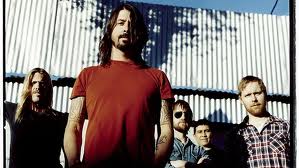
(the Foo Fighters)
and
(Wolfmother)

Before you despair of me totally, either for feminist or aesthetic reasons, I do listen to other sorts of music, and that does often include women: Goldfrapp is probably the band I listen to the most, interchangeably with Led Zeppelin, and I love Fiona Apple too, just as examples. Honestly I have eclectic tastes (protesting much?) – but what I’m really looking for is female voices doing awesome rock.
Can you help?
Tea from an Empty Cup: a cyberpunk review

When I read Trouble and Her Friends, I was forcibly reminded of what Helen Merrick says about it in The Secret Feminist Cabal (while thinking for a moment that it was my own brilliant insight), something along the lines that women made cyberpunk very much about bodies (sorry, Helen, for badly paraphrasing). Cadigan does a similar thing here. The focus is almost entirely on the issue of bodies: who inhabits them and how much physical reality is in artificial reality and to what extent bodies – artificial and physical – are our identities… and all sorts of fun things.
The story revolves around two very different women who go into Artificial Reality looking for answers: one to find someone gone missing, the other to find clues (she hopes) about a murder. Neither is experienced in AR, but other than that they are quite different. We learn very little about Yuki – not her job, not her overall circumstances in the world, just that she is “full Japanese” and that she values Tom Iguchi highly enough to seek out the probably dangerous person who might be able to point her towards him. Konstantin, on the other hand, is a slightly more open book. She has recently broken up with her partner; she’s a cop; and she possesses a remarkable bloody-minded determination that will either see her crack cases or get her skull cracked for her. Having the two main characters as women is (was), it occurs to me, probably not that common in cyberpunk literature – and having the two be so different, with quite different aims, worked nicely. Of course, in AR one’s physical gender, and body, and identity, are quite irrelevant – something that the protagonists have a bit of trouble with but that others are at pains to point out. Out there is not in here and can have little or no bearing depending on each individual’s preferences. And, much like Doctor Who and House are both at pains to point out, people lie. In AR, it’s quite likely that everyone is lying all the time. And when you’re trying to find a person or trying to find clues, that’s not particularly useful.
The AR that both Konstantin and Yuki interact with is a… simulation, I guess, of post-Apocalyptic Noo Yawk Sitty (yes really).* Interacting with it and other AR users requires a complex understanding of mores and manners, and it’s very easy to be shown up as a virgin and either mocked or turned into prey. It’s not a very nice place, as experienced by Yuki and Konstantin, and certainly suggests that Cadigan imagines AR being used for the sort of entertainments and identity-experimentation that would be frowned on, considered morally dubious, or actually legislated against in reality. It’s hinted that AR has other uses in this world, but they’re not fleshed out in the slightest. It is therefore quite an unpleasant little world Cadigan introduces the reader to, and suggests that she is pessimistic about the uses humanity would put AR to. Given the amount of porn on the internet, perhaps she has a point.
Finally, any novel that manages to get away with having an avatar called Body Sativa is pretty awesome as far as I’m concerned.
* Interestingly, the novel is so utterly concentrated about the experiences within AR that although maybe a quarter of the novel takes place in real-reality, I have no idea in which city (I’m presuming America thanks to references to DC); I also have little idea what is going on in the rest of the world, with the exception of something terribly having overcome Japan. I have a much clearer understanding of how life, or society, works in the Sitty than in Konstantin’s actual city. (And frequent ARers would undoubtedly dispute most of the adjectives in that society.)
Galactic Suburbia 57: now with extra Hugo nominations
 In which this Hugo nominated podcast is Hugo nominated and discusses the Hugo nominations while being Hugo nominated. Also, the internet is full of things. Some of those things discuss gender, feminism and equality, some have wide ranging implications for the future of SF awards, and some of them are nominated for Hugos. You can download us from iTunes or get us from Galactic Suburbia.
Hunger Games: Build up to make a hit
The reviews are in:
Topless Robot
Forbes
Our Alisa
“But in the real world, the character Katniss Everdeen faces an even greater challenge: Proving that pop culture will embrace a heroine capable of holding her own with the big boys. It’s a battle fought on two fronts. First, The Hunger Games must bring in the kind of box office numbers that prove to Hollywood that a film led by a young female heroine who’s not cast as a sex symbol can bring in audiences. And second, for Katniss to truly triumph, she must embody the type of female heroine — smart, tough, compassionate — that has been sorely lacking in the popular culture landscape for so very long.”
The Clarke Award Shortlist:
Christopher Priest’s original post
Cat Valente responds:
“Because let’s be honest, I couldn’t get away with it. If I posted that shit? I’d never hear the end of what a bitch I am”; and further response
Outer Alliance discussion on Gay YA Dystopia & Paolo Bacigalupi
Qld Premier cancels Premiers Literary Award
“Before the election, the LNP pledged to cut government “waste” as part of its efforts to offer cost-of-living relief to Queenslanders.”
Response of Queensland Writers Centre
The Fake Geek Girl at the Mary Sue
Kate Elliott on the portrayal of women in pain & fear
Ashley Judd on the media’s attitude to women and their bodies
Valente on the war against women in the real world
Tehani on Aurealis Awards stats, gender
BSFA stuff – Actual winners
The first post that raised the problems with the ceremony.
A response (there for historical sake, though I think since at least partly recanted)
how the Tweets saw it
Cheryl’s take
**The BSFA issued an apology right about when we were recording**
Jim Hines works through his privileged dumbassery
Kirstyn McDermott works through whether her feminism is good enough
Vote for Sean the Blogonaut for NAFF
What Culture Have we Consumed?
Alex: Monstrous Regiment, Terry Pratchett; Showtime, Narrelle M Harris, Woman on the Edge of Time, Marge Piercy; 2312, Kim Stanley Robinson; The State of the Art, Iain M Banks
Tansy: So Silver Bright, Lisa Mantchev; Kat, Incorrigible, by Stephanie Burgis; Cold Magic, Kate Elliott
Alisa: The Hunger Games (movie and books), The Readers (podcast)
Please send feedback to us at galacticsuburbia@gmail.com, follow us on Twitter at @galacticsuburbs,, check out Galactic Suburbia Podcast on Facebook and don’t forget to leave a review on iTunes if you love us!
Woman on the Edge of Time
 This book… blew my mind. It’s angry, and demanding, and confronting, and seriously amazing. It’s also not at all what I was expecting, but that’s quite ok.
Connie Ramos has been committed to a mental institution (again) in the mid-1970s. Perhaps the first time she ought to have been there (although maybe not…), but this time she doesn’t. Which doesn’t make any difference to the authorities, who view her – as a woman, a previously incarcerated person, as a Chicana, and with powerful male figures banded against her – as unreliable and someone To Be Dealt With. Her experiences within the institution are demeaning and seem aimed at dehumanising her and her experiences. What makes this even more unbearable is the thanks Piercy gives at the start, “to people I cannot thank by name, who risked their jobs to sneak me into places I wanted to enter… the past and present inmates of mental institutions who shared their experiences with me” – her fiction is, then, not fiction at all, but a reflection on reality. And that is heartbreaking, if (tragically) also not surprising. Her experiences within the institution – begging for treatment for injuries, the cold carelessness of the staff – are heightened when a doctor chooses her to be part of an experiment in ‘curing’ certain mental ‘problems’ (like aggression – particularly in women – and being gay). This is not an easy read. It is a sobering and worthy one, though.
… but hang on. This doesn’t sound like the sort of thing she usually reads! Oh yes. Connie is also in contact with someone from the future (150 years ahead, or so). Luciente first speaks to her and appears in Connie’s time, but they then discover that Connie can go through to Luciente’s time, and experience what life is like then. Piercy does a wonderful thing with this future society in not making it utopian, tempting though I’m sure that would have been. It is certainly better than the America of Connie’s experience – enough food for everyone, a broader understanding and expectation of family and care, no capitalism – but there are problems, such as jealousy and anger, still. And indeed there are aspects which Connie finds quite unacceptable, especially in their broadening of the maternal role, which she sees as women having given up their only claim to power. Here, the idea of family is a negotiated one, and multiple partners take on the role of breastfeeding; someone who is tied too closely to another (as we would expect from life partners) is deemed to have overstepped society’s boundaries. Of course, the contrast between Luciente’s experiences and Connie’s makes Connie’s all the harder to read.
Connie is not the easiest character to read. There are times when she was frustrating precisely because she fits so much into the mould that society wants her to fill – I can’t fault her for that, but I wasn’t even born during the times she is experiencing, so there was of course a part of me that just cried out for her to rebel, please! For your own sake! – which I understand is totally unfair, but nonetheless it was there. Luciente is a slightly easier character to read, even though it’s through the lens of Connie and her experiences; she’s far closer to what I am used to reading about. This disjunction between the characters, and my reactions to them, was a really interesting aspect – and, I admit, added to the discomfort of reading, which led to its own interrogation.
This is a book which interrogates power on the basis of gender, education, race, and perceived place in society. It shows power as constructed, it shows power to be dangerous, and it shows that power shared is more useful power. It doesn’t claim to have all the answers, but it certainly suggests that things could be substantially better. And that today’s world has the power to bring about change… or not.
Just read it.
Galactic Suburbia 54
 In which we keep it short (truly) through restraint and perseverance, despite setting Tansy off on a tangent about Lego and lots of crunchy gender bias stuff to chew through. Um, yes, we might have misnumbered somewhere along the way. This really is 54, apparently. You can get us from iTunes or Galactic Suburbia. Also, yes we already know we made a mistake in talking about what Genevieve Valentine has won. Oops.
News
Stoker shortlist
Paul Cornell on Panel Parity
Elizabeth L Huede on National Year of (Gender Biased) Reading
Tansy’s thing: new feminist Doctor Who blog Doctor Her
Can princesses play with Lego? (Lego friends petition at Change.org)
What Culture Have we Consumed?
Alisa: Vorkosigan – Shards of Honor, Barrayar by Lois McMaster Bujold
Alex: The Islanders, Christopher Priest
Tansy: After the Apocalypse, by Maureen McHugh (collection)
Feedback episode coming too!
Please send feedback to us at galacticsuburbia@gmail.com, follow us on Twitter at @galacticsuburbs, check out Galactic Suburbia Podcast on Facebook and don’t forget to leave a review on iTunes if you love us!
Galactic Suburbia: the awards edition
I meant to post this yesterday and totally forgot! If you want to listen to the podcast – from iTunes or via the website – without being spoiled as to the Honours List and the winner, stop reading now! Alternatively, below is the TL;DL version.

The GS Team: Alex, Alisa, Tansy and our Producer (AKA Gentlemen’s Auxilary)
Yesterday Galactic Suburbia put up a Very Special podcast, announcing the honours list and winner of the inaugural Galactic Suburbia Award.
After much discussion, and wanting in particular to create something that wasn’t already out there in the multitudinous world of spec fic awards, we came up with this definition:
The Galactic Suburbia Award: for activism and/ or communication that advances the feminist conversation in the field of speculative fiction in 2011
Honours List
Carrie Goldman and her daughter Katie, for sharing their story about how Katie was bullied at school for liking Star Wars, and opening up a massive worldwide conversation about gender binaries and gender-related bullying among very young children.
Cheryl Morgan for Female Invisibility Bingo, associated blogging and podcasting, and basically fighting the good fight
Helen Merrick, for the Feminism article on the SF Encyclopedia
Jim C Hines for “Jane C Hines” and associated blogging, raising awareness of feminist issues in the SF/Fantasy publishing field.
Julia Rios, Kirstyn McDermott and Ian Mond for Episode 11 of the Outer Alliance podcast (The Writer and the Critic special episode)
L. Timmel Duchamp – for continuing to raise issues of importance on the Ambling Down the Aqueduct blog and various Aqueduct Press projects
Michelle Lee for the blog post “A 7-year-old girl responds to DC Comics’ sexed-up reboot of Starfire”
 Winner
Nicola Griffith – for the Russ Pledge, and associated blogging
The winner will receive a Deepings Doll hand-painted figurine of a suffragette with a Galactic Suburbia placard, hand-painted by Jilli Roberts of Pendlerook Designs. (Tansy’s very talented mother!) Each Deepings Doll is individual, so the one each winner will receive (we do plan to make this an annual tradition) will be unique.
If you have ideas for our Honours list for 2012, please email us at galacticsuburbia@gmail.com or tweet @galacticsuburbs
=====
It’s been lovely to see such a positive response from our honourees and winner. Already, Nicola Griffith, Cheryl Morgan and Timmi Duchamp have posted the award details on their blogs with gracious commentary. We at Galactic Suburbia had a great time chewing over what our award should be, and what we wanted to celebrate in the SF community.
===============
Galactic Suburbia 51
 In which women aren’t funny, don’t write important books, but come in handy as assassins and thieves. You can get us from iTunes or download us from Galactic Suburbia.
News
Connie Willis named SFWA Grand Master
Liz Bourke on Strange Horizons & the art of the mean review
Survey shows that men (as well as women) often play characters of the other gender while gaming – in many cases, men are bored with or alienated by the big musclebound male characters, which game designers think they want. Sound familiar?
Hoyden about Town are asking for guest bloggers to crosspost their Australian Women Writers Challenge reviews on Hoyden (ASIF also keen to do so)
More on feminine tosh: a good solid article in the Australian media (shock!) about the women in literature issues of recent months (and, you know, decades).
Have we been following the “Women aren’t funny” stoush that played out in NYT? This interesting development.
DC Comics – cancellations & new titles – Tansy is especially excited by World’s Finest (featuring the Earth 2 Huntress & Power Girl)
Stranger with My Face – Women in Horror film festival in Hobart, Tasmania – 17-19 February
Tansy’s book launch for Reign of Beasts (Creature Court Book Three) on 2 February at Hobart Bookshop, 5:30pm.
What Culture Have we Consumed?
Alex: Ashes to Ashes season 2; Dr Who season 1; Rocannon’s World, Ursula le Guin; The Declaration, Gemma Malley; Grey, Jon Armstrong; The Collected Works of TS Spivet, Reif Larsen. BBC 4 “Cat Women of the Moon” podcast
Tansy: Destination: Nerva (Big Finish, audio), Astonishing X-Men by Joss Whedon, The Name of the Star by Maureen Johnson, DVD Extras Include Murder, by Nev Fountain
Alisa: absorbed in novel submissions; The Big Bang Theory; Swordspoint Audiobook, written and performed by Ellen Kushner
GS Award will be proclaimed… in a short while!
Winner of Alex’s Yarn giveaway: Jo
Tansy: Creature Court trilogy give away!
Email to tell us about one book you read after we talked about it on GS to be eligible
Please send feedback to us at galacticsuburbia@gmail.com, follow us on Twitter at @galacticsuburbs, check out Galactic Suburbia Podcast on Facebook and don’t forget to leave a review on iTunes if you love us!
Tiptree, and a collection of her short stories

I bought this collection of James Tiptree Jr’s short stories (and two of Raccoona Sheldon’s) because I was going to be part of the 2011 Women in SF Book Club, being run over at the (now-defunct) Dreams and Speculation blog. D&S’s now-defunct status is part of the reason why it’s taken me the whole year to read the collection – although to be fair it would have anyway, since the idea was to read 1-2 stories per month for the book club. But instead I’ve read the last third in the lat two days. I tried to host the Tiptree bit here on my blog: I posted my own spoiler-y thoughts on Delicate Mad Hands and Houston, Houston, Do You Read? However, I didn’t get much interest in them, so I discontinued it.
Now, however, I have finally finished the collection! And what a collection.
I have read bits and pieces of Tiptree’s work before, but most of these stories were completely new. The thing that most immediately strikes is that that they are intimately concerned with life and death, and with reproduction in defiance of the latter. I know this could be said about a lot of authors, but it really is a clear and obvious preoccupation in many of these stories. Perhaps not coincidentally, Tiptree can in no way be described as a happy writer. Which is not to say that she lacks joy; there is a great deal of that fierce, loving-life-in-the-face-of-death joy that can be both poignant and exultant, in these stories.* But you could bet on a story having a not-entirely-happy ending, and much of the time you would win.
And yet I love it. Tiptree breaks my heart and yet I love her writing. She is confrontational – about humanity, about individuality, about reason – and she is challenging, she is grim and she breaks my heart but there are very few stories that I didn’t love in this collection, even if they gave me agony.
What didn’t I like? I didn’t enjoy the titular “Her Smoke Rose Up Forever”, nor “Love is the Plan the Plan is Death.” The former was, I think, too… cold? for my liking; the latter was, dare I say it, a bit too weird – it was too hard to really figure out what was going on, who was speaking and why. Really, it just didn’t grab me. Ditto “And So On, and So On,” which was a let-down of a piece to end the collection with, although I guess I can understand the rationale; it sort of wraps up the entire collection and everything it’s been saying, and suggests that maybe it’s just the self-involved mutterings of a “kid these days.” That sort of deliberate invitation to dismiss everything that came before really didn’t work for me.
However, that leaves 15 stories that really worked for me.
The collection opens with “The Last Flight of Dr Ain”, and it meshes quite nicely with “The Screwfly Solution.” Both appear to deal with some sort of plague affecting the whole world, although the diseases have different impacts. “Screwfly” in particular is a scary read, as a woman – how male sexuality could be manipulated.
“And I Awoke and Found me Here on the Cold Hill’s Side” – the title an allusion to Keats – is one that I had read before and one that gets me every single time. Human-alien contact stories generally fall into two categories: “zomg they’re going to kill us!!!” or love-in. Tiptree presents a third option: we care, they don’t. It’s a subtle story, and I think one that tends to play on the mind – whose impact deepens the longer you think about it. “The Women Men don’t see” deals with a similar-ish story, and is probably the least obviously SF of the stories in the collection. But the description of male/female interaction, and the perception particularly of men’s behaviour, is brilliant. And heartbreaking. Probably the weirdest story of the lot, also dealing with an alien encounter, is “A Momentary Taste of Being.” It’s also I think the longest in the collection, I’m sure reaching novelette length. It’s amazing and horrendous at the same time: the interactions of the humans on a survey mission are, to a large extent, frightful; the backstory Tiptree gives some of the characters abhorrent; the reality of the alien is weird and mind-blowing and masterfully original. I’m not sure that I loved it, but I’m definitely in awe.
“The Girl who was Plugged In” is a most remarkable piece for 1973, anticipating as it seems to GPS and reality TV is horrendous ways. This is one that made my heart bleed and yet I loved it. It’s so clever – Tiptree had such a searing way of evaluating humanity, our foibles and penchants, and they come through here, in talking about what we love and what we discard; in this case, humans who do and don’t fit our preferences. That also connects in some ways to “With Delicate Mad Hands,” which is another heart-rending but fiercely awesome stories – of beating the odds, of being what you want to be, and finding fulfilment. Cold Pig is one of the most wrenching of Tiptree’s protagonists, because of what she endures and the dreams that she holds.
“The Man who Walked Home” is post-apocalyptic and takes place over a long period of time, and shows Tiptree’s very clever manipulations of time and physics; it’s one of the few stories that doesn’t deal with aliens, in some way or other. It suggests a somewhat gloomy view of humanity’s future, which isn’t necessarily present in all of her work – for example, “And I Have Come upon this Place by Lost Ways” and “On the Last Afternoon,” along with numerous others, imagine humanity having spread out through at least part of the galaxy, if not always to everyone’s betterment. “And I Have Come” reflects a certain view of how to colonise, I think, which Tiptree challenges in really interesting – if somewhat nihilistic – ways – while “Last Afternoon” has a human dealing with two different types of alien creature and being confronted with his own, and his species’ mortality. Also post-apocalyptic-ish is “She Waits from All Men Born,” which is Tiptree’s most obvious meditation on the issue of death and its intimate connection to life. Very, very, clever.
“Your Faces, O my Sisters! Your Faces Filled of Light!” seriously, seriously broke me. IT’S SO SAD. I’m pleased to see that this one was published as Raccoona Sheldon, because I cannot imagine anyone thinking this was actually written by a man. At the same time, “Houston, Houston, Do You Read?” was published as Tiptree, and it’s one that I can kinda understand as being seen as masculine, but at the same time – so, so not. “Houston” is one of my favourites of the whole collection; it’s just so damned clever, the reveals come so teasingly and obviously, once they’re there.
“We Who Stole the Dream” is, I think, the only story not written from the point of view of humanity. Instead humanity is in the place of ignorant, unhelpful alien – which is quite a shock in the middle of the collection. It’s also, to my grieving heart’s extra battering, apparently set in the same universe as Brightness Falls from the Air, because it references Star Tears which are intricately involved in that (brilliant) novel’s plot. This is another really clever story about the lengths people (in this case non-human ones, but whatever) will go to, for their children. And so, in some ways, is “Slow Music” – another of my absolute favourites. Here humanity has interacted with aliens, but we never see them – we just see the result, which is the River, which appears to have attracted almost everyone on Earth. And so we’re left with a boy, who comes across a girl… and then there’s a most marvellous examination of modern life and its trappings.
This is a seriously brilliant collection. I would recommend, though, not reading the introduction first, because there are a few spoilers, as I found to my annoyance.
*In case you’re just joining us, James Tiptree Jr = Raccoona Sheldon = Alice Bradley Sheldon.
Galactic Suburbia 38
In which none of your fearless podcasters are impregnated by mysterious aliens for the duration of a single episode, nor do any of us experience a rapidly accelerated pregnancy or give birth to an otherworldly demon/alien/vampire. Also: Batgirl, Bujold and a cranky feminist rant or two. You can get us from iTunes or from Galactic Suburbia.
Cordwainer Smith Rediscovery Award – fascinating idea – given to a living writer for the first time, Katherine MacLean.
World Fantasy nominations, of course!
The Mystical Pregnancy trope – torture porn? Reproductive terrorism, exploiting women for being female. Violent degradation of women’s bodies for plot.
Vote For Top-100 Science Fiction, Fantasy Titles; Swedish Writing Fairy crunches the numbers.
Andromeda’s Offering Issue 1 – new fanzine to “open up new female voices in SF, raise the awareness of female SF writers and share ideas.”
(you can find them on Facebook)
Where are the women in the new DC Comics? Newsy; interview with Batgirl cosplayer.
SF Signal Episode 70 – 6 men talk about their favourite podcasts and illustrate what we mean by gender disparity in SF gatekeeping; Alisa makes reference to a recent Mind Meld.
What Culture Have we Consumed?
Alisa: Passage by Connie Willis; Red Glove by Holly Black; The Lifecycle of Software Objects by Ted Chiang.
Alex: Diplomatic Immunity and Cryoburn, Bujold; Chicks Dig Time Lords, ed. Lynne Thomas; The Sparrow, Mary Doria Russell; Shades of Milk and Honey, Mary Robinette Kowal; Songs of the Earth, Elspeth Cooper (abandoned). SF Squeecast.
Tansy Glenda Larke – Stormlord Rising; Malinda Lo – Huntress; Penni Russon – Only, Ever, Always
Feedback
We get to be Friday Hoydens!
Please send feedback to us at galacticsuburbia@gmail.com, follow us on Twitter at @galacticsuburbs, check out Galactic Suburbia Podcast on Facebook and don’t forget to leave a review on iTunes if you love us!

 Randomly Yours, Alex