The Strange History of Samuel Pepys’s Diary
Many moons ago, I did an undergrad subject that I thought was part of the English department but was actually in Cultural Studies. It was about how “classics” get to be part of the canon – about how much there is to the construction of the canon, and that it’s not just organic. So we looked at the various versions of Hamlet, and Pound’s editing of “The Wasteland”, and James Joyce’s work at making Ulysses seem like a classic before it was even published. All of which was in my mind as I read this amazing, fantastic book.
I read this book courtesy of NetGalley and the publisher, Cambridge University Press. It’s out at the end of June, 2025.
What Loveman is doing is not just assessing and explaining the Diary, but also putting it in its historical context across the 350 years of its existence. How and why Pepys originally wrote it – and the fact that it is almost certainly not JUST a diary recording his uncensored thoughts, but consciously constructed. And then, even more interesting for me, the life of the Diary after Pepys’ death.
The Restoration is not my favourite period, so I haven’t studied the Diary much, if at all – and being Australian, I wasn’t subjected to excerpts at school. So I had no idea that most of it is in shorthand, nor that for the last three centuries very few people have been able to actually read the Diary: what scholars have worked from is a transcription – a translation, even, given that transcribers don’t always know what was intended. And then there’s the fact that until the 1970s, there was NO unexpurgated version of the Diary published. Early editors cut out bits that were perceived as too raunchy, as well as bits that were perceived as too boring (also often, apparently, bits involving women…). So again, what people have “known” about Samuel Pepys has been constructed by choices, consciously or unconsciously made. The way Loveman sets out this publication history is completely absorbing in a way I hadn’t really expected.
This book is deeply historical: it’s thoroughly researched, involving I can’t imagine how much time in archives. It is simultaneously wonderfully engaging, clearly written, and inclusive of fascinating tidbits – a newspaper column written like Pepys during the First World War, making daily observations! And a biting section about the work of editors’ and transcribers’ wives, “With thanks to…”, for the enormous amount of unpaid work they have put in over the decades.
This is a book that appeal not just to folks who know something about Pepys and his diary, but to anyone with an interest in how history is constructed. Splendid.
The Fall of Egypt and the Rise of Rome
Read via NetGalley and the publisher. It’s out now.
My feelings on this book are conflicted. There are some good bits! There are also some frustrating bits that definitely got in the way of my enjoyment.
The good bits: just the existence of a book about the Ptolemys is a pretty good thing, I think. They so often get ignored in histories of Egypt; and they just end up as a prologue to Cleopatra VII. And I get it – it’s hard to figure out where they fit in, as an invading ruling family that doesn’t fit with OG Egypt. I am also intrigued by the idea of putting the Ptolemaic dynasty and the rise of Rome together: if you know anything about the two, you know they have a stunning convergence in Cleopatra VII/ Caesar / Marc Antony, but what de la Bedoyere shows is the ways Egypt and Rome had been interacting for generations beforehand, and why therefore Caesar went to Egypt and Cleopatra thought getting the Romans involved made sense. I have a much greater appreciation now for the ways Rome was meddling in their surrounds, and how Egypt and Syria and others were using external players in their internal struggles.
Other positive aspects are the fact that the women get some discussion (although that’s also a source of frustration, see below), and the fact that this is written fairly accessibly, within the confines of ‘there are a lot of the same names and that gets very confusing’. I appreciated that the author did acknowledge things like ‘Roman historians have a LOT of prejudice’ and that there are several aspects of Ptolemaic history where historians simply do not have enough information to adequately explain things.
So. The less good bits. Firstly, the frustrating-ness is partly a product, I suspect, of writing a book that’s intended to be generally accessible – so it doesn’t go into a lot of detail about some aspects, and doesn’t have all THAT many references either. Instead, the author just makes claims… which are sometimes such that I raised my eyebrows. Perhaps the most egregious, from my perspective, is the fact that he doesn’t try to examine why various non-Roman kings in the Mediterranean world would appeal to Rome at the start, when Rome is an international upstart. He simply says that it happens because the Romans had won some wars. There seems to be an underlying assumption that Rome was always going to preeminent, so it makes sense that everyone acknowledged this early on. I wanted to write “needs more evidence” in the margin.
Secondly, the portrayal of the women is fairly problematic. The second Ptolemy was the first to marry his sister. De la Bedoyere blithely states that the sister, Arsinoe, basically made the marriage happen after she ran to her brother for help when previous marriages had gone badly wrong, because she was so ambitious. There is no explanation offered for her characterisation as ‘ambitious’. The fact that she married various rulers doesn’t tell us anything about HER attitudes. There is no suggestion that maybe Ptolemy forced or convinced her to marry him. Given the extravagant after-death cult stuff set up by Ptolemy II – which may be partly about playing into Egyptian religion – it seems more like to me Ptolemy II was either besotted or very, very political (why not have both?!). There are other moments when the various other Cleopatras, Berenices, and Arsinoes are also treated like this: mothers acting as king instead of stepping down for their sons, or manipulating brothers… and maybe some of them were indeed political machines! But I need evidence of that – because achieving that in such a patriarchal world would be admirable and worthy of applause! I point you also to this claim: “Worried that her power and influence were waning after his triumph over [another ruler], [Cleopatra Thea] tried to poison her son. Having already killed one child, killing another must have seemed comparatively easy.” NO WORDS.
Fourthly, connected to what I said earlier about acknowledging the problems with Roman sources in particular: relaying what those sources say in great detail, AND THEN spending a couple of lines saying ‘but we can’t take everything they say at face value’ doesn’t really work. Pretty sure that’s what lawyers do when they know a jury will be asked to ignore some evidence, but THEY’VE ALREADY HEARD IT (lol, at least that’s how it works on tv, and you see what I mean). I really think those sections – usually bad-mouthing a Ptolemy, and especially Cleopatra VII – needed to be PREFACED with ‘but the Romans had an agenda’. I really got the sense that de la Bedoyere doesn’t care for Cleopatra VII at all, to be honest; he claims she didn’t care for Egypt in the slightest, just her own power, and again – I’d like to see more evidence please.
Finally, there are some odd choices in terms of the book’s presentation. Every now and then there are boxes with random bits of information that is tangentially connected to the main part of the story. I found these more distracting than helpful – although I guess YMMV and maybe for some people this really works.
Overall… I’m reluctant to recommend this to an Egypt or Rome novice. I really think you need a slightly sophisticated reader who is able and willing to question some of the assumptions, and put things into context. So like I said: I am conflicted.
Ocean: A History of the Atlantic before Columbus
I read this courtesy of the publisher and NetGalley. It’s available now.
Broad sweeping history like this, even when done well, is both very intriguing and enjoyable to read, and occasionally frustrating. As long as you know what you’re reading, you can get around that.
To get the frustrating bit out of the way: the book focuses almost entirely on the European experience. It touches briefly on Africa, and even more briefly on the Americas, but largely through a European lens. Now, I am sure that this is partly a dearth of written records – but a significant portion of the book is about pre-history and/or relies on archaeology, so that doesn’t hold as a reason. I would have less of a problem with this if the book itself made clear it was “the European Atlantic,” but it doesn’t.
So, on the understanding that this book is largely about the European experience of the Atlantic before Columbus sailed across it, this is a pretty good book! It’s a survey, so it covers an enormous swathe of time and, within the European bounds, a broad range of cultures too – which does mean it doesn’t have really nitty-gritty detail, but that aspect is entirely expected.
Having recently visited Skara Brae, on Orkney, I was delighted to discover a section on that site, and to learn more about what it reveals of how Neolithic folks used the ocean. Haywood covers what we can know about how humans have eaten from the ocean (isotopes in bones, how amazing), as well as – when the literary sources exist – how they thought about it, used it in myths and stories, and so on. And then of course there’s sailing, for a variety of reasons and in a variety of vessels.
I left this book intrigued by the different ways people have used this ocean over time. I generally enjoyed Haywood’s writing style, and think this is accessible to the general reader.
History in Flames: the Destruction and Survival of Medieval Manuscripts

Read via NetGalley. It’s out in August 2024.
This book is highly engaging, thoughtful, sometimes depressing, and overall wonderful.
It’s also occasionally snarky. To whit: “On 19 July 1870 France declared war on Prussia (this was a time when states still officially declared war).”
One of the things that people who have never studied history don’t really think about is just how much we don’t know about the past. And that that lack is not for want of trying, but because the sources simply aren’t available. And that sometimes, that lack isn’t because people in the past didn’t bother to record it, but because the sources have been “lost”. Sometimes “lost” means the sources succumbed to time and the environment; sometimes folks re-used the medium for other purposes (binding other books, or for bullet casings – which makes me weep). And sometimes, as in the focus of this book, they are destroyed when humans destroy archives and libraries during military campaigns. The examples are from France, Ireland, Italy and Germany – he is frank, in the introduction, about the focus being narrowly European and medieval; that’s his area, after all.
The book starts with an overview of how we know what we know – a good reminder for the expert, an easy intro for the novice. It then uses one of the most famous European examples of how narrowly some of our information has avoided being lost: the manuscript of Beowulf, whose story gives me nightmares every time I read it (one manuscript, nearly lost several times… we were THIS CLOSE to not having Grendel and Grendel’s mother and MY GOODNESS imagine how different European literature would be).
The meat of the book is in four chapters that focus on four specific case studies – four instances of the military destroying archives or libraries. In two cases, Bartlett focuses on one significant object that was lost in the destruction, as a specific example of what we used to have; in the other two, he focuses on the entire oeuvre that was destroyed, and what that means for our knowledge of an era. So each chapter has an explanation of why folks were fighting, and why the specific place (Dublin, Chartres) was affected; then discusses what was in the library/archive – how and when it was made, why it was important, how it got to be in that place. And then the process of destruction (being blown up from the inside; bombs dropping from above).
All of that is what I expected from the title, and the overview. What I had overlooked is that the subtitle also says “and Survival”. So each chapter also includes how scholars tried to save the information otherwise lost: finding examples of transcripts, lithographs, and photographs of the now-destroyed work; finding copies of letters and so on in other archives; and so on. Within the horror, therefore, at losing an enormous swathe of Irish medieval history or the largest Mappa Mundi, there is a small amount of joy and gratitude at how people tried to mitigate the loss. And that makes me very thankful.
This is an excellent book for the reader who has a keen interest in medieval history; for those interested in the construction of knowledge; and for those with a broad general interest in history. I loved it.
The Immortal Life of Henrietta Lacks

I saw this film a long time ago – maybe it was on TV? – and ever since then “I should read the book” has been vaguely in my head. I’ve finally done so because someone else, in my book club, nominated it as one of our books. Sometimes it really does take that external influence. And I’m so glad I did because this really is a great book, and an amazing story.
The basics of the Henrietta Lacks story are that she was an African-American woman who, in 1951, was diagnose with cervical cancer. Doctors took a sample of the cells of the cancer, as was standard; they were sent to a lab that was doing some early work on trying to get cells to live in petri dishes (basically). For whatever reason, her cells were the first to prove functionally immortal: they did not die as every other human cell did, but reproduced… and kept reproducing… and, after a fairly short while, HeLa cells were being used all over the world for a variety of biomedical research.
Lacks, meanwhile, died. She had not been told her cells were being cultured; her family were not told either. Eventually, the family found out – there’s a whole story about how it was revealed who these cells that revolutionised the world came from – and it wasn’t an easy thing for them, for a whole bunch of reasons.
This book would be interesting if it were just the straightforward (well, as straightforward as it could be) story of Henrietta and her cells. But that’s all this book does. Instead, there are really three stories.
There’s the story of Henrietta herself. This is necessarily brief: she only lived to 30, there’s not a whole of sources, and she lived a difficult, but fairly straightforward, life: not a lot of education, married and having children young, not working outside of the home – then sick, and dying. Skloot writes about her life with compassion and, honestly, love; she doesn’t moralise or condemn, she doesn’t go all ‘woe what a tragedy’ in that fake ‘oh how hard things were’ way that some people might.
There’s the story of Henrietta’s cells, and the larger scientific story around it. This, too, is fascinating; the attempts at culturing cells, the fear felt by society about what might happen with such cells… and then there’s all of the ethical issues, too, about whether tissues outside of the body are still the property of the person who grew them. And this is tied into larger questions of American medical history around the white scientific establishment and Black bodies, which is of course a whole thing itself.
And thirdly, there’s the story of the Lacks family. Skloot doesn’t try to keep herself out of the story; in fact, she is very present, as she tries to get in touch with the Lacks children, to learn their part of the story. The children – in particular, the only surviving daughter, Deborah – are reticent, for a lot of good reasons. But they gradually come to trust Skloot, and Deborah takes part in a lot of Skloot’s research; the story of their time together, learning about Henrietta (and the eldest daughter, who died as an adolescent) is a vital part of the story: about Henrietta as a human woman, about the consequences of medical decisions, and about the lives of African-Americans in the last half of the twentieth century.
This is one of the best science history books I’ve ever read.
Four Points of the Compass
Read via NetGalley and the publisher; it’s out in November 2024.

This is a really neat idea for a book. So much of the “western” world (an idea that Brotton interrogates fairly well) simply assumes that north should be the default direction at the ‘top’ of the map, and that’s how it always has been. AS someone who has deliberately put maps “upside down” and challenged students to think about why – and as someone living in Australia – book that shows exactly how and north doesn’t HAVE to be the default top, and that historically it hasn’t been, is a wonderful thing.
Brotton mingles a lot of different ways of thinking about the world in this book. There’s linguistics – the ways in which different languages’ words for the cardinal directions reflect ideas about the sun, rising and leaving, and other culturally important ideas. Like ‘Orient’: it comes from the Latin for ‘rising’, as in the sun, and came to mean ‘east’… and of course ‘oriental’ has had a long and difficult career. But in English we still orient ourselves in space. Then there’s the connections with various types of weather, in various parts of the world, something I had not considered; and of course there’s an enormous amount of association with mythology from all over the world, often privileging the east and rarely making the west somewhere to be revered. (Three out of four cardinal directions have been regarded as most important over time and space; not the west, though.) Then of course there’s history, as humans learned what was actually out there in various directions, and associated people and places with specific directions (hello, Orient). And the act of cartography itself has had an impact on how people think about direction and the appearance of the world – Mercator, obviously, and the consequences of his projection particularly on Greenland, but even how vellum (real vellum, ie made from calfskin) was shaped and therefore impacted on how things were drawn on it.
Is the book perfect? No, of course not; it’s under 200 pages, it can’t account for every culture and language. But I do think it’s done a pretty good job of NOT privileging European languages; there’s an Indigenous Australian language referenced, which is rare. (I should note that anyone who thinks they can do any sort of navigation by the ‘south polar star’ like you can with the northern one is in for a very, very rude shock.) There is some reference to South American cultures, and I think passing reference to North American ones; some African cultures are also referenced. China and some other Asian societies get more space.
This is a really good introduction to the idea of the four directions having an actual history that is worth exploring for its consequences in our language and our history. The one thing that disappointed me is that there’s no reference to Treebeard’s comment about travelling south feeling like you’re walking downhill, which seems like a missed opportunity.
Shakespeare’s Sisters, Ramie Targoff
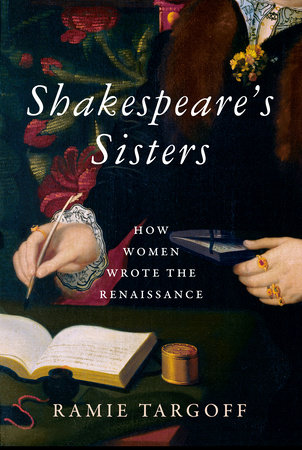
Read via NetGalley. It’s out now.
I’m here for pretty much any book that helps to prove Joanna Russ’ point that women have always written, and that society (men) have always tried to squash the memory of those women so that women don’t have a tradition to hold to. (See How to Suppress Women’s Writing.)
Mary Sidney, Aemilia Lanyer, Elizabeth Cary and Anne Clifford all overlapped for several decades in the late Elizabethan/ early Jacobean period in England – which, yes, means they also overlapped with Shakespeare. Hence the title, referencing Virginia Woolf’s warning that an imaginary sister of William’s, with equal talent, would have gone mad because she would not have been allowed to write. Targoff doesn’t claim it was always easy for these women to write – especially for Lanyer, the only non-aristocrat. What she does show, though, is the sheer determination of these women TO write. And they were often writing what would be classified as feminist work, too: biblical stories from a woman’s perspective, for instance. And they were also often getting themselves published – also a feminist, revolutionary move. A woman in public?? Horror!
Essentially this book is a short biography of each of the women, gneerally focusing on their education and then their writing – what they wrote, speculating on why they wrote, and how they managed to do so (finding the time, basically). There’s also an exploration of what happened to their work: some of it was published during their respective lifetimes; some of it was misattributed (another note connecting this to Russ: Mary Sidney’s work, in particular, was often attributed to her brother instead. Which is exactly one of the moves that Russ identifies in the suppression game). Some of it was lost and only came to light in the 20th century, or was only acknowledged as worthy then. Almost incidentally this is also a potted history of England in the time, because of who these women were – three of the four being aristocrats, one ending up the greatest heiress in England, and all having important family connections. You don’t need to know much about England in the period to understand what’s going on.
Targoff has written an excellent history here. There’s not TOO many names to keep track of; she has kept her sights firmly on the women as the centre of the narrative; she explains some otherwise confusing issues very neatly. Her style is a delight to read – very engaging and warm, she picks the interesting details to focus on, and basically I would not hesitate to pick up another book by her. This is an excellent introduction to four women whose work should play an important part in the history of English literature.
The Seven Wonders of the Ancient World

I received this book to review at no cost, from the publisher Hachette. It’s out now (trade paperback, $34.99).
As someone who has been keen on ancient history since forever, of course I was intrigued by a new book on the seven ancient wonders. And I’ve also read other work by Hughes, and enjoyed it, so that made me doubly intrigued.
Before I get into the book: of course there is controversy over this list. Hughes acknowledges that, and goes into quite a lot of detail about how the ‘canonical’ list came about – the first surviving mention of such a list, why lists were made, what other ‘wonders’ appeared on such lists in the ancient world of Greece and Rome, as well as what other monuments could be put on such a list were it made today. I appreciated this aspect a lot: it would have been easy to simply run with “the list everyone knows” (where ‘everyone’ is… you know), but she doesn’t. She puts it in context, and that’s an excellent thing.
In fact, context is the aspect of this book that I enjoyed the most. For each of the Wonders, Hughes discusses the geographical context – then and now; and the political, social, and religious contexts that enabled them to be made. This is pretty much what I was hoping for without realising it. And then she also talks about how people have reacted to, and riffed on, each of the Wonders since their construction, which is also a hugely important aspect of their continuing existence on the list.
- The Pyramids: the discussion of the exploration inside, by modern archaeologists, was particularly fascinating.
- The Hanging Gardens of Babylon: the discussion of whether they even existed, and if so where, and what ‘hanging’ actually meant, was intriguing.
- Temple of Artemis: I had no idea how big the structure was.
- Statue of Olympia: I had NO idea how big this allegedly was.
- Mausoleum of Halikarnassos: NOT HELLENIC! Did not know that.
- Colossus of Rhodes: also had no idea how big it allegedly was, nor the discussion around its placement.
The Quiet Revolution of Caroline Herschel

I’ve read a bit about Caroline Herschel, often in the context of “here are women who did important things in science who don’t get enough recognition.” She was one of those women who helped a man get lots of science done – in her case, her brother William: she was his assistant for much of his observing life, writing down his observations and helping with his frankly unwieldy telescopes, as well as keeping house for him for many years until he married – and then his wife had money so they had more servants. All of those things are immensely important and often get overlooked; no one is able to do science on the scale of William Herschel, or Robert Boyle, or Charles Darwin, without an immense amount of assistance: usually either female, lower class, or both. Hence why that assistance is often overlooked, because the European narrative in particular is much happier with the ‘great man’ theory.
To leave Caroline’s story at that, though, is to do her an immense disservice. She was an astronomer in her own right, discovering eight comets (two of which she wasn’t the official discoverer, because someone else got there first, but she didn’t know about that when she found them). She also contributed observations to William’s immense catalogue of the ‘nebulous’ stars. In the late 1700s, most people assumed that that ‘cloudy’ or nebulous patches in the sky were simply stars that contemporary telescopes couldn’t resolve. William used the largest telescopes of the time to realise that actually, some of those areas actually couldn’t be resolved – they really did look cloudy – and suggested that maybe some of those areas were where stars were born. (He also discovered Uranus – the first planet to have been discovered by a human, rather than seen naked-eye, which is what shot him to fame.) Caroline personally observed and described some of the Herschel catalogue.
And then there’s the other scientific tasks she undertook, which might be easy to skim over because they don’t seem that sexy. She worked for years on a massive index and catalogue of stars, using the main one available in English: double checking for errors, making it systematic, and so on. Not glamorous, requiring hours of probably boring labour, required a great deal of knowledge – what an amazing contribution to astronomy.
Anyway, the biography: is not entirely what I was expecting! It focuses largely on a decade in the middle of Caroline’s life, her most scientifically productive – and a decade for which she destroyed her dairy entires and never discussed in either of the two memoirs she produced later in life. There’s a lot of speculation for why this might be; most people conclude that it’s because she wrote some bitchy stuff about her new sister-in-law and that this didn’t fit her self-image as meek, self-effacing, and doing everything for family. It’s a fascinating question and one that will almost certainly never be resolved. So Winterburn has used letters, information from journals, and references in other places to reconstruct those lost years, and in doing so to highlight just how phenomenal Caroline was as a scientist. While she wasn’t the first women to be paid to do science – lots of other women were doing ‘science’, it just wasn’t usually called that – she was the first English woman to have a royal pension for doing science, and that’s very damn impressive.
There are oddly repetitive bits throughout the book, where Winterburn repeats ideas or phrases that have just been laid out a paragraph or two earlier; and the book can’t solely concentrate on the one decade, because the reader needs greater context for Caroline’s life – so it’s not without flaws. There’s also a frankly odd emphasis on the events of the French Revolution; while it certainly had a huge impact on some of the people Caroline and her brother corresponded with, it didn’t actually seem to have a direct impact of Caroline, living in England – she wasn’t obviously a supporter of either Burke or Paine (anti or pro the revolution), so I was confused by how many ink was spent discussing those foreign events. Nevertheless, overall I really enjoyed this, and am immensely pleased to know more about Caroline. To the point where I’m considering the so-called Herschel 400 as an observing list.
The Tigris Expedition, Thor Heyerdahl

All of the things I said about The Ra Expeditions also apply here. Although this is happening in the late 1970s, so the racism is both a bit less, but also even less comfortable, if that’s possible.
Interestingly, I didn’t find this as historically problematic as Kon-Tiki or Ra. I think that’s mostly because he’s only sailing around places where there is actual archaeological evidence for contact – Mesopotamian stuff found in the Indus Valley, and vice versa – so there clearly was contact, although at how many degrees of separation is unclear from just those remnants. Although I did have to stop and laugh when Heyerdahl earnestly suggests that just because there’s a similarity between how a place name is said today, and how we think a word was said in a language nobody now speaks – well, that’s evidence that they might be the same place!
For real.
ANYWAY. I don’t need quite such an expurgated version of this book as with the other two, because the ideas and the language aren’t quite as offensive. And as with the other two, this is genuinely a fascinating adventure story. Getting the built made – of reeds, in Iraq – is another amazing story of ingenuity and the problems of materials etc in an area that really didn’t have ‘modern’ resources at the time. Was importing South American boatbuilders the most authentic way of doing it? Probably not. Anyway, then you’ve got eleven men on this little boat navigating the Arabian Gulf Persian Gulf Sumerian Gulf (there’s a whole thing about which name is appropriate), which is filled with enormous boats and isn’t all that easily navigable… and they go to Oman, and Bahrain, and Pakistan, and then back west – honestly it’s an amazing journey, with a lot of quite serious problems that they do manage to overcome. Heyerdahl is open about some of the friction experienced between the men – he has to be, given there’s someone with a camera filming them for much of the voyage – as well as their frustrations about what’s going on on land.
Would I recommend this wholeheartedly? No. Would I recommend it with reservations? Sure. Only to an historically literate reader, who’s in a place to deal with fairly stereotypical 1970s attitudes. It’s probably the best of the three in terms of not being problematic.


