The Ministry for the Future

Kim Stanley Robinson continues to be one of the great voices of climate change fiction – particularly, the consequences of, and how humans might mitigate them (since no way are we avoiding).
The Ministry of the title is the use-name for a small international organisation set up under the auspices of the Paris Climate Agreement, kind of but not entirely associated with the UN and based in Zurich. Their remit is to basically to represent future generations, who currently don’t get a say in what they will inherit, and therefore to advocate for policies that will be good for those future people. It’s a clever way of showing that current decisions have downstream consequences, and of having people whose job it is to focus on that.
Part of the book, therefore, focuses on the Ministry: policy and the struggles of international collaboration. Another large part isn’t even really narrative so much as a series of vignettes from individuals who are either directly affected by some aspect of climate change – like the devastating heat wave that opens the novel – or by people who are involved in climate change mitigation, like farmers in Kerala who are doing awesome things with agriculture. The scope of the book is a couple of decades, thus showcasing the problems as they develop as well as the myriad and varied attempts to deal with the issues.
It’s not a standard linear narrative, therefore; but it is recognisably a Kim Stanley Robinson. For example, New York 2140 had several characters to follow and a few clear narrative threads, which sometimes intertwined, plus the narrator who dumped info on you. This is more experimental, I think, but feels like an extension of what was going on in 2140. I guess there are two main characters, although they probably don’t get quite enough space to really legitimate the title: the head of the Ministry, a middle-aged Irish woman who is awesome; and an American aid worker caught in the Indian heatwave who continues to suffer the repercussions of that for years. If it’s anyone’s story, it’s theirs; although having said that really it’s the planet’s story, and that of the entire population. Which feels so right for a book like this. It makes sense to hear from farmers in India and glaciologists in Antarctica! Less so the bits from the sun, and a carbon atom; but I’m prepared to indulge Robinson’s whims.
I trust Robinson to generally have his science right, if slightly on the outlandish side – that is, his suggestions probably match known science, but they may require more time / other resources than is considered feasible… although actually, this is something that he addresses in the book – that what seems like a large amount of money kinda isn’t when you set it in context. I do wonder whether a copy of this should be sent to people at the UN, and glaciologists, and agriculture people…
This book won’t work for everyone. The structure will annoy some, for sure, because it decentres characters and because it doesn’t really have much of a narrative. It just… covers a period of time, and what happens to the world in that time. So if you like a neat open and close, this probably isn’t for you; if you like really strong characters driving the story, likewise. But I really do recommend this as an exploration of the next few decades on our planet… it’s both optimistic on some levels but also devastating.
Station Eleven
The first question to ask here is, how did I not read this book when it first came out in 2014? And then how did I not read it when it won the Arthur C Clarke Award?

Those of you who have already read this are now possibly backing away in dismay, and reflecting my second question:
How could I read this book this year: did I not know that it involved a… y’know… flu-like virus??
The answer to the second is no, actually, I didn’t. It came as quite a surprise. And it’s a bit of a spoiler I suppose to those who haven’t read it yet but I figure that’s a community service at the moment. Because the thing is, this is a fantastic book and I want to recommend it to everyone… it’s just that, at the moment, such recommendation requires a little delicacy.
“Mum! You should read this book!! … how do you feel about reading about pandemics?”
(That’s not quite verbatim, but close.)
(For the record, she said she was fine with it.)
At any rate, I bought this in one of my spates of book buying this year, as a title I’ve had hanging at the back of my mind for five years and knew basically nothing about. And then I read the whole thing in a day. I would have read it faster than I did but I had to keep stopping to eke it out just a little bit longer. Yes, it’s one of those.
There’s a lot to love about this book. The writing is wonderful, easy to read and utterly absorbing. It takes a particular style to get away with declaring “Of all of them there at the bar that night, the bartender was the one who survived the longest. He died three weeks later on the road out of the city.” In the first part of the book, in particular, this felt a lot like one of the best of Kim Stanley Robinson’s stories (and yes, just to be clear, that’s definitely a compliment from me).
The narrative goes back and forth between times – pre- and post-pandemic – filling in character histories, drawing links between people, giving detail to the world. The two central characters (I would argue) are introduced at the start of the novel – both actors, one old and one a child. Their lives and the people they interact with largely inform the rest of the story. The child, in particular, grows up to be a focal part of the future story, traveling with a group of actors and musicians across an America utterly devastated by pandemic (see? this is why recommending it requires a certain delicacy right now!). These artists use a Star Trek quote as their raison d’être: “because survival is insufficient”. And I love this for many reasons.
As well as flitting between times, the narrative also shifts between characters – all of whom end up having some connection with the two actors, deep or glancing, which is a neat device that Mandel manages to make neither cheesy nor just too convenient. The range of people (rich and not, pleasant and not, etc) allows Mandel to explore multiple human experiences and reactions to disaster – which, let’s face it, is often the point of writing post/apocalyptic narratives. Another sign of a narrative that is well-paced and features multiple characters is that I never got impatient in reading about some new character, wanting to get back to an original – they were all engaging and, especially as the threads started to come together, I always wanted to see what the new character brought.
There’s not that many books about which I can confidently say “I will read you again.” This is one of them.
Hollow Empire

The author sent me a copy of this book at no cost. It comes out on December 1.
I read City of Lies last year, but I didn’t review it because it was for the Norma K Hemming Award, and reviewing when judging feels wrong. It should be noted that this is definitely a sequel – don’t come to it without the first book – and honestly that’s no hardship, since the first book is excellent and I highly recommend it.
In one sense, you could describe these books in a way that makes them seem like well-written but run of the mill secondary world stories: small country beset with difficulties, strange magic system not entirely approved by the powers that be, fights enemies. That would, however, be to entirely miss what makes this series (trilogy, I assume) stand out. The dual-protagonist structure does that: brother and sister, connected to power but not really wielding it, sharing narrative duty. But again, multiple perspectives isn’t all that unusual. Aspects of these siblings, though, is still highly unusual: she has what seems to be something like chronic fatigue, while he has anxiety and the sometimes-awkward coping mechanisms to deal with it. They’re often in the public eye and people sometimes look on these ‘conditions’ with a dubious eye. And they are also both entirely competent at their jobs (diplomacy, and poison-tester) and at managing their health… issues? complications? The two of them are immensely real and relatable, not defined by what others see as (potentially) disability and also not ignoring it. These two, Jovan and Kalina, make Poison Wars unusual and excellent.
Also excellent is the writing; Hawke conjures a fascinating world, with political and commercial intrigue, malice, and cooperation interlaced throughout the different countries and their interactions. Different societies have different belief systems and social mores, and navigating those is a big part of this second book, in particular, as Silasta recovers from its civil war and the problems revealed by that. Silasta must confront its own history, and oppressed people, while also being wary of external threats. I feel that there’s a particular nuance to a story touching on colonialism and empire when it’s written by an Australia (maybe this can also be true of other colonial settings, too, but I find it easiest to see in Australians). Hawke deals with the lived reality of this sort of situation for colonised and colonisers, and I (as a white Australian) think she does so well.
There is excitement here, given its focus on intrigue and discovering whether someone is indeed trying to kill the Chancellor; but there’s not a whole lot of set-piece battles, so if that’s what you’re after, you need to go elsewhere. I really like that the focus is on the people trying to stop an assassination, rather than perpetrate it; in general, the reader gets to be on the morally right side (or at least, I assume we are…) rather than cheering for a person actively trying to kill another, as in those stories focussed on the assassin themself!
Highly enjoyable; read the first book first; definitely one worth throwing yourself into.
Hans Rosling
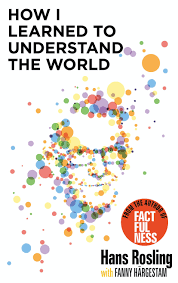
This book was sent to me by the publisher, Hachette, at no cost. It’s available from November 10; RRP $32.99 for trade PB, $15.99 for ebook.
An important thing to know about me is that I am a very big Hans Rosling fan. I think the first thing I ever saw from him was his TED talk about the Magic Washing Machine – an example of how to think about poverty, and the spread of people in terms of income across the globe, and the difference that a washing machine makes to everyday life. And then there’s the greatest four minutes of stats you’ll ever see: 200 countries, 200 years, in 4 minutes (and 1948 was a great year). It highlights one of Rosling’s key points that he wants people to know: overall, the world has improved dramatically over the last two centuries. (With the caveat that he acknowledged profoundly in his first book, that many part of the world are better but still bad – like a premature baby in a NICU, who is still ill but better than previously.) And if you want to know just how much of a badass he was, watch this interview with a Danish journalist.
… so as you can imagine, when I learned that Rosling had written a memoir (with journalist Fanny Hargestam) in the year before he died (too young), I was very, very excited. His first book, Factfulness, co-written with his son and daughter-in-law (who worked with him at Gapminder) was mostly about the sorts of preconceived notions that impact on the way people view the world (like the Generalisation Instinct that makes us believe everyone in ‘that’ category – race, religion, gender – is exactly the same). Within it, though, were also all sorts of stories about Rosling’s own life – which was a fascinating one.
This is not a standard (auto)biography or even memoir. Rosling wasn’t writing it just to talk about himself, or even just to reflect on his own life, as far as I can tell. His purpose was to use his life and his experiences to teach readers about the world – hence the title. The man who started as a doctor, became a researcher and then a statistician was, in the end, a teacher. You can see that in his TED talks, and get a clear sense of it when he despairs about the lack of knowledge people have about the world. (Many people who take the Ignorance Survey over at Gapminder do worse, in Rosling’s words, than chimps – they at least would choose at random, whereas most people seem to have overwhelmingly negative views about the world.)
This book is amazing. Rosling’s life was amazing, and the writing is beautifully simple. He starts in Sweden, becoming a doctor; spends time in Mozambique as a doctor; investigates a debilitating illness there, and later a similar problem in Cuba; gets into research, and eventually into teaching, and develops the way of presenting stats that – with the bubble charts his son and daughter-in-law created – really made him famous. Which gets him to Davos, and speaking to people like Melinda Gates. (When Factfulness came out, the Bill and Melinda Gates Foundation gave a copy to every US college grad that year.) Rosling doesn’t shy away from personal details – some tragic, some wonderful. And he also doesn’t shy away from sharing the difficult, and sometimes bad, decisions that he made over his life. Everything he talks about is aimed at helping the reader to understand him for the sake of understanding how he made his decisions – and what that says about the world. One of the most difficult sections is when he talks about working in an under-resourced, under-staffed, hospital in Mozambique, post-independence. He has to make incredibly difficult decisions. And sometimes they have poor outcomes. Rosling doesn’t attempt to cover that up; it’s all in the context of understanding the world.
One of the great revelations of this book is Agneta Rosling, Hans’ wife. She seems an amazing woman – definitely a match for him. And let’s be honest, you’d have to be, because Hans comes across as one of those people it’s incredible to watch and listen to but would actually be difficult to live with. Agneta had her own career, and actively worked with Hans in some stages of their lives, and supported him – and was supported back.
I read this book very quickly, because it’s an easy read and I really wanted to know everything. There were moments, though, where I had to put it down: occasionally to stare at nothing and consider the world, occasionally to shed a tear, and sometimes to just breathe and let new knowledge settle. I don’t tend to read modern biographies; they usually bore me. This one, though, I will be praising to everyone for a long time. Highly, highly recommended.
Avengers: Endgame (MCU 20)
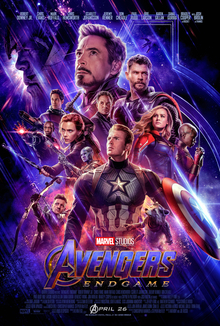
And so it all comes to an end, and many (but not quite all) of the narrative points are tied up, etc. It’s an epic finale (and too long, but that’s basically to be expected), and most people get interesting parts, and there are some great working-together moments too.
Except for what happens to Natasha.
I LOVE the start of this film. That it’s on such a small scale – Tony and Nebula hanging out dying together, and then saved by the BIG DAMN HERO Carol Danvers. Then coming back to Earth, and that’s all a big reunion and so on.
And then it’s five years later.
I was intrigued and a bit boggled by that time jump. It felt so out of place in the entire MCU run – which has been much more about relatively small jumps in time, keeping everything together. On the other hand, from a narrative perspective, how absolutely brilliant and devastating. And the idea that people have, largely, been… getting on with things….
The changes that people have experienced are fascinating. Steve is the one doing the counselling, and Sam is off being a hero. I loathe how Clint has become a vigilante, as if somehow that’s what he would become – it’s not like the people he’s killing are in any way connected to his family’s deaths. I am kinda delighted by Tony and Pepper and Morgan, and their rural retreat. I am devastated by Thor’s reaction to his perceived mistakes, and feel that – while it’s maybe a bit exaggerated, and uncomfortably played for laughs a couple of times – this is entirely believable and in some ways was a bold choice. Genuinely showing the effects of PTS? The idea, at least, is a good one. I do not like BannerHulk at all, but whatever.
And then there’s Natasha. Who has lost her family and is desperately trying to keep it together and I’m not sure people really appreciate all that she’s doing. She is so ill-served in this film.
Then there’s Scott coming back, and somehow The Quantum Realm etc etc oh and NOW we get to have time travel and basically write another massive love letter to the entire franchise. Don’t get me wrong – it’s a neat way to try and deal with the issue, and I love seeing some of those earlier scenes from a different perspective – but let’s not be under any illusions about this being a bit too self-referential and delighted with its own cleverness.
The replay of Steve’s fight in the elevator: brilliant. And fighting himself – hilarious. Tony with his dad – I mean, ok, Stark finally gets to deal with his self-loathing re: dad. Thor getting to see Friga again was wonderful (although no way would she make a jibe about his weight, that’s just offensive). Unsurprisingly I kinda love how Quill is shown to be a douche with his whole dancing routine from the first Guardians film.
And then there’s Natasha. On the one hand I can love that she wants to be sacrificial because she loves Clint and the rest of her family. On the other… it makes me so, so mad that it was her that died. After all she’s been through, and all the evil Clint has done. I refuse to believe that her death was inevitable. It’s the single biggest thing I dislike about… probably the whole franchise, actually.
Finally, the stones are back and we have two Nebulas running around and the final, epic battle. Which once again brings together all of our heroes (Sam’s “on your left” may have brought a wee tear to my eye… again…), and is genuinely a culmination of everything. And how restrained that this is the first and only time the writers used “Avengers, assemble”! I know I’m falling for some emotional manipulation, but golly the whole passing-between-women scene made me happy.
Can we all just agree that Danvers and Wanda are the strongest Avengers, by the way?
And finally proof that Steve can lift Thor’s hammer – everything about that little by-play made me happy.
I know certain people who complain The Return of the King has too many endings. Clearly they’re wrong (because it’s missing one, the scouring of the Shire), but I feel like that’s the case here. I can basically see the point for all of them, but… it does go on a bit.
- Tony’s death. Appropriately shocking, and in some ways a bold choice, but so appropriate for the entire franchise that started with him.
- Tony’s funeral. yeh yeh, whatever. A small mention of Natasha which also made me scowl.
- Thor giving up Asgardian kingship. This is a great moment, actually, and I really want to see a film all about Valkyrie in the role.
- Steve returning the stones and then… not coming back. Until he does, as an old man. And this is where I have LOTS OF QUESTIONS. In particular:
- Which timeline did Steve’s happy ending happen in? because if it was the timeline of the films, how the HECK did Steve and Peggy let Hydra get to that point in SHIELD??
- If it wasn’t “our” timeline, how did he come back to Sam and Bucky?
- Other timey-wimey, cranky, questions.
So now the whole Infinity Stones set up has come to its end. The Iron Man saga is done; the Thor saga, as initially set up, is done; the Steve Rogers saga is done. Natasha is dead and I’m still cranky, and Hawkeye does not deserve any sort of standalone. But there’s still room for more Captain Marvel, and how I wish there could be more Black Panther with Chadwick Boseman. And I can imagine there will be more Guardians of the Galaxy but whatevs. I am waaaay more excited for Thor: Love and Thunder.
Avengers: Infinity War (MCU 19)
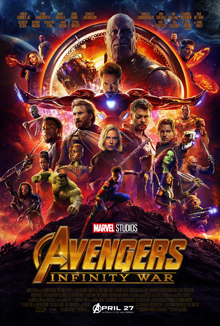
It’s taken me ages to write this review because… once you’re through, it has felt like there’s not much to say. So this isn’t going to be the most comprehensive of reviews.
The opening is awesome: Banner arriving back and Stark and Strange having to work together; Wanda and Vision having Their Moment; all of Thanos’ minions are very much bad takes on 1960s-style Bond villains. The interaction between Quill and Thor is just cringeworthy and I continue to dislike Quill.
Etc etc. Things go bad, people meet up, Peter Parker is adorable (“this really old film called Aliens…”). The fight in Wakanda is wonderfully choreographed and showcases different abilities. I think one thing I love about this and the next film is the way people from the different franchises are matched up and work together.
I love that Shuri gets such great moments. And Wanda – although her arc is one of the more heartrending. Okoye is of course transcendent, and M’Baku can have his own film as far as I’m concerned.
And then Quill proves that he’s a right tosser and destroys everything. Yeh, yeh, Strange saw all possible futures etc blah blah. Doesn’t negate the fact that Quill let his emotions get in the way in a spectacular way that basically means half the galaxy’s population DIES, QUILL. Tosser.
The very end, with people disintegrating, is genuinely distressing (although also a bit nonsensical, since why do some people take a while to go, and others don’t? why doesn’t everyone disappear at the same time?). And it took someone else to point out that basically we’re left with the original Avengers, at the end; everyone else is dead.
This film is exactly what it needs to be (except: too long). It brings together a whole bunch of threads that have been building up for nearly 20 films; it destroys the world and leaves the desperate need for things to be better in the next film; it gives some lovely character moments (except not for you, Quill. You suck). It doesn’t ignore the problems that have gone before – Steve and Tony, etc – but allows the characters to be genuinely heroic (except for Quill) in swallowing that animosity, in general, and doing what is required.
It’s not a perfect film, but I like it a lot. It doesn’t really have a heap of rewatchability, for me; the dramatic tension is a bit lessened with repeat viewings. But I have to admire the foresight that enabled a film like this to be the culmination of all that came before – and if there were reworkings and things had to be rewritten because they previously hadn’t worked, well, the writers and producers did a good job of that, too.
Anthropocene Rag
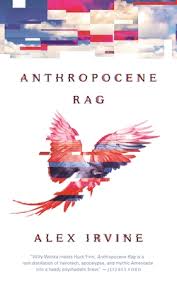
This book is an absolute trip.
I should preface my comments here with the reminder that I’m Australian. While cultural imperialism means I have a better knowledge of American culture than is probably appropriate, I don’t know all the ins and outs of American myth: I have heard of Paul Bunyan and Babe, for instance, but I have zero knowledge of their context, or what purpose they served, and so on. There is undoubtedly nuance that I missed, here, as a result; clever puns or narrative twists that passed me by.
Having said that, this is still a really fun and weird and clever book.
In case you haven’t come across it ‘anthropocene’ is a proposed name for the geological epoch in which we currently live: the time when humans are having a significant impact on Earth’s systems. The ‘rag’ in the title is mostly the musical version of the word.
The narrative takes place across an America that has been completely taken over by nanotech – the Boom. This tech is somewhat driven by a consciousness, but not entirely. What it is driven by is a fascination with story. And it will go to great lengths to recreate stories and historical moments – up to and including completely remaking places… and people. So there’s a whole new level of danger in living in America, never quite knowing whether the person over there is biological or a construct, and whether they might coopt you into their narrative.
The story itself centres around six individuals who have received Golden Tickets from… someone… to enter Monument City, which may or may not actually exist but if it does, it’s connected to the Boom. And at this point hopefully you, like me, are thinking: wait, wasn’t Roald Dahl English?? Yes he was, but I can only assume that Irvine is going with the idea of Willy Wonka having been so completely Hollywood-ised that he’s basically been subsumed into the American cultural myth. Anyway: essentially this is a set of road trips that showcase the weird things that have happened to America thanks to the Boom, and allow Irvine to explore American mythology.
Anthropocene Rag is a lot of fun. It doesn’t take itself too seriously, it does have some lovely lyrical moments, and its range of characters were always entertaining.
Guardians of the Galaxy, Vol 2 (MCU 11)

This film is way better than the first one.
I am prepared to accept that I am a sap (ha), because: baby Groot is the best thing about this film. And Yondu is a close second. Also Kurt Russell. Fight me.
Baby Groot: yes, I find the dancing adorable. It’s fabulous CG – and mostly the emotion is in the eyes, I guess – and I don’t care how manipulative it is. He’s hilarious. Utterly predicable but the bring-me-my-fin scene is fantastic. The opening credits are some of the best I’ve seen; and the way every other character loves him is adorable.
Yondu: probably one of the most compelling side-characters of the series. He gets a genuinely epic arc in this film and I love it.
Kurt Russell: finally an antagonist who makes GotG worthwhile. And, please note, another actor playing (mostly) against type. Although when you hear that a character’s name is Ego there should be very little surprise when he turns out to be a galactic-sized douche. I love everything about Russell’s performance here. I love that he starts out as the heart throb, and that he morphs into the elder statesman who is still approachable and then turns out to be a magnificent megalomaniac.
This film was a lot of fun to watch the first time – and unlike the first one, still completely holds up. Quill is still an arrogant, self-righteous ass with few redeeming features except for his love of his mother. But Gamora is awesome (again/still), I love Mantis, and Nebula has a much bigger and more interesting role here. The soundtrack isn’t quite as epic – or maybe it just isn’t such an extravagant gesture as it was in the first film – but the use of “Tusk” was magnificent.
Maybe this works better for me because the narrative is more … contained, I think. More personal. In the first one the Guardians all fall into it, and – except for Gamora – none of them really have any skin in the game. They just fight because they basically have to. Here, it’s personal, and I think that makes the characters work better; more believably, perhaps; it makes me care more. (Also, see previous comment about a better antagonist.)
Also, the cameos. Sylvester? Ving? MICHELLE YEOH?! (And Ben Browder, who… actually with this audience maybe people will know him, thanks to both FarScape and Stargate SG:1.) Plus THE HOFF.
Simply: Sabrina Ghayour
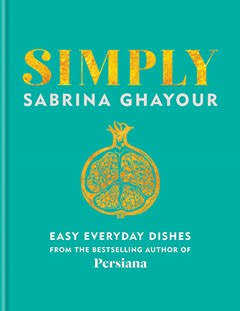
I received this as a review copy from the Australian publisher, Hachette, at no cost. It’s available now; RRP $39.99.
I own all of Sabrina Ghayour’s cookbooks. Her first, Persiana, is one of my favourite cookbooks ever. Every book has been produced beautifully, and every recipe I have tried has been great. This new book is no exception.
Ghayour is Persian by background, and having grown up in Britain she brings a (ugh, buzz word) fusion to cuisines that really works. I recently started following her Instagram account, and the enthusiasm that appears in her descriptions of the recipes comes through there, too. She’s a delight.
The idea of a ‘simple’ cookbook is a perennial one; it’s come around again recently, it seems to me. I was a little surprised that Ghayour got into it – not that her other recipes have ever been that hard, but that it seemed an odd genre for her to get into. But actually, this does fit: she’s into encouraging everyone that they can cook, that doing so doesn’t need brand new, hard to get, and fresh-or-lose-it ingredients every time. She’s a big fan (from her Insta account) of using pantry essentials really well. Of course, her pantry isn’t necessarily mine; but once you’ve bought sumac or tahini (which, let’s be honest, actually are always in my pantry), you’ve got them and you can keep using them.
Anyway! The recipes are once again easy to follow, and every recipe I’ve tried has been a hit. Baked sweet potato chips with za’atar were great; beans with tahini and preserved lemon is inspired and I want to do beans like this forever. Carrot with pistachio, dill, and lime; baked butternut that’s then mashed with yoghurt and chilli and dill… and absolutely fantastic felafel. And that’s just the vegetables! Variations on chicken kebabs, and kofte, and the solution when my veg box has a full celery: lamb, celery and parsley stew (yes, when I ask for 100g of parsley, I meant it. It didn’t even make a dent in the parsley thicket). I haven’t had a chance to cook any dessert yet, but: white chocolate, pistachio, and raspberry tiramisu. Nuff said.
The book is divided into Effortless Eating; Traditions with a Twist; The Melting Pot; Something Special (sticky peach and halloumi skewers!!) and Cakes, Bakes, and Sweet Treats. I am keeping this book out on the counter to keep cooking from over the next … I dunno, six months?
Highly recommended. An excellent introduction to Ghayour’s style of cooking and recipe writing.
Flyaway

Bettina lives in a very small town with her mother somewhere in the outback. It’s an area of farmers and hard scrabble and everyone being in everyone else’s business; they’re a long way from everyone else. Her father and brothers have been missing for some time, but Bettina’s life seems to be going its own quiet, easy way, until something comes along that starts a disruption. And then she chooses to follow where that disruption leads, becomes (re)acquainted with two of her peers, and goes on the sort of literal and figurative journey that means you can never properly go home again.
Like most Australians, I am a city/suburbs person. Like slightly fewer Australians I have spent some time “in the bush” although never for especially extended periods (days and weeks, never years). For all that much of the (white) Australian apparently has this romantic notion of, or attachment to, “the outback”, that’s not the reality for most people – who’ve never spent long periods outside of a large town, never worked on a farm (I’ve visited but not worked), don’t really know what it’s like away from streetlights.
All of that is, I think, an interesting backdrop for coming to this novel. I definitely think Australian audiences will come at it differently from, in particular, an American one. For Australians, the fact that Jennings did in fact grow up in a rural area will be an important part of trusting her insight and the way she sets her story up; it certainly was for me. Not that someone like me couldn’t write a story about an outback town and have it work – but I trust Jennings and her observations because I assume she is writing at least partly from experience.
Jennings calls this an “Australian gothic.” I did not study the gothic genre at uni, when most of my friends did; it has never especially appealed to me as a genre. I think, in my head, it comes too close to the aspects of horror that I dislike; I don’t enjoy being made to feel uncomfortable. So I can’t speak to the accuracy of the gothic label – although there were definitely bits where I felt uneasy, and was put in mind of the stories we used to tell each other as kids, about things like the Min Min lights and other such things.
There are many things to love about this book. Firstly, the structure. The narrative proper is interrupted every second chapter by the insertion of a story-within-a-story. These might be told by someone who’s present, or be second or third-hand. Their connection to present events isn’t always obvious, but always becomes so. And they’re generally linked to some piece of folklore, or apparently superstitious warning, that might be straightforward to ignore during daylight but becomes less so at twilight. This was an intriguing way to flesh out the story, and also contributed to a sense of … disconnect; of things not working exactly as they should, because the narrative isn’t straightforward. It left me feeling unbalanced, like I wasn’t sure things were happened as I expected.
Secondly, the art. Jennings is probably most well known in Australia, and indeed overseas, for her art – which isn’t entirely fair since she’s written and had published any number of short stories; but her book covers, in particular, have had a fair bit of notice, and justifiably so. It’s her own artwork on the cover, which is awesome; there are also fantastic pieces at the start of every chapter, and on the folded covers. They make me particularly happy to own this in hard copy.
And thirdly, of course, the writing and the story itself. Publishers Weekly describes it as “spellbinding, lyrical prose”, Kelly Link says that her prose “dazzles”, Holly Black that it is “exquisitely rendered.” All of that. Jennings evokes a particular feeling of Australia – the space, the dust, the sun, the trees, the oppressive expanse – that made me glad I was reading this in my nice suburban house (even if it is during lockdown), and not while out camping, because I think that being in the bush while reading it might have been just too much. It would have made it too… real. So the setting works brilliantly; and the people do, too. My nan moved to a small town after marriage when she was 20 years old; into her 70s some of her peers still treated her as new to the place. Small towns can have delineations that strangers don’t see – I’ve heard the stories of Catholic and Protestant areas in teeny little Victorians towns – and that’s brought to the fore here, too. And then there’s the folklore, and the uncomfortable sense that maybe more is going on beneath the surface than is immediately obvious…
I really hope Flyaway gets a lot of notice, and from a wide-ranging audience. A lot of Australians will enjoy it for the way it plays with notions of “The Australian outback” – and frankly it’s just gorgeous.


