Women’s History Month series


Links to interviews (and transcripts) with Melbourne women who protested against the Vietnam War and the National Service Act.
(list continues below)
Continue reading →The Book of Records
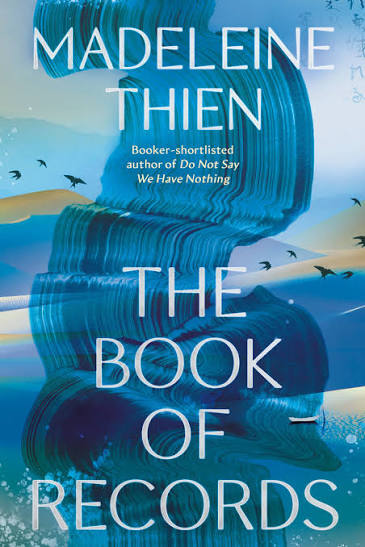
I feel like a fraud even trying to write a review of this book. I don’t think I have anything particularly coherent to say – I’m sure that since it came out last year, people who actually know something about Hannah Arendt and Baruch Spinoza and Du Fu have made all sorts of thoughtful, insightful, comments about how they’re portrayed there. And I’m sure literary critics have written fabulous words about how the book is structured; and philosophers have examined what it has to say about time, and love, and freedom, and choice.
I don’t really have anything to add. But I do want to add my tiny little flag, waving, to say that this is an amazing book and people should read it.
Somehow this passed me by last year – I hadn’t heard of it until I came across the Tadeusz Bradecki Prize 2026, for which the book was shortlisted this year. This prize is for a book that does clever things with nonfiction, and that’s exactly what Thien has written.
A young girl and her father, fleeing Foshan in China for environmental reasons, arrive at a liminal space called The Sea where people from across the world end up as they leave one place and go somewhere else. They stay much longer than most, however, because of her Lina’s father’s illness. As she tries to understand this new place, she has little to comfort her, except for three books her father snatched up as they fled: biographies of Arendt, Spinoza, and Du Fu. Eventually she meets three adults who are prepared to spend time with her, and tell her stories – especially when they see these books, because (and it’s a slight spoiler, but I already knew it going in and it actually improved the reading experience for me, so there you are) these three are Arendt, Spinoza, and Du Fu. And they share the stories of their lives and fill in what those books missed.
The choice of these three people is a fascinating one, and one that I am not fully equipped to analyse. Arendt and Spinoza in particular have some similarities that require more understanding than I have to untangle, in their approaches to life and philosophy – plus, Arendt studied Spinoza herself. The inclusion of Du Fu is probably a more surprising choice from the point of view of most Western readers… actually who am I kidding, lots of Western readers haven’t heard of Arendt or Spinoza either, or know basically nothing about them (and I know only slightly less than nothing, so I’m not exempt from this criticism!). Anyway, they all faced immense trauma – the Holocaust, the plague and being exiled from your community, famine and civil war – and all created art before, through, and after. One of the balancing acts Thien manages here is not minimising any of those horrors, but also not making the book only about them; instead she keeps pointing to the living that goes on around them.
All of this is also relevant to Lina, whose own life has been upended – her family torn in half – for reasons she really doesn’t comprehend.
This is, at best, a surface level explanation of the novel. It sounds weighty and I guess it is; there are definitely bits that I didn’t understand because I just don’t know enough philosophy. But it was still a remarkable book, and I hope lots of people will come to it.
Stargate SG1 season 1
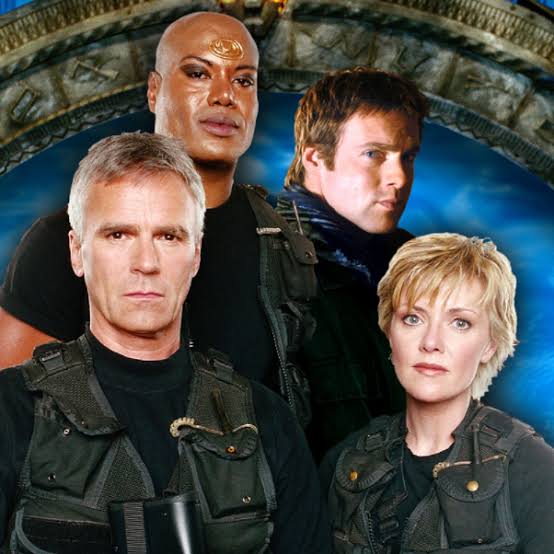
I just realised I should have started this rewatch next year… for the thirtieth anniversary of season 1.
Across this season, many things have happened! There’s a lot of Teal’c background, which I find fascinating: we meet his mentor, Bra’tac, who will become much more important across the seasons; and also his son, Rya’c, and wife, Drey’auc. There’s a whole episode about whether Teal’c is responsible for the deaths that he caused in the service of Apophis, which is a rather remarkable focus for an episode of 1997 television. There’s Daniel’s pain at losing his wife Sha’re, which is an ongoing feature across this season – Daniel is driven by the desire to get her back. There’s also an episode on Jack and his pain at the death of his son Charlie. Interestingly we get basically no background on Sam: there’s a brief mention of her having a brother, and that she misses her nieces, but that’s all. No tragic backstory! Oh also Sam has an ex-fiance, but given he goes fully Kurtz on an ultra-UV planet, that’s no loss.
Meanwhile, the SG1 team destroy a Goa’uld trap in order to rescue Teal’c, challenge the legal structure of another society, and get totally condescended to by the Nox because humans are still incredibly juvenile (but they’re a lot nicer about it than the Tollans). A new sarcophagus is discovered – surprise, Egyptian hieroglyphs rather than Mayan ones! – and it contains Hathor, who proceeds to entrance every man on the base; it’s unclear whether there are no lesbians or bi women, or if Hathor is just regressive. Also we get an episode featuring Catherine, the woman who brought Daniel on to the Stargate programme in the first place – and she’s definitely got a little intergenerational crush on Jack. I appreciate this further nod to the film enormously. And this episode is when we properly understand there’s more aliens out there – there was earlier the suggestion of Thor and his kin, but here we see script from four races that sends Daniel into conniptions. And ah, the Antarctic episode.
And then you get Senator Kinsey, asking questions about the Stargate programme – and for all he’s presented as a bit venal, a self-serving politician who cannot possibly understand the heroics of SG1… it’s hard not to see that he kinda has some points about military secrets, and the military wanting to spend money on fun new toys, etc. My goodness why am I now half on Kinsey’s side?? Do I miss this sort of filler episode? I really do not. Do I understand why they made them back in the day? Sure.
We learn there are more women in the SGC than Sam, Janet, and a few nurses!
Maybourne arrives!
Chris Judge’s downturned mouth gets more and more ridiculous across the season!
And in this season Richard Dean Anderson is the age I am right now.
Stats:
- Sam gets a raw deal for being female: 1
- Someone falls madly in love Sam: 1
- Sam reciprocates: 1
- Jack gets seduced: 2
- Daniel gets seduced: 1
- Sam gets seduced: 0
- Teal’c gets seduced: 0
- The team brings bad stuff back to Earth: 3 (sorry Cassandra)
- Daniel apparently gets killed: 2
- Jack apparently gets killed: 1
- Sam apparently gets killed: 1
- Teal’c apprearntly gets killed: 0
- Jack gets replaced: 2
- Sam gets replaced: 1
- Daniel gets replaced: 1
- Teal’c gets replaced: 1
- Sam and Jack have A Moment: 2 (not including alt!Sam & Jack)
- Maybourne gets thwarted: 1
- Specific human cultures represented: Mongols, Mycenaean, Minoan, Norse
- Goa’uld encountered:
- Apophis
- Hathor (dec.)
- Nirrti, indirectly
- Things I hadn’t realised turned up this early:
- The Nox
- Replicators
- Teal’c’s cap
- Daniel’s bandana
Merryll of the Stones
Apparently I last read, and reviewed, this in 2012. Most of the reason for that is that my sister had my copy for some reason, and she’s just returned it to me.
This was published in 1989, and there are aspects where that definitely shows: Lots of Capitalisation to indicate Importance, plus some pretty weak naming – the Power, the Gift, the Families. There’s also the very… old-fashioned reference to Aboriginal people – it’s definitely not intended to be derogatory, and if anything there’s a nod to including the Dreaming within the big idea that Caswell is setting up here. Still, it’s there. Poor Kylie and her being on the ‘wrong side’ of eleven stone… but also there’s Tieu, the refugee from Vietnam, who has made friends with Megan and Kylie: this aspect of 1980s Australia I approve of.
Merryll is sent into the stream of time for her own protection when her father, the king (obvs) is killed. She is born as Megan – born in Wales, moves to Australia with her family at 2 years old, moves back to Wales when her parents are killed in a car crash, in the aftermath of which she starts have distressing dreams. Meanwhile Emlyn, living in the same Welsh village, Megan goes to, is also having weird dreams and is obsessed with Welsh mythology and history. There’s a bitchy cousin and difficult school transition, as well as the mystical elements of time travel and the existence and use of magic.
Would this book appeal to a 15 year old today? Absolutely no idea. I do know that I devoured it whenever I got it, presumably in the early 90s. Is it a classic example of far-too-smart-for-15-year-old characters? Absolutely, but I would argue that this sort of too-smart is part of the reason that kids like I was (read a lot, often feel uncomfortable with their peers, can’t fully explain their ambitions, etc) read books like this.
Also it’s 250 pages long and only took me a few hours to read. Caswell’s writing style is straightforward, while still carrying the beauty of the Welsh landscape and some of the terror Megan/Merryll confronts. (Although I do think one of the things lacking is appropriate acknowledgement of the grief Megan would be feeling for her dead parents.) I have no regrets for having read it again.
Stargate SG1 s1, e1-4
So I’ve finally caved. It’s been on the cards for a long time, but now seems to be the moment.
I’ve started a rewatch. How long will I last before I give up? How often will I watch? These are not questions I can answer – although I do have a big knitting project to complete…
The things I remembered from ep1: the tissue box; Sam making the comment about reproductive organs. I knew Charlie got a Goa’uld early on, but I forgot it was in the pilot.
So, things we already get in the first three episodes:
- The entirety of the early cast, including the dude in charge of the iris. I don’t remember whether the medic is the same one for a while or not. (But Janet appears in ep4 already, which I’m watching as I type.)
- Sam is already faced with the challenges of travelling while female, and the team are completely fine with her going along with the sartorial expectations. They do at least immediately interfere when they learn she’s going to get raped that evening.
- I won’t deny that I’m 100% here for the sexual tension between Jack and Sam (and yo, Primitive Sam trying to jump Jack’s bones in e4 is hilarious and I’d forgotten it already started at that point) (and I’ve changed this to be e4 not just e3). However, my delight in the Daniel/ Jack dynamic knows no bounds, and we already have that in spades.
- There’s a MacGyver reference in the very first episode. I giggled.
- There’s interesting questions about racism and misogyny in the show. On the one hand: out of four of the SG1 team, one is a black man and one is a woman. That’s good! There are a few black marines/ other SG personnel, and a few folks of Asian descent on base as well early on. There’s Dr Janet, and some of the nurses are women. But there’s no other women on SG teams – in fact I don’t think there ever is. Of the planets the team visits, there’s the excuse that the Goa’uld nabbed people from different regions on Earth, and that explains their general ethnic homogeneity. I don’t have a clear enough memory of the series to recall whether there’s something to be said for the planets they visit over all… but the Mongol-based planet is pretty primitive, with regressive patriarchal attitudes as well as simplistic clothing and ways of living; and then the Minoan planet is a lot prettier – amusing, and unsurprisingly, a distinct lack of bare boobs.
- Speaking of misogyny and boobs: when Apophis is choosing a new bride, he brings first the white, blonde woman – and we see her bare back, and that’s it. Sha’re, though – a brown woman – we see naked, full frontal, for a moment, and her boobs several times. It’s an interesting choice.
- The Jack / Teal’c dynamic is also delightful. Honestly most everything about Teal’c is a delight at this point.
- Episode 4: the first time the team brings back a disease and they Do Unexpected Things. I think this might be my favourite trope of all – definitely more than the “let’s visit a planet and fundamentally challenge their way of life.”
I’m not regretting having started this rewatch. Some of the stories, at least, definitely hold up. Can’t say the same for some of the prosthetics….
The Old Drift
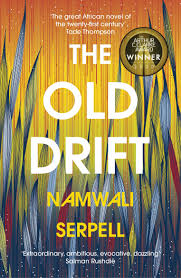
I believe I bought this when it won the Clarke Award, so late 2020. I didn’t read it then – I think I assumed it would be too heavy for that particular year, and then that assumption has coloured my way of thinking about it ever since. I finally picked it up this week: partly gesturing to my endeavour to at least read the oldest books in my TBR pile.
This is not the book I expected it to be, given the Clarke Award. It definitely has SF elements towards the end, when it’s projecting into the future – and goodness it’s weird, in 2026, reading a book that was published in 2019, therefore written the few years before that, and/but has significant things happening in 2020 that are not Covid.
Rather than feeling like “a science fiction novel,” the connections I more strongly made for The Old Drift are the works of Edward Rutherford – his place-based historical novels that followed a few of families through many, many generations. Serpell does that here, following three main families as they interact across four generations. The central location is (what is today known as) Zambia, and in particular Lusaka. As befits modern Zambia, some characters are descended from pre-colonial inhabitants of the area; some are descended from British migrants, some Italian, and some Indian. Some of the actions happens in England, some in Italy, and some in India, as well as a couple of other sites in Zambia.
Across the novel – around 550 pages – Serpell traces the fortunes and misfortunes of the families. Marriages and births, infidelities, education, employment, tragedy – and only rarely triumph; illness (the last third or so revolves significantly around “The Virus”) and cleverness and revolution. Some of what Serpell portrays is based in truth: Edward Nkoloso plays a role – a real figure in Zambian independence, who proclaimed the country would send “Afronauts” to the moon and Mars; and one of the characters is Matha Mwamba, one of those Afronauts. Percy Clark, one of the progenitors and an early British colonialist, was real; and the fictional characters interact with some other historical figures. I don’t know much about modern Zambian history, but I know that a lot of the moments that appear in the background – like the issues around Northern Rhodesia becoming part of the Federation and then eventually getting independence; “Rhodes Must Fall,” the fight to remove the statue of Cecil Rhodes at Cape Town University – are real.
What Serpell does in this novel is show both how individuals can be deeply affected by larger historical moments, and how sometimes personal issues are far, far more important. And neither of those experiences de-legitimises the other.
It’s fair to say that this isn’t an easy read. None of the characters do not spend their lives in comfort and ease, with no problems beyond what to have for dinner. They experience heartbreak and personal tragedy; families are difficult, opportunities are lost, life simply doesn’t go the way they hoped. Racism and misogyny play enormous roles – unsurprisingly. While there are moments of triumph, and doggedly continuing despite setbacks, Serpell has not set out to write inspiration porn. It’s much more real than that.
A connecting thread across the generations is a plural first-person narrator: mosquitos. Which, of course, have an important role to play in disease transmission; I’m fairly sure characters comment on their pesky existence in every section of the novel. Precisely why mosquitos are used as an almost Greek chorus isn’t entirely obvious, except for the fact that they’re ubiquitous – which I guess is enough.
The Old Drift is by turns bawdy, clinical, grim, lighthearted (occasionally), earnest, and reflective. It’s also beautifully written – while I wouldn’t say easy to read, it doesn’t require a quiet room and intense concentration to follow. I’m glad I bought it and have finally read it.
33 1/3 Africa: Graceland
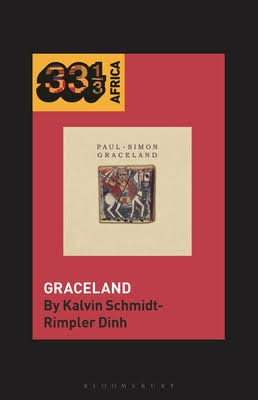
I read this courtesy of NetGalley and the publisher, Bloomsbury. It’s out today.
Graceland is a really important album to me. When I was in my teens, it was one of my favourite albums – it was different from other things I had been listening to, it had such a brilliant beat, I was already a fan of Paul Simon’s, and it just really clicked for me. Reading this consideration of the album – musically, historically, politically – has deepened and complicated (complimentary) my relationship to the album.
I had no real knowledge of the background to the album, aside from the fact that it’s Simon working with groups like Ladysmith Black Mambazo at a time when bands from Africa in general weren’t particularly well known outside of the continent (what am I saying, that’s still the case today). Dinh does a particularly good job of briefly setting the political scene – foreign attitudes towards the Apartheid regime, questions about the cultural embargo – and also refers back to related issues as they arise across the book.
I enjoyed the structure of the book a great deal. The introduction and first chapter set up the history – Simon’s experiences with African music, in particular, and his own musical history. Four of the next five chapters look at specific tracks from the album as a way of exploring how the album was put together in time and space, what can be understood about music and history and politics from both the lyrics and the music, and some of what is known about the personal experiences of the musicians. As someone who has read very little musical history, this approach was fascinating. It’s made slightly more difficult by the fact that Dinh wasn’t allowed to quote slabs of lyrics, due to copyright issues – which I frankly find amazing, that the copyright holders weren’t able to come to some reasonable agreement rather than charging standard rates, but what would I know. For someone like me, who basically knows the album off by heart, it wasn’t as annoying as it will be for folks who only know it in passing! The other chapter in this middle section looks specifically at South African popular music – about which I previously knew nothing, and now have some appreciation for the layers of influence going on there.
The penultimate chapter looks at “the politics of collaboration” and picks up on issues that have been touched on in other chapters too – about the power imbalance of Paul Simon, the white American pop star, working with lesser-known, brown- and black-skinned musicians, sometimes also American but many from various African countries. Dinh comes to no easy conclusions here: some folks have spoken up about being disgruntled for the way they were treated; others have remained steadfast in saying it was a good experience. Presumably both are telling the truth. I appreciated that across the whole book, Dinh is interested in neither maligning nor lionising Simon – or indeed any of the others. They’re just humans.
Finally, the last chapter looks at one of the weirdest aspects of the album – the cover art: St George. It’s always just been ubiquitous to me; I didn’t pay much attention to it as a kid, and as I got older it was just… the album. Now? Well, the image is based on a painting by a medieval East African artist, and George himself is an important figure across a sprawling set of cultures. So he does sort of make sense.
There was always the potential for a book like this to ruin a favourite album. It’s true that I can’t listen to it now without feeling a degree of discomfort, knowing that some musicians felt taken advantage of; that there were political questions around whether it meant Simon was crossing the embargo line; and some of the other political questions around the music. However, Dinh in no way wants to stop people from listening to the album – my sense is that he wants people to appreciate the issues, as well as many of the intriguing lyrics, more deeply. Which is good because I’ve had “Boy in the Bubble” stuck in my head for days.
The Jewel and the Comet

Read courtesy of NetGalley and the publisher. It’s out now.
This is a sequel to The Knife and the Serpent, although it’s not entirely necessary to have read that first; the narrator provides a “previously on” recap so you know what the state of play is: that the narrator is Glenn, except when she’s Gwen; he is dating Vivy, who is from another multiverse; Glenn is himself learning to be an agent, along with Vivy, for a group called the Interventionists; that Vivy is the domme to Gwen/Glenn’s sub; that Vivy’s spaceship, The Wreck of the Edmund Pevensie, is a bit of an ass and sometimes gets around in an android body.
With that knowledge, you can go into the novel fairly easily, because while another character from the first novel does reappear here, their personality is explained well enough and their actions aren’t really related to anything important previously.
With the understanding that the novel’s universe is part of a multiverse, and that there are bits of the multiverse that can’t be accessed by humans or human-like creatures, the novel wonders what happens when there’s an incursion from outside the bit that functions like the universe we understand. And then somehow that piece of incursion attaches itself to a spectacularly amoral character. The answer, obviously, is Bad Things, and potentially Very Bad Things. Vivy, and then Glenn/Gwen, get pulled into the efforts to figure out what is going on, and what to do about it.
So there’s a lot of action, and some discussion about how places/ planets should govern themselves, and when/whether intervention is necessary. There’s also a lot about the people involved, and especially Gwen/Glenn, who is still working through their personal gender presentation preferences as well as working on their relationship with Vivy. (It should be noted that if you’re uncomfortable with the discussion of kink, this is not the book for you.)
Overall, this is a fairly lighthearted romp; there are serious issues and problems to resolve, but the overall tone is one of cheerful mayhem. There’s never any real doubt about whether a solution can be found – although the actual solutions were different enough that it was an enjoyable read.
The Mortons

Back in the mists of time, when Justine Larbalestier’s Liar first came out, we on Galactic Suburbia invented the Spoilerific episode just to talk about it in all its glory.
The Mortons isn’t as tricksy as Liar was. It is, however, a book to talk about, chew on, examine the bones of… and those metaphors get really uncomfortable when applied to this book.
The sprawling Morton family are not a family that ordinary people will have heard of. But if you have money, or power – or your family might one day have those things – you may well hear from them. They can help. They can get things done, smooth paths, remove obstacles. And all you have to do is sign a blank piece of paper.
The Mortons aren’t just killers, although that’s a significant part of their brand, if you like – just take a look at that cover. They also work in other ways to make the correct outcome occur; torture, accounting, social manipulation, and so on. They have been doing this for generations, because their children are taught – pretty much from infancy – how to Be A Morton. And sometimes they adopt children, too.
If you’ve Seanan McGuire’s InCrytpid series: imagine if the Price family were actually like the Covenant. And now make them the actual Covenant.
Jessica Morton is the prodigy of her generation. She is nearing the end of her schooling at Helshire College – along with her Morton cousins, the offspring of the other three legacy crime families, and a large number of children from wealthy ‘ordinary’ families… some of whom will end up being incorporated by the Mortons. She is eager to be blooded, and be acknowledged as an adult Morton. Fer first kill isn’t quite what she expected, though; and then her summer internship isn’t either. And then things escalate, and… well. Life can’t be the same again. Probably.

This is the author photo at the front of the book. When I first saw it, I thought it was Larbalestier and Westerfeld having a fun photo shoot. And it is. And then you get to a certain point in the book and you realise that they’re cosplaying, and it’s still a fun photo shoot but also just a little uncomfortable.
This novel is vicious. The characters aren’t spending their time asking whether killing is evil; the only questions are around motive. If you’re very squeamish, you’ll probably want to avoid it; there are a couple of bits that were a bit gruesome. Having said that: I read this very quickly. It was un-put-down-able. The writing itself is a delight: evocative, smartly paced, leavened with a touch of humour. The characters are really where it’s at. Jessica is an intriguing character to sit in the head of. She is completely committed to her family, and the family legacy. She has experienced trauma, and uses it to feed her desire to be excellent. Even when she is tasked with doing terrible things – things she actually doesn’t want to do – the family comes first. I had no idea where the authors could possibly be going with the story for a long time. When a change does occur, it blindsided me – it’s such a good twist – and of course it didn’t just stay as one thing, either. No, I am not going to put more spoilers here, this is a book where you do not want to know more than the minimum before going in.
The short version is that this is a brilliant book and I hope a lot of people read it. The main characters are in the late teens but I really hope it doesn’t get classified as ‘young adult’ – I might give it to a mature late-teen reader, but no younger than that. I would not recommend it, as noted, for those who are very squeamish (no shade!), or if you’re not prepared to read about children and adolescents happily considering (and undertaking) murder.
Wickhills
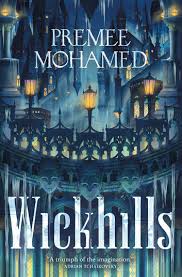
The short version is that if you enjoy a thoroughly realised fantastical city, and you like spies and mystery, you should probably just stop reading this review and go get this.
And if you’ve heard of Mohamed as a predominantly horror writer, don’t worry; while there are certainly unpleasant things happening in this novel, I don’t think I’d classify it as horror. (I say this as a mostly non-horror reader.)
If you’re still here… this review contains some minor thematic spoilers, but nothing major.
There’s something about a novel that loves a city that tends to delight me. Sometimes it’s a real city — China Mieville’s Kraken loves London; sometimes fantastical… to make a similar point, Mieville’s The City and the City. Tolkien’s Minas Tirith has elements of this; Grace Chan’s Melbourne in Every Version of You; Makana Yamamoto’s space station in Hammajang Luck has some of the same vibe. And when that city has weirdness as well… you’ve got me. And I say that as someone who is distinctly not good at directions; if the clue to who the murderer is relies on knowing what’s west and what’s east, from a comment ten pages ago, I am not going to pick up on it.
Wickhills the city is a significant character in its own right in this novel. We’re thrown into it, and its fantastical nature, very quickly: the Market Street Wyrm is on the first page; we have windmills and museums, banks, a busy port, child labour. Across the novel we learn about omnibuses, a variety of options for artificial light, and the fact that humans are only one of the sentient species inhabiting the city. Wickhills is unstable – its geography can change in an instant; Wickhills is a version of democratic; and Wickhills is impossible to know completely.
The main narrative character is Ferec, which is fitting as he has made it his goal in life to try and understand Wickhills as best he can. Unconnected – except insofar as his obsession is useful on-the-job knowledge – for nearly ten year he has worked for Seaborne, a highly secretive counter-terrorism organisation. His jobs have ranged from assassination to seduction to infiltrating and undermining seditious groups. As the novel opens, he and his partner are waiting for a ship to arrive, so that they can locate and procure a particularly valuable asset.
And it all goes downhill from there.
This sort of novel will often feature a ‘getting the band together’ section – which I usually enjoy; I love some repartee and squabbling to figure out team roles. Mohamed, however, largely eschews that. Ferec doesn’t get to pick most of his team; they spend very little time on bonding or coming to know one another. Instead, the entire focus is the mission. Because that asset Ferec lifted off the boat turns out to be wanted by some very serious people (of course) and is far more dangerous than anyone had understood (of course).
Much of the novel is the action of Ferec securing the asset (and losing it and retrieving it etc). But there’s a philosophical aspect to the novel as well, which for me puts the novel in quite a different light. Ferec himself is not an innately moral man, but he does believe in the importance of Seaborne and its place in the city. Over the course of the novel, however, the place and use of Seaborne — effectively a secret police — is brought into question by various characters. Ferec is made to look at how his world works, and where it fits with what he understands of the city. And these questions — of how societies function, the role of secretive power structures, where and how power is exercised — they’re always important to ask; they feel vital at the moment.
Mohamed writes beautifully; her descriptions are evocative, her conversations often tantalisingly full of ellipses but conveying just enough information. The novel provides some answers, but nowhere near all of them — I could imagine at least half a dozen more novels just picking up on some of the points mentioned here. I haven’t even mentioned that Ferec’s boss is a manticore.
Some people are going to find the lack of clarity around some points very frustrating. But no one ever knows their city completely, so what makes you think you would know Wickhills — a much weirder city than the one you live in — any better?
Highly recommended.
Sugar, season 1
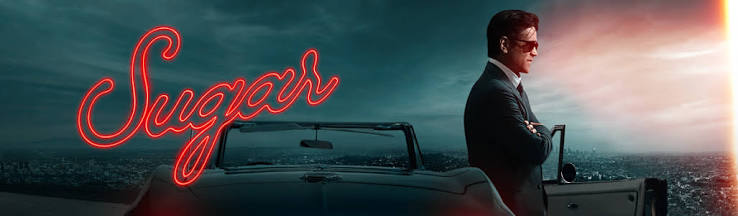
I was spoiled for The Big Reveal before I started watching Sugar. I’m a bit mad about it, I’ll admit – it would have been tantalising; it was still tantalising enough; but it did also make me move watching the show further up the list. So there’s that.
ALL THE SPOILERS FOR SEASON 1, stop reading now.
Seriously.
Continue reading →

