LOTR: Book 3
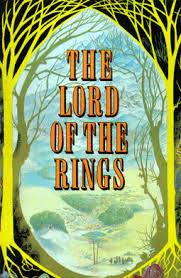
Finally I am back to this! Here’s a link to Book 2 (and thence to Book 1).
And now we get the split: the Fellowship has broken: Frodo and Sam have gone East; Merry and Pippin have been nicked by Orcs; Aragorn, Gimli, and Legolas choose to follow along after. Boromir is dead. And for this entire book we have only those second two sets; for a while, we have no knowledge of Frodo and Sam and the Ring, just like their friends. Which is really quite a remarkable choice, when you think about it: in theory this story is meant to be all about the Ring, isn’t it? But we go 170-odd pages with no knowledge of its whereabouts!
Other thoughts:
- I still really enjoy following Aragorn et al as they track the Orcs and hobbits. There’s something delightful to me in the description of the land, and of the chase.
- My attitude is now very coloured by the film-version of the Rohirrim – and especially their theme – but I do find them a magnificent, romantic, people. Dreadfully violent and arrogant, of course, but nonetheless. Tolkien captures their bravery and their pride, as well as the sense that the time for those attitudes might be coming to an end.
- Everything about Fangorn Forest, and Fangorn himself, delights me. The way Tom Bombadil’s forest is a foreshadowing of this one delights me; that much of the forest is untouched by other people delights me; Fangorn’s stoicism that can also be kindled to action delights me.
- I cannot imagine how it must have been for the first readers to have Gandalf back; I do not recall my own reaction. The metaphors-made-real of purifying by fire and ordeal are resonant and powerful, and I still find it awe-some.
- I’m sure readers who come to this from having seen the films must be very surprised by the swiftness of the Helm’s Deep battle. I do love that section in the film, don’t get me wrong; but I also like that it’s actually just another part of the action, and then the key folks go off to Isengard.
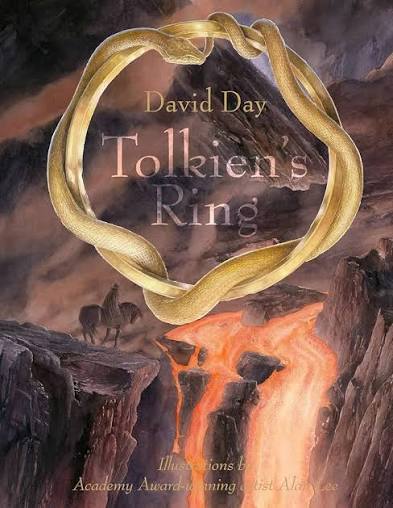
- At some point in high school, I won a book prize (okay, I won a lot of book prizes; but this is the only specific one I remember). The librarian knew me fairly well (unsurprisingly), and she chose the prizes, so I was given David Day’s Tolkien’s Ring – a beautiful hardcover version. It might have been the first time I read anything vaguely academic (it’s not academic) about Anglo-Saxon people, and about the Norse. Most importantly, that book introduced me to the idea that there are two moments in LOTR where Tolkien is chastising Macbeth, and the first one occurs at Helm’s Deep when the Huorns arrive and deal with the Orcs. That is how one should have Birnam Wood come to Dunsinane, Mr Shakespeare.
The last couple of times I’ve watched these films, I’ve often skipped through the Frodo and Sam sections. They’ve become the least interesting parts for me. Partly it’s the lack of action, and also the lack of colour; partly it’s that I find them so earnest and (genuinely) pathetic – I find them too hard to watch. But now there’s 150 or so pages of nothing but Frodo and Sam and Sméagol/ Gollum.
The Fist of Memory

Read c/ NetGalley and the publisher. It’s out in October.
There’s a Trevor Noah skit about how aliens never land anywhere near Africa, in Hollywood movies. Literature, of course, puts that to the lie, especially with Afro- and Africanfuturism over the last couple decades. Nonetheless, it sprang to mind while reading this excellent novel, because it’s set entirely in Africa – in Nigeria and South Africa, mostly – except for the bits that are set off-planet, that is.
Talabi uses multiple narrators to tell this story of memory, power, family and history. The first is The Irunmole – a name I had to look up, because my knowledge of mythology originating in Africa is woeful; I only did so when I was about halfway through and I’m glad I did that, so I’m not going to spoil it; feel free to do so for yourself. But here, The Irunmole starts off out at the Kuiper Belt, and they are focused on Earth. So yes, that’s a bit intimidating, but also there’s no sense of threat. We come back to the Irunmole just occasionally. Next is Tope: a killer for hire (that’s not a spoiler, she tells you she’s good at killing in the first line), she lives in Nigeria. Her story is told in the first person, so we’re right inside her head for her first chapter as she focuses on her target – and then deals with the aftermath. She has a painful backstory – and a painful present, too, as we slowly discover. Then there’s Itumeleng, an astrophysicist living in South Africa and a disappointment to his family; his story is told in the third person. I think Itu is my favourite character; his struggles to understand things outside of his worldview are highly believable. The story largely revolves around these two. Additionally, there’s Ahanna – also a killer, but these days hellbent on revenge, and pretty unpleasant as a result. His story is one that I was less interested in, ultimately, as the story progressed. And getting just a few chapters is Ufuoma, aide to the president of Nigeria – an intriguing character, with unexpected motivations; I would have enjoyed more from her perspective.
The overarching story is that humans register the approach of the Irunmole, and the Powers That Be respond as they think fit. But the truth is that this takes up far less of the novel than I had expected – while it’s always in Itu’s mind, it barely registers for the others until quite late in the story, because it’s kept quiet. So really this is a story of a near-future Nigeria (mostly; Itu goes to Nigeria relatively early on); and it’s fantastic. This is a world where most people have AI implants, which are trained on the individual – ask it for the time, or for basic info about something, or have it question whether you’re making sensible decisions. It’s a world of self-driving cars (mostly), and various other impressive technological features… but also one where corruption, and poverty, and other human vicissitudes are very present – why else would someone like Tope still get work? But that’s not to ignore that humanity’s other aspects – the love, the collegiality, the desire to do and be better – are also, of course also present.
I don’t know Nigeria, so I can’t speak to how well Talabi sites the novel geographically – he’s Nigerian, so one assumes he knows what he’s writing. Same goes for the way he portrays Nigerian society, and the use of language; several speakers use pidgin, and there’s a fair amount of slang too, all of which makes sense in context and adds to the sense of place. Additionally it’s worth noting the use of “juju” – just a few mentions, but at key moments – this is a word that I’ve only come into contact with as meaning ‘magic’, basically. Is the reference here meant to be ‘magic’ in a Western fantasy understanding? Is it science that’s not explained? It’s unclear – and I think that’s actually the point. Differentiating is unnecessary, and even unhelpful.
I was a little… surprised, maybe, by the ending. It wasn’t what I expected; I’m maybe a little disappointed, but also intrigued. Basically I have to keep thinking about it, which in itself isn’t a terrible result.
Overall though his is a really great novel, and one I enjoyed a lot.
I Eat the Stars, by Sarah Wilson

This is another book that I am so completely torn about that I can barely figure out how to talk about it.
On the one hand, Wilson has gathered together some really interesting science and thinking about the world as it is right now – ie coming apart at the seams, and no one much wants to do anything about it.
On the other hand, there is so much… look, calling it “woo woo” is dismissive, I get that. But there is so much not supported by evidence thinking, so many suggestions that I just blinked at in bewilderment, and a few bits that are just downright WHAT?? that it makes me question the bits that I did appreciate.
The book is typeset with wide margins. Wilson acknowledges this early on and says it’s for writing notes. Which I did. But probably not the sort of notes she was hoping for.
Let me start with some of the aspects that I did appreciate.
It’s a very personal book, and I do like that; Wilson isn’t trying to present this as impersonal. It’s heartfelt and passionate, there are lots of personal anecdotes, references to her newsletter readers, and acknowledgement of where she has personally struggled with ideas and issues. I like this! … even though sometimes it felt a bit name-drop-y, and occasionally self-indulgent. I suspect that’s a YMMV issue, and I don’t know where the line would have been for me, so that’s an issue to let slide (for me).
I happen to agree with a lot of her points: the climate crisis is real, and there’s no winding it back; much of society is pulling a stereotypical ostrich manoeuvre; we really do need some new suggestions for how to confront the coming disasters. Living in constant existential uncertainty is appalling for individual and societal mental health. And I do like some of the straightforward suggestions she has. Make art! Enjoy the world! etc.
So then, the issues.
I have an issue on the first page. Wilson recounts the story of Pandora, with hope left in the container when Pandora closes the lid… which Wilson presents as hope being “forever lodged in human consciousness as a thing that exists but is always out of reach.” Which is the complete antithesis of how I have always understood the story. Hope is what is left for humans, to help us keep going. So… that wasn’t a great a start.
She then talks about giving up on hope – the hope of being able to fix the climate crisis. And then immediately talks about having hope for other things. Which gave me whiplash, basically.
Then there’s an attempt at historicising the current crises, and here I saw red. Wilson goes into hopelessly simplistic ways of seeing the collapse of ancient civilisations, saying it happened “because [sic] they became too complex.” I can’t even begin to discuss how her examples – the way she airily discusses all of human history as fitting into her paradigms – left me blinking in shock. And she ties this to John Glubb’s essay, “The Fate of Empires,” which I have not read but which she summarises admiringly. He apparently outlines six stages of civilisational rise and fall; the bit that really got me is that in the mid-stages, “the dominating discourse switches from morals and values to knowledge and discourse. A society will start to become secular and fixated on rights over collective needs.” This leads to the “age of intellect” and these things are bad. Apparently. And it just sounds so staggeringly conservative and frowny I can’t even.
There’s a lot of “not everyone can deal with looking at crises face on and if you’re with me we’re a bit special.” I am suspicious of such ways of thinking.
Many of the suggestions presented here for how you might personally work through or deal with what’s going on are only applicable to those who are likely to read the book – which I understand, I really do – but without giving pointers for non-Western, and non-affluent folks, who are (as the book does acknowledge) already living with the realities to a far greater extent THAN those Western affluent types… well.
If you’re going to quote “Me and Bobby McGee,” maybe attribute it to Kris Kristofferson, not (or not only) Janis Joplin.
So… yeh. I wouldn’t stop someone from reading the book – unless they were already in a not-great place, mental health-wise, and I wasn’t sure they’d be able to get through the disaster aspects to some of the more hopeful bits. I would also not give this to someone who wasn’t pretty science savvy, as I could not in good conscience think that was a good way to read it.
Do I regret reading the book? I don’t think so? But I’m not entirely sure.
The Missing Thread
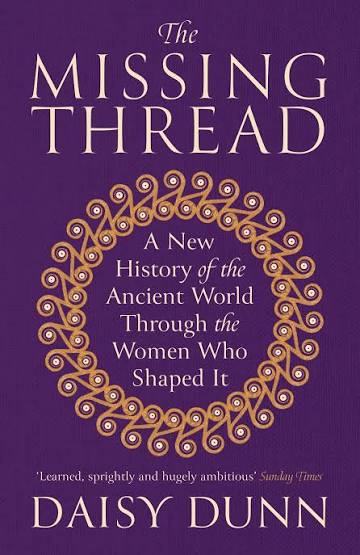
A New History of the Ancient World Through the Women Who Shaped It.
I am so conflicted about this book.
The theory: absolutely up my alley. Writing women back into the (hi)story they were always a part of? Of course that’s a good idea!
And yet… I can’t help but feel this book isn’t quite the right way to do it.
Some of the good things first:
It is great to have women like Atossa and others who get one line as a wife or a mother brought to the forefront. Discussing Fulvia and Octavia a lot when discussing Marc Antony and Octavian? Brilliant! Not to mention Olympias when you’re discussing Phillip and Alexander of Macedon. There’s a nice amount about women like Sappho, too, so it’s not just all fighting – and the book opens with what we might be able to understand about Minoan culture, which probably had important roles for women, so that’s also excellent.
And yet. I have reservations.
One issue is that it’s still trying to tell exactly the same story of battles and political intrigue, just with women in it. Sometimes the women feel shoehorned in – this is a story the author wants to tell, and has to fit in the women to justify the story. So that’s frustrating. Partly this is a result of my own expectations: I was hoping for some new stories, making “history” not just about battles.
A large part of my problem is that the author doesn’t make much attempt to differentiate hearsay, calumny, and verifiable stories. There’s occasionally a gesture at that – “oh, these words were used to make the woman / man associated with the woman look bad” – but it’s usually after the story has been presented as legit. And sometimes the stories are just presented as fact: Cleopatra in the rug to sneak into Caesar’s room, for example. So in some instances, the worst stories about women’s roles are blithely repeated.
And then there’s the fact that this is presented as a history “of the ancient world.” Which, to me, suggests “of the world.” The occasional reference to China – with no context at all – does not make a global history. This is a history “of the Classical world” with very occasional reference to things in “the Near East” and about three sentences about China. Which would be fine if the book had made it obvious that’s what it was doing.
So. Yes. I am disappointed. As someone with knowledge of most of the general stuff discussed in the book, I could contextualise what was being presented and it did indeed give me info about women’s actions I hadn’t come across before. But I would not give this to someone with no prior knowledge.
Moon Sun Stars

This is another book of Filipino SFF sent to me by the lovely Charles. I’ve come across Alfar’s work before – in Year’s Best collections, I think – but didn’t know he had a collection like this; it came out last year.
I was really intrigued to read in Alfar’s collection about the way the stories were arranged, and how that reflects the title. The moon corresponds to ideas of love and longing; the sun to resolve and desire; and strange stars suggest “the familiar rendered peculiar.”
I’m not the sort of person who can read a collection and point to all the ways subtle themes or stylistic choices play out; it’s not how I read, or think. For me one thing I noted across this collection is just how varied the stories are, in tone and narrator and place and pace. It’s something that made it highly enjoyable – I didn’t get bored, I didn’t go into the next story expecting and getting the same thing each time. There are a few things that keep cropping up – stories set in the Philippines, or riffing off Filipino ideas or history, for instance (and I’m sure there’s more of that than I managed to see). But some stories are pretty science fictional; others are on the horror side – although none got to the point where I had to stop reading, so that was a positive from my perspective; and others are more traditionally fantastical. First person and third person narration; gender diversity in narrator and focus; tonal jumps from comedic to vicious to nostalgic.
Some of my favourites:
- “Ohkti”: seems straightforward enough – living on the moon is rubbish, being brought up by your big sister is also rubbish. And then – oh the twists. Alfar conveys the emotions sympathetically but also almost clinically – which doesn’t make sense but I can’t explain it any better.
- “East of the Sun”: this is one of the vicious ones. Alfar is doing playful things with narration and reader expectations, and making that explicit, and I loved it.
- “A Field Guide to the Roads of Manila”: I’m a sucker for artificial things gaining awareness and interacting with humans.
- All of the stories in the Stars section. These really got to me; really packed an emotional punch.
How easy is it to get this outside of the Philippines? Don’t know, but I hope it can be found.
Beyond the Graves Waits Mist and Sea
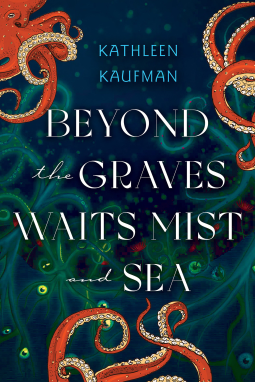
Read courtesy of NetGalley. It’s out in September.
The short version is I liked the ideas behind this quite a lot, but I found the execution lacking.
The positives:
Sometimes I like a chosen one story. There’s something a bit cosy, a bit comforting, about reading a book where the main character is really special. I know it’s not for everyone, and that’s ok! So, here, Harper is a marine biologist and she’s looking for some evidence that will help show her PhD idea is real and viable rather than just a crackpot theory. So she ends up on the remote and mysterious Bell Island to do the research. She’s been a loner all of her life; her parents died when she was 13 and she’s been emotionally closed since then. Her mother was a Bell Island native, but Harper’s never been there. She’s also had weird dreams for her whole life. So yes, it’s pretty obvious there is Something Special about Harper.
Some of Kaufman’s description is pretty great. It’s a windlashed island – there’s a lot of scope for it.
The less positive:
I have some big complaints, and some smaller one.
First, it’s too long. Harper’s dreams – especially early on – and her internal agonies get repetitive.
Second, some bits are simply unbelievable. I’m not talking the existence of huldafolk or an octopus who communicates with humans; I mean someone with both a 17-century diary (which she can read with ease) AND a historical account in front of her, and she CHOOSES to go back and forth between them rather than reading one in entirety. With no explanation like ‘she’s looking for context’.
Third… I just got bored. It was very obvious very early on what some of the twists would be – which isn’t necessarily a problem, but when the book treats the reveal as a surprise, it is a problem. Harper is meant to be looking for evidence of a mysterious octopus, but there is a remarkable LACK of octopus. Also a lack of science, but that’s because of the epic storms the island faces, and that’s fine in the context of the geography.
And a small issue in the context of the story, but rather large theologically: pretty sure no one prays to “Christ the Father.” Because, uh, that’s kinda the point of Christ – that’s he’s not the Father…
Overall, I was disappointed.
As You Wake, Break the Shell
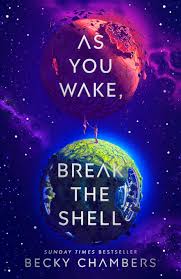
I read this courtesy of the publisher and NetGalley. It’s out in October (sorry).
A more complete review of this will appear in Locus eventually, but: it’s brilliant.
I read Long Way to a Small, Angry Planet when it first came out, I think, and I bounced off it hard. Why? I do not remember. Not a jot. Probably I was in the wrong frame of mind – at least, I can only assume so; after reading this I wonder if actually I was too much in a ‘big space adventures’ mode.
Chambers does some clever narrative things across this novel. Firstly, the chapter sequencing: it starts with Chapter 1… but then all of a sudden you’re in Chapter 764, and no you didn’t skip a lot of pages. So there’s two parallel timeframes. Which means one of the big character questions is resolved very quickly, which means that you can get on with looking at the other questions: how do the characters get from here to there? What changed?
It would be easy to read this mostly as an almost domestic novel, focused on two people and their experiences; there are even recipes! But the reality is that Chambers is doing some really cool political stuff here. The reality of the initial planet’s colonisation, the way the two societies structure themselves, how difference is viewed… yeh, there’s a lot going on.
It’s really good.
Object Lessons: Laboratory
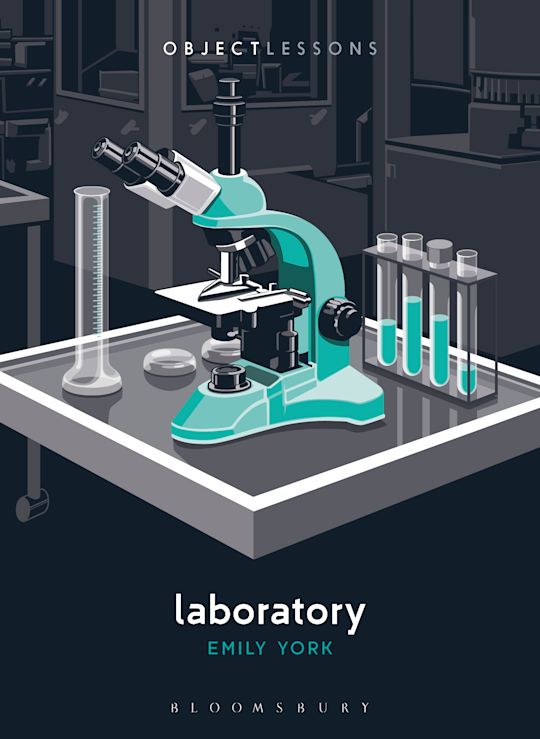
I read this courtesy of NetGalley and the publisher, Bloomsbury Academic. It’s out in September.
I have said this before and I say it again: I love the Object Lesson series. Sometimes the Object in question seems relatively simple – a skateboard! – but sometimes it’s a bit more abstract: like The Laboratory. (One of those words where you can hear an Aussie / Brit vs US accent difference.)
As is so often the case, York uses her own experience – of sort of working in a lab, and sort of not; being science-adjacent – to illuminate all sorts of interesting aspects of the lab, and along the way varying reactions to science as a discipline. She looks at labs in science fiction – in film, in particular, since that informs so much of what non-scientists think of as “a lab” (ask me how I feel about the lab in Fringe).
I enjoyed the expansive view of “the lab” that York brought in this book, and how passionate she clearly is about communicating the realities of scientific research to a broad audience – that it’s piecemeal, that it involves many, many contributors, that it’s usually safe! She has a good section on the development of scientific rigour, and laws around things like animal experimentation – and, of course, given it’s Now, touches on some of the issues around Covid and its genesis.
This is a really great intro to the idea of “the lab” for the non-scientist, but I suspect it might also be a nice thought-provoker for those who work in science to think about how the rest of the world views their work, and their world.
Bodies of Magic
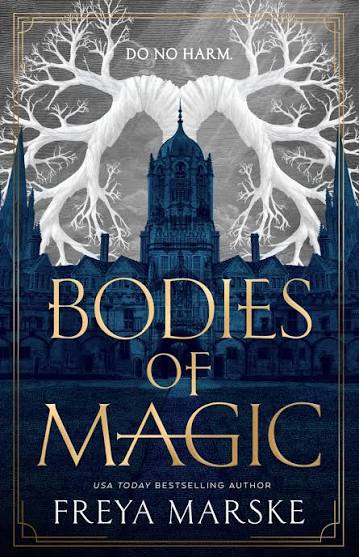
I read this in ARC. It’s out in September. (And it’s worth waiting for.)
A proper review of this is forthcoming in Locus, but the TL;DR is I loved it. I’ve loved everything of Marske’s I’ve read so far, so that’s not a huge surprise – but this is quite different from her other books in some ways. Some similarities, though, too.
Set in secondary world, where some people are born with magical ability and that’s no real big deal. You get tested, you see whether you might have a gift. If you live in Sieuxerr, though, you might have the ability to be a healer – in which case you have no choice but to be a healer. And after five years of study you undertake five days of exams with four other students – not of your choosing – before you graduate. And then you have to go off and be a healer, either in whatever place paid for your training (because of course it costs), or at home if your family is rich enough to have paid upfront.
Sounds familiar, really, doesn’t it.
The book focuses on five students in those final days. All of the characters are beautifully developed. They all have their struggles, and their achievements.
Did I mention there’s a death? There’s a death. Finish your medical exams AND figure out whether the death is a murder or not! No drama! So there’s investigatory shenanigans; there’s falling in love, arguing with family, making your place in the world, defying expectations, etc etc. It’s a lot of fun. I did get about 4/5 through and have to go stare at a wall, For Reasons.
This is such a great book.
The Book of Bots
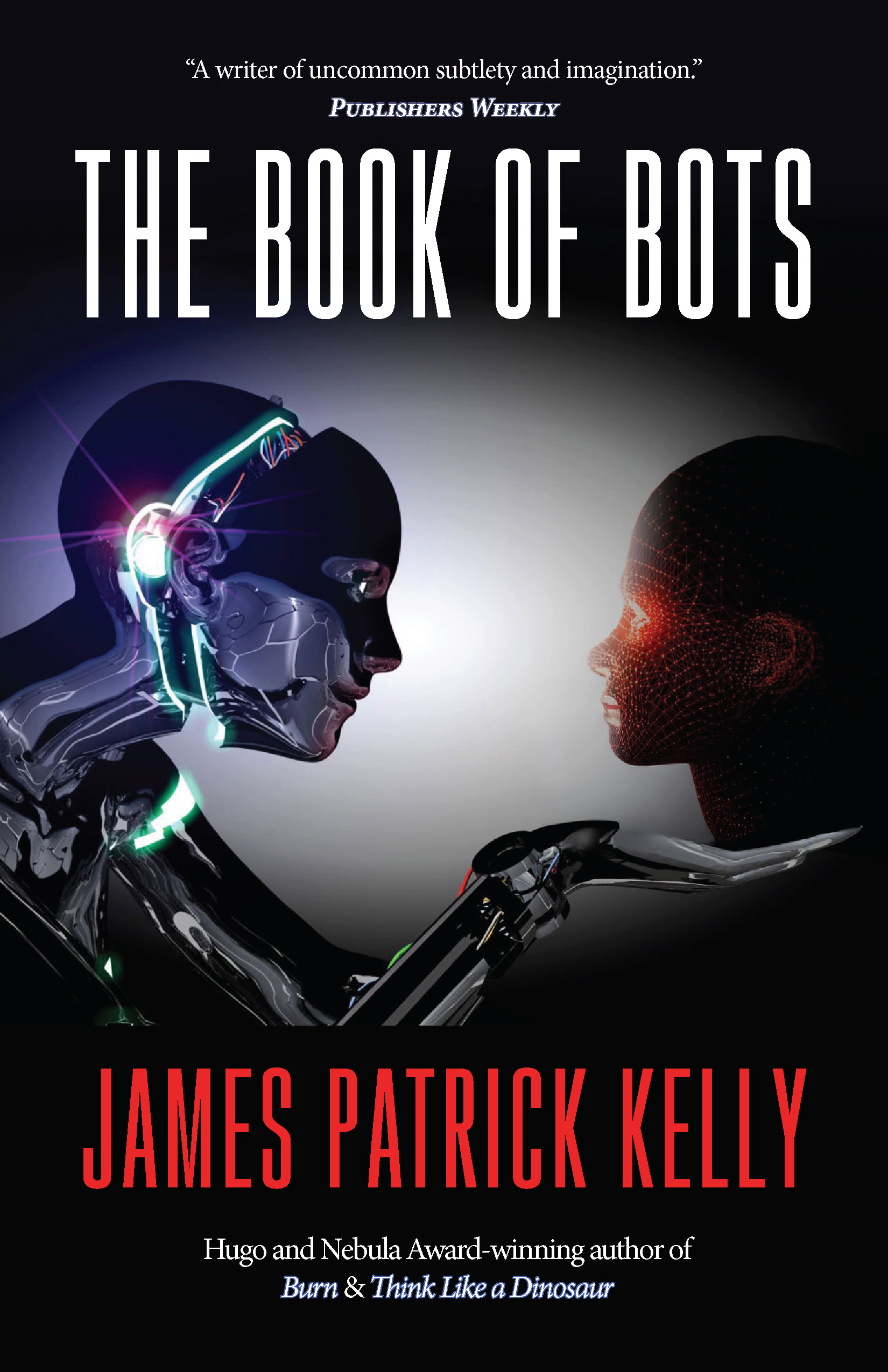
I received an ARC from the author. It’s out in August – but preorders are love!
I often love a robot story; I also enjoy a well-thought-out AI story. And thus, James Patrick Kelly’s The Book of Bots: completely in my wheelhouse.
Covering around 25 years of his career – which is impressive in itself – the range of stories in this collection is fascinating. Some of the robots are actively meant to be caring for humans, in very different ways; stories like “Itsy Bitsy Spider” could come across as cutesy but it is deeply, deeply creepy, from my perspective anyway. Indeed, several of the stories end up crossing into the Creepy realm, because of the way they imagine bots interacting with humans – and, more to the point, humans interacting with bots. “Bernando’s House” is, if anything even more creepy than “Itsy Bitsy Spider;” a house has a personality, and a human figure to represent it, aaaaaand then things go weird. “Yukui!” confronts the idea of humans owning bots, and questions of sentience/slavery. “Your Boyfriend Experience” likewise asks questions about humans creating bots to their own specifications, and how that plays out with and around other humans. And “Je ne regrette rien” is kind of the culmination of the stories about human-like bots, and a quest to be more than they have been created to be.
On slightly different notes, “Undone” brings in a sentient spaceship – the concept itself not unique, but the playing-out and ramifications are what make it worth reading. “What it means to be a car” consists of dialogue between a car and a passenger – the only story that has a particularly different narrative structure, and one I enjoyed for that reason.
The collection also has two essays, one about the modern use of bots and one doing a short history of robots/ AI in literature. Both are entirely appropriate in the context of the collection, and add to the overall story of “what do we mean when we talk about bots.”
This is a great collection. Highly recommended.


