Galactic Suburbia 161
In which Alex & Tansy consume bucketloads of culture and explain what all those fan fund letters really mean. This is an educational podcast! Get us from iTunes or at Galactic Suburbia.
GUFF race (until 1 April)
DUFF race (until 10 March)
CULTURE CONSUMED
Tansy: Pantomime by Laura Lam,
Alex: lots of the Vorkosigan saga, Lois McMaster Bujold
Tansy: Harry Potter & the Cursed Child,
Alex: Obelisk Gate, NK Jemisin;
Tansy: Passing Strange by Ellen Klages,
Alex: Bright Air Black, David Vann;
Tansy: Dr Strange
Alex: My Real Children, Jo Walton
Tansy: Lemony Snicket’s A Series of Unfortunate Events
Please send feedback to us at galacticsuburbia@gmail.com, follow us on Twitter at @galacticsuburbs, check out Galactic Suburbia Podcast on Facebook, support us at Patreon and don’t forget to leave a review on iTunes if you love us!
Bright Air Black
This book was sent to me by the Australian publisher, Text Publishing, at no cost. It’s out on 20 March 2017; RRP $29.99 (C-format paperback).

This is a tale about Medea, which makes me happy she is definitely one of the more intriguing of ancient mythical women. Kerry Greenwood wrote a take on her ages ago, which I remember enjoying, and she featured in Robert Holdstock’s remarkable Merlin-and-Jason series (hmm… did I ever finish that? Must check). For the modern writer there must be a challenge in trying to understand what could compel this woman to leave her homeland, kill her brother, and eventually kill her children, and a tension is deciding whether to stay true to the “original” (HA) story, or to put a different spin on it – keep the children alive, for instance. Do you play Jason as a helpless fool or an arrogant one, Medea as loving and betrayed or as cunning herself, and perhaps still betrayed – or the witch that she’s sometimes regarded as? Lots of interesting possibilities.
… and I guess those are some spoilers if you don’t know the Medea story.
Vann chooses to set his version properly far back in time, the 1300s BC; there is reference to Hittites, and Ilium, and Egypt. There are no Greeks; Jason and his Argonauts are the Mynae. Intriguingly, his descriptions of the voyage of the Argo back to Iolcus – which is more than a third of the book – is based on Vann’s own experience of traveling on a recreated ship of Hatshepsut’s time, with archaeologist Cheryl Ward, for a French documentary Building Pharaoh’s Ship.
First, let me mention the language. The copy describes it as ‘poetic prose’, which is apt. Bluntly it means there are lots of incomplete sentences and a few extended ones, and lots of adjectives and time spent on description. The gorgeous reality, of course, is not captured in that summation. For example:
Her father a golden face in darkness. Appearing in torchlight over the water and vanishing again. Face of the sun, descendant of the sun. Betrayal and rage. (p1)
and
The sail not a god itself but only the tracing of a god, a more responsive form of temple. Like fire to reveal Hekate. How can we know when we’re worshipping a god and when we’re worshipping only the sign of a god? Wind itself a sign of something else, and even fire, and white hides behind them? (115).
I’m not accustomed to reading quite such flowery language (which I mean positively), so it did take me longer than expected to read the book. It is wonderfully evocative and enjoyable, don’t get me wrong. And the other thing that I appreciated you can see in that last quote – Hekate. Korinth. Kreon. It’s also Iolcus and Colchis so I’m not sure if that’s annoying inconsistency; some Green scholar will have to let me know.
There are lots of threads that Vann is tracing through Bright Air Black (words from a translation of Euripides – the gods “turn the bright air black” in frustrating mortals). One is the role of gods, or lack thereof. Medea frequently calls on Hekate, who sometimes appears to answer in the form of fortuitous weather; but at other times Medea despairs of her goddess and appears to be at best agnostic. There is no magic here (probably); there is luck and poison and human trickery and the use of power. There’s some commentary on the role of those things in developing human society and how men (as a rule) keep power.
This being Medea there is also commentary on the nature of feminine power. Medea has always been a weird girl, going off into the forest and not being afraid of the night; she plays on that and develops her reputation for fearlessness through her familiarity with the unfamiliar and inhuman – forests, the sea, the night. And then she leaves her family for a foreigner. Medea herself ruminates on the power of women versus the power of men; this includes thinking about her own family, and the complicated genealogy whereby it’s unclear exactly who her mother and grandmother are – are they the same person? No one much cares; it’s the men that matter.
This is a pretty straight retelling of Medea’s story – if you know Medea, you know what’s going to happen. Vann has added motive and explanation, an investigation and justification of some events and a whole lot of description. It’s a great addition to the oeuvre of Greek mythological retellings.
Galactic Suburbia 160
In which the world is on fire but we’re still reading… get us from itunes or over at Galactic Suburbia.
WHAT’S NEW ON THE INTERNET
Teen Vogue as tool of the revolution – why we shouldn’t be surprised.
Problem Daughters: check out this fantastic crowdfunding project for intersectional feminist stories.
GUFF race (until 1 April)
DUFF race (until 10 March)
Help support these fan funds! Alisa & Alex are hoping to go to Helsinki this year, while friend of the podcast Paul Weimer is hoping to come to Melbourne.
CULTURE CONSUMED
Alisa: Nora Roberts (Bride Quartet); Fangirl Happy Hour; Please Like Me; Travelers; Frequency; Designated Survivor; Younger
Alex: Parable of the Sower, Parable of the Talents, Fledgling, and Dawn, Octavia Butler; River of Teeth, Sarah Gailey; Istanbul: A Tale of Three Cities, Bettany Hughes
Tansy: Acts of Kitchen; Wicked (local performance); Heroine Complex, Sarah Kuhn; Ladycastle, Deliah S Dawson (writing) & Ashley A Woods (art); Unstoppable Wasp; Hawkeye; Moana (film & soundtrack), Buffy rewatch check in.
Tansy’s new literary gift shop business: Alice & Austen
Also, Tansy has a story in the latest issue of Uncanny Magazine: Some Cupids Kill With Arrows.
Please send feedback to us at galacticsuburbia@gmail.com, follow us on Twitter at @galacticsuburbs, check out Galactic Suburbia Podcast on Facebook, support us at Patreon and don’t forget to leave a review on iTunes if you love us!
Fledgling
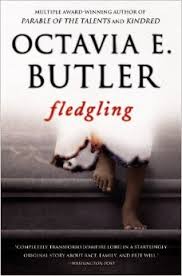 I had read that this was Butler’s vampire-cum-courtroom drama, and had also been given a hint that the opening section might make the reader be all WHOA WTH NOOOO. And it would have, so I’m glad I had a bit of context, which I’ll give below as a wee spoiler that might help some readers. This is, though, a Butler book, and in no way is this JUST a vampire or courtroom drama – not that either of those would have been bad. But the book also deals with racism, justice, and family in intriguing and sometimes uncomfortable ways. Also, unsurprisingly given Butler’s interest in anthropology, with vampire myth and ‘logical’ ways for vampires to actually exist.
So here’s the spoiler:
at the start, the focus character can’t remember anything and is eventually found walking along a road by a young man, in his early 20s. There’s immediately a sexual connection… and then we find out that our character is young. Like, looks ten or eleven.
End spoiler
And it’s squicky even with the anticipation, and I can’t help but wonder what was in Butler’s head: did she want to use this to challenge assumptions about appearance, or about black sexuality (because our character, Renee/Shori, is black), or… ? I don’t know. And it’s intriguing because it’s Butler and I trust her, BUT.
Anyway. There’s are similarities here between the Xenogenesis and Patternist novels. They deal with miscegenation and the ramifications of that – for the individual who is ‘mixed’ and for the society around them, seeing the benefits and drawbacks. They all deal with the Outsider in our midst, and that the notion of the Outsider takes on a multitude of forms within each of those books – sex, race, species, ability. And they also all present different ways of compromising, different motivations for compromise, and different consequences of it too. Butler isn’t interested in making life easy for her characters or for her readers. She wants us to THINK. She probably wants us to be horrified, too, and forced to think through that horror.
This won’t be my favourite Butler; I don’t think it’s quite as well written as some of her other work. Goodness the ideas and challenges are magnificent, though, and with so little published work from her I’m pretty happy to read whatever I can get my hands on.
Blue Moon Rising
 I love this book a lot. I love the characters and the way Green plays with conventions – a prince riding a unicorn, a princess who is willing to fight, the brutal realities of being a second son in a royal house, some insightful passing comments about the danger of being too focussed on being a good warrior. I like the way betrayal and treason are explored, and how making compromises isn’t an inherently bad thing, and that peasants get a moment in the sun, and that not everything can get fixed but life goes on and can be fine. This was a comfort re-read and it absolutely worked and I am reassured that sometimes the suck fairy doesn’t visit.
Also I love the goblins.
But now I wonder about revisiting the entire Deathstalker series and that might get out of hand.
Galactic Suburbia 159

Alex and Tansy pull apart the recent school-set Doctor Who spin off TV show Class, with its YA tropes, teen diversity, squicky alien creatures and fascinating parent-kid dynamics. But mostly we rave about the awesomeness of Quill. Because she is the best.
You can get us from iTunes or at Galactic Suburbia.
Please send feedback to us at galacticsuburbia@gmail.com, follow us on Twitter at @galacticsuburbs, check out Galactic Suburbia Podcast on Facebook, support us at Patreon and don’t forget to leave a review on iTunes if you love us!
Paper
 I have loved everything I’ve read by Mark Kurlansky. So when I was in a small bookshop in a small town and saw a new book from him, I was pretty stoked. I half considered buying it as an e-version, partly because OH THE IRONY, but then my darling fawned her how pretty it is (and it really is very pretty, with rough-edged paper and all), so I bought the bard-back. Supporting small book shops for the win.
Tragically, I am disappointed.
I was trying to pin down exactly why the book didn’t work, and halfway through I realised: each paragraph felt like an extended dot point. Like he had all of these great ideas and fascinating points, mostly connected to paper, but… couldn’t quite nail the flow and structure. There are weird disjointed bits that entirely lack in connection, there are some fascinating bits about language and so on that aren’t clearly tied to paper, and… well. Disappointed.
I appreciated his discussion of the technological fallacy: that tech happens and then society follows. Rather, he argues, society creates a demand and THEN technology follows, playing catch up: why else is so much money spent on market research? So I liked that bit. However, as someone has pointed out to me, Kurlansky is entirely too linear in his perspective on the relationship between change and society. Civilisation just isn’t like that.
More serious than the lack of sequencing, though, were a few points where he was just… kinda wrong. For instance: he suggests that some people credit Ada Lovelace with inventing computers, and then reveals that actually she was inspired by Charles Babbage. And, uh, no. She invented the first computer language, and it’s no secret she worked with Babbage! … so this makes me a little concerned when he’s discussing those bits of history that I don’t actually have knowledge of. Because… can I trust him?
I gave it a four over on Goodreads because the ideas and the history really are fascinating, but the book itself as a piece of text ought to get a three.
River of Teeth
 This novella was sent to me by the publisher at no expense. It will be on sale at Tor.com on May 23.
HIPPOS. Hippos, folks. There need to be more hippos in my literature.
The foreword states that the American Congress debated importing hippos at the start of the 20th century, to resolve a meat shortage. I have no idea whether this is true. I presume it is; the foreword says it is. I could google it… but I choose not to, and live in the world where I believe that America actually considered ranching hippos. Because that’s way more fun than not.
And what’s even more fun than living in that world is this, Sarah Gailey’s debut. (Seriously? debut? kick. ass.) It’s an alternative history (which means it’s definitely not true, despite some recent definitions of ‘alternative’), pushing the date of hippo-introduction back half a century and imagining the consequences of actually hippo-ranching. Like cowboys riding hippos, and hippos going feral, and breeding hippos for stealth to help deal with the ones being raised for meat.
I’m just going to stop here for a moment and consider eating hippo-meat. Because… I dunno, the Anglo-Celt of my heritage just wants to gag.
Anyway, this is a crazy romp filled with wonderful characters and, as the name suggests, a whole lot of hippo-teeth-gnashing. Winslow Remington Houndstooth, putative lead and leader, is filled with desires for revenge and does his own share of teeth-gnashing. He rides Ruby: black, sleek, fast and deadly. Wonderful as he is, I adore Regina Archambault more: “Nobody ever suspects the fat lady”… who pickpockets and breaks hearts and helps save the day. She rides Rosa: three thousand pounds of albino hippo. Hero is also wonderful, and all about blowing stuff up (always the way to my heart), and the rest of the team fills out nicely. There’s a good villain (or two, or three…), so that’s the character side all sorted. There’s explosions, and card games, and feral hippos that are happy to eat people; romance, confusion, and a lot of crankiness and snark. OH THE SNARK.
You’ll want to get your mitts on this one, folks. It’s just way too much fun to miss out on.
Movies and TV of 2016
New TV:
Molly * Paper Giants: The Birth of Cleo * X-Files (reboot) * Sonic Highways * Once Upon A Time (season 1) * The Night Manager * Carmilla (season 2) * The Expanse (season 1) * Agents of SHIELD (season 3) * Orphan Black (season 4) * Trepalium * Revolution School * Games of Thrones (season 4) * Game of Thrones (season 5) * Games of Thrones (season 6) * The Americans (season 1) * The Americans (season 2) * The Americans (season 3) * The Durrells * Once Upon A Time (season 2) * Once Upon a Time (season 3) * Person of Interest (season 1) * Carmilla (season 3) *
TV, rewatched:
Fringe (season 2) * Fringe (season 3) * Fringe (season 4) * Pride and Prejudice (BBC) * Jericho (season 1 and 2)
New movies:
Dallas Buyers Club * San Andreas * State of Affairs * Captain America: Civil War * Deadpool * The Hollow Crown (Richard II, Henry IV parts 1 and 2, Henry V) * Ghostbusters 2016 * Frozen (um, without most of the singing) * Batman v Superman * Sherpa * Pride and Prejudice and Zombies * The Art of Flight * X-Men: Apocalypse * John Carter * The Huntsman: Winter’s War * Miss Peregrine’s Home for Peculiar Children * The Congress * Tinker, Tailor, Soldier, Spy * Only Lovers Left Alive * Lover Come Back * Underworld: Awakening * Jason Bourne * Suicide Squad * Star Trek Beyond * Independence Day: Resurgence * Rogue One *
Movies, rewatched:
Mad Max: Fury Road * Sahara * Aliens * Indiana Jones and the Last Crusade * Chronicles of Riddick * The Fifth Element * The Avengers * Ghostbusters (original) * The Edge of Tomorrow * Thor: The Dark World * Captain America: The Winter Soldier * Independence Day * Alien * Top Gun * Beverley Hills Cop * Beverley Hills Cop II * It Might Get Loud * Bridge of Spies * Crimson Tide * Stargate (the movie) * The Edge of Tomorrow * Underworld * Underworld Evolution * Blade Runner * Mr and Mrs Smith * Enemy of the State * Pacific Rim * RED
Galactic Suburbia 158
Happy New Year edition! One last episode before we squeak into 2017. In which we sum up a year of culture consumed and other interests, and mourn the recently departed. You can find us on iTunes or at Galactic Suburbia.
WHAT’S NEW ON THE INTERNET?
Carrie Fisher
George Michael
Richard Adams
Vera Rubin
(note: we recorded this ep before the death of Debbie Reynolds was reported)
CULTURE CONSUMED IN 2016:
Tansy: Rogue One
Alisa: Operation Apocalypse Plan (books mentioned: Will McIntosh’s Soft Apocalypse as a guide to the probable future, Defying Doomsday)
Alex: The Arrival
Tansy: Hurricane Heels by Isabel Yap (& Buffy rewatch with daughter, because this is what 11 yr olds are for)
Alisa: PhD & Jamberry
Alex: The Expanse
Tansy: Check Please fandom & Yuri on Ice
Alisa: Paleo Cinema Podcast
Alex: Octavia Butler
Link to call for Letters to Butler
Tansy — 2016 culture round ups in Smugglivus & Ambling Down the Aqueduct
Please send feedback to us at galacticsuburbia@gmail.com, follow us on Twitter at @galacticsuburbs, check out Galactic Suburbia Podcast on Facebook, support us at Patreon and don’t forget to leave a review on iTunes if you love us!


