The Just City
I hadn’t even heard of this book until Katharine mischievously sent me a copy because she wanted to know how I would feel about it. And my initial feels are: omg THERE BETTER BE A SEQUEL.
Is that what you were expecting, K?
 The premise: Athene (yes, she who sprang fully formed) wonders what would happen if humans attempted to put Plato’s Republic into action – with a little help from her, of course. So she gathers together a bunch of people from across time who have all prayed to her, perhaps inadvertently, after reading The Republic and wanting themselves to put it into practise. And they’re going to collect slave children, and they’re going to try out their city on a certain island that will eventually be destroyed by a volcano… (yes Athene is aware of how recursive this is I LOVE YOU JO WALTON).
Apollo, meanwhile, is confounded by Daphne wanting so much to get away from his tender advances that she was happy to be turned into a tree, so he decides to become mortal to explore ideas of volition and equal significance. And hanging out in the fledgling Republic of the philosopher-kings seems like an interesting and pragmatic way of doing so.
The book’s chapters switch between a few different characters. Apollo gets a few, but not most, which is good because I liked his perspective and seeing what life was like for a being with godly knowledge but human limitations, but it would have got old to have him as the focus. Instead, most of the chapters are from female perspectives. Lucia, renamed Simmea, is from what I take to be the early Christian period; she’s bought as a slave and taken to Thera, destined to be brought up in the first generation of true Republicans. Maia, originally Ethel, was born in Yorkshire in 1841. Well educated for a girl at the time she appears destined for the standard gloomy life of struggling middle class woman, until she happens to cry out to Athene… and she’s transported to Thera to act as one of the guardians, teaching the new generation how to be their best selves and eventually develop into Plato’s philosopher-kings (… well, some of them).
I’ve not read The Republic. In fact, I’ve never read anything of Plato’s in much depth or at much length (I’ve taken some Classics subjects so I must have read a bit… right?). This is not, however, a problem for reading this novel because Walton does a wonderful job of having her characters discuss the various issues and conundrums and ideas that Plato raises – all without it seeming like an info-dump. Just as setting up the city is an experiment for Athene, this book is a thought-experiment itself. This book reminded me in some ways of Ursula Le Guin’s The Dispossessed, because so much of it is conversation- and ideas-driven. There is some action, but it is not the focus – and most of the action is connected to the ideas, showing them in action in some way. And I never once found it boring.
Issues confronted:
Slavery, good or bad? And can you have the perfect society as suggested by Plato without slaves to do at least some of the jobs?
Individuals as ‘fit for purpose’: should someone else get to determine what you do for your  entire life? Should your worth be entirely determined by the work that you do?
How to be one’s best self: I could not help but think of Bill and Ted, of course. But it is also a deeply intriguing question: how do we help ourselves and those around us be excellent?
Censorship: can it be a good thing?
Who can you trust? How do you know? Are there levels of trust, or areas in which someone is trustworthy and others in which they aren’t?
There is JUST SO MUCH in this book I have only scratched the surface IT IS EXCELLENT.
Slight spoiler
The one off-note that didn’t really work for me was the rape early on of one of the guardians. While it was occasionally referenced later on and certainly had some impact on the woman involved, I didn’t really see why it needed to be a part of the narrative. And it seems weird to say that this is a minor quibble, given the topic, but overall I think it’s dealt with mostly ok; it just didn’t quite sit right with me.
Aaaaand in finding the image for this post I’ve just discovered that the second book already exists in the world AAAAAAAH *buys*. (Also buys a hard copy of The Just City, for re-reading and shoving into people’s hands. My mother MUST read this.) You can get The Just City from Fishpond.
Deadman’s Hand and Pieces of Hate
I received these from the publisher at no cost; the first was a freebie with the second.
Deadman’s Hand
The scene: Deadwood. I have no idea whether this was actually a real town but it appears to have become That Place Where Westerns Happen. The plot: a bad man needs killin’. This bad man happens to be some sort of demon, or shapeshifter, or something, named Temple; the one to do the killing is Gabriel, who seems to have been hunting Temple for a long time.
My favourite part about this story is the narrator. He’s not an entirely convincing Watson, all naive and stuff, but he does provide a really interesting perspective on the clash of two basically inhuman forces. It means that we get to see Gabriel as genuinely hurt and and hurting, which emphasises his grit when he gets back up again to confront Temple. It also means that we see the consequences for this sort of clash happening in a relatively normal little town. It’s a town that’s seen its share of killings, but nonetheless their appearance has an impact; and it has an impact on our narrator on a personal level, too. All of that made the story that bit more approachable, where otherwise it would have felt quite divorced from possibilities of empathy.
Written well enough, fast paced.
 Pieces of Hate
I was expecting another with an uninvolved narrator. So when it turned out to be Gabriel himself, I was surprised and a little disappointed. I can see why Lebbon did this; this story, which certainly felt much longer than the first (not sure if it really was), gave Gabriel’s backstory and motivation for his quest to kill Temple. But I think that this could have been done in discussion with someone else, perhaps while on the voyage to Port Royal (the scene this time: en route to, and briefly in, Port Royal). That would have made it seem a bit less like Gabriel was moping around, and simultaneously wallowing in his fury and hate which were a little distasteful. I’m not saying he shouldn’t be angry for what happened, just that I got impatient and a little bored with all of the WOE FOR ME bits.
There was a lot going on in this story that didn’t involve the search for Temple. Some of it was showing Gabriel to be a bad-ass, which actually I didn’t need; it’s clear he is, and I think it would have been more impressive to have the clash between him and Temple show his chops, rather than killing maiming… well, not innocents, but not-Temple. Gabriel knows that he’s no saint and doesn’t claim to be, but it is hard to really be on the side of someone who is not-quite-as-bad-as the villain.
It wasn’t a bad story, although the pacing felt a bit off; I’m not sure I care enough to read the third in the series.
Cadence: a memoir
Dear Mum
 You gave me Emma Ayres’ memoir Cadence a year ago. It’s only taken me a year to get around to reading it, which let’s be honest isn’t a bad turn around when it comes to your gifts and my reading them.
Anyway, you gave me this book for a number of reasons. I think you knew that Classic FM was our choice of alarm-clock-station; after quarrelling over whether it should be Triple M (him) or Triple J (me), and anyway then we both grew up. So for a long time it was Emma’s dulcet tones that let me know it was time to drag my carcass out of bed. Then there was the bicycle aspect: one of the chief points of the book is that Emma rides her bike from England to Hong Kong, and that reminded you of our bicycle trip around the UK. And then there was the music aspect, which clearly had nothing to do with me but I guess you thought might appeal to my trumpeter (but she’s viola and cello, and brass players and string players have something of a mutual animosity I think).
The first thing to note about this book is that it made me immensely grateful for my stable, boring childhood. Boring in that sense is a good thing. Because Emma did not have a boring childhood. Her father left the family when she was very young; her mother struggled immensely to provide for the family; her middle sister was very troubled/ bordering on dangerous. None of them issues I had to deal with. Also her mother signed her up for violin instead of cello, thus breaking her heart. You on the other hand allowed me to experiment with flute but probably were not surprised when I gave it up pretty quickly. Let’s be honest; I’m not exactly flautist material.
The book has a lot of potential… which phrase may be a clue to the fact that I didn’t adore it. Sorry.
The potential is in Emma’s life: the life of a musician isn’t inherently interesting but Emma did a lot of interesting things – studied in Berlin, played in Hong Kong – and she has a nice turn of phrase that makes even a non-musician interested in the learning to play music bits. Plus she keeps agonising about whether she wants to try her hand at cello, as an adult, which is a fairly major change to consider.
Then of course there’s the trip across Europe and Asia by bicycle, and all that entailed. She did it solo, and she attributes the many, many interesting conversations she had to this fact – and the fact that she was cycling with a violin strapped to her back. Turns out that even if you don’t speak the same language you can indicate your desire for a bit of Brahms with your lunch fairly easily.
In the last half or so of the book, Emma starts talking about the idea of cadence, which is apparently a big deal in music. (I must admit that there were a few bits that I skimmed over… because I just don’t get music-speak, so when she’s waxing lyrical about majors and minors and tones and fifths, my eyes glaze and I start thinking about lunch.) There’s perfect cadences and interrupted cadences and so on. Cadence is also important in cycling, and when you get a good cadence riding is a bit like flying. I think that what Emma was trying to convey in this memoir is that life has its cadences. Interrupted cadences can add to the richness of life, and so on. But… she only started talking about that towards the end. So it didn’t really work as a framing device.
I think this is the problem with the book overall. There’s a distinct lack of structure and form. Is it a book about her cycling adventure? Well, yes, but not entirely. In fact I felt a bit betrayed in the last chapter where she mentions that actually she got to Lahore, was so stuffed that she went home for a while, then flew back to Lahore to finish. Which is SO fine, I’ve got nothing invested in her finishing in one go, but… why not mention that say, chronologically? It’s also only at the end that you find out she’s been raising money for a charity. Which is weird. Anyway. It’s also about her making major life choices… but it’s not always framed around those, either. So I was frustrated by the meandering from childhood story to 20-something story to 30-something story with a lack of obvious connection. Like going from Brahms to Limp Bizkit and then to Howlin’ Wolf without an explanation as to why.
ANYway. Thanks for buying us this book. It’s not one I would have bought myself but I definitely don’t regret reading it. It only took me a day to read while I was camping.
Love
A
Jonathan Strange and Mr Norrell
This was… not what I was expecting.
If I was being unkind, I would be tempted to use the word ‘interminable.’ But that’s not really fair because after all, I did finish it, and I mostly enjoyed reading it too. So it wasn’t unbearable. But it did go on for far longer than I thought made sense.
 It’s not what I was expecting because this is, in a way, much more like a history book than a novel. It didn’t have the beats that I was expecting; there’s not really that much of a climax, in the end, which was deeply surprising. To be honest I’m a bit surprised that this won quite so many accolades when it was released. Is it because it was doing something quite new, and this is like kids today watching The Matrix and being all “yeh, so?”? Because I’m feeling a bit… yeh, so?
I was intrigued early on by Mr Norrell, unpleasant as he is… and yet, not that unpleasant. I wondered about Mr Childermass… who ended up being a bit surprising, which I appreciated, but somehow was still quite a muted character. Sir Walter Pole was a bit flat. Jonathan Strange… well. I was somewhat bemused that we got his childhood story, since that seemed out of character for the novel overall – no one else gets that sort of background. I understand Strange is meant to be the focal character, but it still felt odd, coming after so many chapters of Mr Norrell. I liked him overall – more than Mr Norrell, which is to be expected, since Strange gets a lot more action and is presented more sympathetically; I really liked him over in Spain. Stephen Black did feel like a rounded character, but it was quite uncomfortable to see him bullied by the man with the thistledown hair.
That’s the men. As for the women… there was a serious lack of agency going on here. Lady Pole is, I think, a catalyst for an enormous amount of the action, but she doesn’t do anything. She just… exists. Arabella Strange has a bit more action, but is still not an instigator. And that about does it for the women.
I think one of the things that felt odd is that there is no clearly discernible villain. Now I don’t mind a story without a villain, but I think I was expecting one – so that’s another way this story isn’t what I was expecting. Which is therefore partly my fault. But also the story appears to be setting itself up to have a villain, and then wrong-footed me. I don’t think it’s surprising that I was unbalanced.
Also, I wanted a lot more about the Raven King. For me, that figure just ended up being too mysterious, such that I felt a bit frustrated.
I did like the world that Clarke created – using the real 19th century England and adding a detailed and convincing history of magic. I loved the idea of northern and southern England having been ruled by different kings, and that the north still sees itself as separate; this is believable. That practical magic would have been allowed to fall by the wayside basically makes sense if it’s been dwindling anyway… and that the existing ‘magicians’ would all be these pompous greybeards who wouldn’t touch real magic is brilliant. The glimpses into the politics were interesting although I didn’t feel that they added much.
I’m glad that I’ve read it. I can’t imagine that I’ll re-read it. I guess I might lend my copy to someone at some point… maybe if I know someone who’s got a real thing for Napoleonic stories? Hmm, perhaps my mother, now that I think about it.
Sheila
 Sheila Chisholm led a remarkable life, which I think is done justice by this biography from Robert Wainwright.
Born into a well-t0-do family outside of Sydney, she went to England in 1914 to make her debut. When war broke out she and her mother ended up in Cairo, helping to care for injured soldiers there… and while there she married a young Scottish lord. He ended up being a drunk gambler, so after two children and quite a long time in a fairly unpleasant marriage (not a violent one, though, it seems), they divorced. By this time she was firmly established as one of the Beautiful People, with friends in the highest echelons of society and she herself becoming a trend setter. Being friends with the English princes may well have helped with that. Eventually she remarried, this time an English lord (lower in the ranks that the Scottish one). One of her sons died at the very outset of World War 2. Her second husband died soon after. After some time, she married for a third time, this time to a prince: Dimitri Romanoff. Yes. Romanoff.
Life wasn’t all love and dresses and travel (frequently to America!), although there was a great deal of that, and it does Sheila a great disservice to only think about her in terms of who she married and who she might (or might not) have had an affair with. Sheila started an interior design business with her second husband; she was deeply involved in a variety of charities, including organising a ball to raise money for one of the biggest hospitals in London. She also, in 1948, started Milbanke Travel (John Milbanke was the English lord). Two decades later, when she sold it to a British hotel and restaurant company, it had eight branches in Britain and 200 staff, as well as operations in the US and Australia – and “it had  generated a turnover of £5 million.”
Additionally, Sheila had an amazing set of female friends, many of whom were influential in their own way. In fashion – Sheila was one of the first women to have really short hair in London – and in the parties they threw, and attended, and therefore had the chance to influence important people. Sheila knew Winston Churchill and Joseph Kennedy, Rudolph Valentino and Evelyn Waugh. And of course two kings of England were, for a time, close friends. I think that, in a way, the parties Sheila and her ton went to may have had some similarities to the salons of eighteenth-century France. Perhaps they were mostly about gossip, but real discussions can and do happen around gossip.
Robert Wainwright has written a really interesting biography. As with so many biographies of women I think it has to be accepted that there’s no way to be certain about some parts of Sheila’s life. Wainwright is relying heavily on memoirs, diaries, and letters for some parts of his reconstruction. That said, she was such a powerful and famous woman that she did get mentioned a lot in newspapers, and interviewed for the Women’s Weekly a few times, so there’s more about her than for many of her peers.
Reading this biography is a bit like reading a regency romance (… except there are three different kings mentioned…): there’s a lot of dressing and partying, and there are names like “Buffles” for Lord John Milbanke; Anthony Hugh Francis Harry St Clair-Erskine; Count Court Haugwitz-Reventlow; and Viscount Marmaduke Furness. I will never again accuse those romance writers of making up ludicrous names.
The other awesome thing is that Wainwright has managed to write an intensely readable biography. This is a truly page-turn-y experience. I’m not sure I will read many more biographies of this era – I’m not that interested in your average dude from this period – but I have zero regrets about reading this.
Galactic Suburbia does Star Wars
 Star Wars: the Force Awakens Spoilerific
We went, we watched, and now we’re going to flail our hands about it, shortly before going to buy all the Rey toys that aren’t out there.
You can get us from iTunes or at Galactic Suburbia.
Relevant Links:
The Bechdel-Wallace Test – is this film feminist?
What To Do When You’re Not the Hero Any More
John Boyega being super excited about being in Star Wars
Lupita Nyong’o on not being seen as herself in Star Wars
Emo Kylo Ren
#WheresRey
Skype number: 03 90164171 (within Australia) +613 90164171 (from overseas)
Please send feedback to us at galacticsuburbia@gmail.com, follow us on Twitter at @galacticsuburbs, check out Galactic Suburbia Podcast on Facebook, support us at Patreon (http://www.patreon.com/galacticsuburbia) and don’t forget to leave a review on iTunes if you love us!
Mrs Dalloway
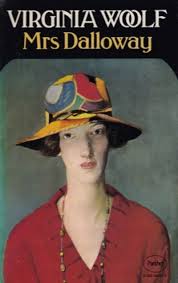 My mother has been a bit vaguely sad at me for not having read this in the past, so I decided it was finally time to bite the bullet. I read and adored Orlando waaaay back in first year; I couldn’t get through To The Lighthouse. I have seen The Hours (and brought home the book, from my mother). So that was my context. Plus a vague suspicion that this was going to be depressing.
At least it’s better than James Joyce’s Ulysses. Which isn’t saying much, except the truth.
So yes. Depressing. With occasional glints of wait – is this actually as depressing as I think it is? Or is this just… life? With occasional regrets and obviously things that are difficult but hey, for Clarissa at least, this isn’t SO bad. (I’ll get to Septimus.) I was so conflicted and in need of debriefing that as soon as I finished reading it I had to call my mother, who was very amused by my reaction. Yes, dear, I think it is meant to be a bit depressing and horrifying. Oh good. She also pointed out to me just how obsessed the book is with TIME. I had noticed that Big Ben is almost a secondary character in its own right, but I hadn’t really clued into time being referenced EVERYwhere. Which makes the story even more poignant. And depressing.
Imagine, an entire novel about an upper class woman’s ordinary day! How absolutely extraordinary that must have been.
And of course, it’s not JUST about Clarissa Dalloway. Her daughter, her friends, all get a little bit of time for their own thoughts… almost always coming back to Mrs Dalloway. The one exception is Septimus, who is completely unconnected to Mrs Dalloway except that they are physically close by one another very briefly, and that his absolutely appalling doctor is a guest at Mrs Dalloway’s party. This was one of the most heartbreaking fictional descriptions of shell shock I’ve come across.
I vaguely remember the discussions about modernist literature and what it was trying to do (that class was a very long time ago). I find Woolf’s style intriguing – and so very different from what I normally read – so many semi colons! And it occurred to me that while this isn’t Joyce’s stream of consciousness – ugh; it’s unreadable – it’s very close to replicating thought patterns, and indeed speech patterns. It approaches verisimilitude and while I am absolutely certain Woolf sweated blood to produce it exactly as it is, it comes across as effortless. As simple and … naive is wrong. So is innocent. Unsophisticated, perhaps, where sophistication means cunning and artifice and tricksiness.
I liked it. I will read The Hours soon. I will probably reread this, now that I know what I’m in for regarding the plot – and I’ll pay more attention to the descriptions than I did this time.
Galactic Suburbia: Star Wars spoilerific!
Star Wars: the Force Awakens Spoilerific
We went, we watched, and now we’re going to flail our hands about it, shortly before going to buy all the Rey toys that aren’t out there. You can get us from iTunes or at Galactic Suburbia.
Relevant Links:
The Bechdel-Wallace Test – is this film feminist?
What To Do When You’re Not the Hero Any More
John Boyega being super excited about being in Star Wars
Lupita Nyong’o on not being seen as herself in Star Wars
Emo Kylo Ren
#WheresRey
Skype number: 03 90164171 (within Australia) +613 90164171 (from overseas)
Please send feedback to us at galacticsuburbia@gmail.com, follow us on Twitter at @galacticsuburbs, check out Galactic Suburbia Podcast on Facebook, support us at Patreon (http://www.patreon.com/galacticsuburbia) and don’t forget to leave a review on iTunes if you love us!
Neverwhere
Read in a day.
Not my first Gaiman novel, despite what I initially thought; I read The Ocean at the End of the Lane a few years ago, which I also loved. I’ve had this sitting on my bedside table for about three quarters of a year, from a workmate….
 Man accidentally gets involved in things beyond his ken. Weird things are happening in the part of the world that ordinary people know nothing about. People are not all they seem. British Museum features. Prose is incredibly page-turn-y. There’s not much else to say, really.
This is a love-letter to London, in some ways, and for that reminded of China Mieville’s Kraken. There is little else of similarity, but it does amuse me to think of reading these two together as a guide to the Weird of London. It’s also, as Gaiman himself suggests, a fantastical way of pointing out the forgotten and ignored in society. There is a romantic aspect to London Below that means you maybe envy those people – but then you remember what Anaethesia experienced to get to London Below, and then what happened to her, not to mention a few others, and you realise: this is no party. London Below is a tough and unpleasant place.
The book also reminded me of Michael Scott Rohan’s Cloud Castles, Chase the Morning, and The Gates of Noon. Richard is not as unpleasant as Stephen Fisher, but there’s still the drawn-into-weird-things-against-his-will aspect, as well as the refusing-to-believe thing. I think I like Richard a bit more, though, because he’s more self-aware overall. He also reminded me of Richard Macduff, from Douglas Adams’ Dirk Gently’s Holistic Detective Agency. Again with the bewildered thing.
By the end, all I could think was how much Richard was going to be in need of Miss West’s school for those who find their way to fairyland and then have to cope with reality (in Every Heart a Doorway).
Movies and TV: 2015
Presented largely without comment: my viewing this year. Thought I had watched more movies than that, but even with short seasons, rewatching the entirety of Spooks was a pretty epic undertaking. Also the entirety of Star Wars, and the three LOTR.
Movies (new)
Of Mice and Men (National Theatre Live) * The November Man * Jupiter Ascending * Monsters University * Fast and Furious 7 * The Avengers: Age of Ultron * Mad Max: Fury Road * Woman in Gold * Veronica Mars movie * Shakespeare Retold: Macbeth * Jurassic World * Focus * Terminator: Genisys * Mission Impossible: Rogue Nation * The Martian * Hugo * Suffragette * Bridge of Spies * Spooks: The Greater Good * Sound City * Star Wars: The Force Awakens
Movies (rewatch)
Lethal Weapon * Lethal Weapon 2 * Lethal Weapon 3 * Lethal Weapon 4 * RED 2 * Notting Hill * Bend It Like Beckham * Moon * Expendables 3 * Ocean’s 11 * Jurassic Park * 2001: A Space Odyssey * Fellowship of the Ring (extended edition) * The Two Towers (extended edition) * Mad Max: Fury Road * Star Wars Ep 1: The Phantom Menace * Star Wars Ep 2: Attack of the Clones * Star Wars Ep 3: Revenge of the Sith * Star Wars Ep 4: A New Hope * The Return of the King (extended edition) * Star Wars Ep 5: The Empire Strikes Back * Star Wars Ep 6: The Return of the Jedi * The Martian * Guardians of the Galaxy * Die Hard * Elizabeth: The Golden Age
TV
Haven (season 4) * Veronica Mars (season 1) * The Newsroom (season 3) * The Dresden Files (complete series) * Warehouse 13 (season 2) * Warehouse 13 (season 3) * Veronica Mars (season 2) * House of Cards (US) (season 3) * Veronica Mars (season 3) * Carmilla * Ace of Cakes (season 1) * Orphan Black (season 3) * Marvel’s Agents of SHIELD (season 2) * Arrow (season 1) * Shakespeare Uncovered * Spooks (season 1) * Spooks (season 2) * Glitch (season 1) * Spooks (season 3) (rewatch) * Spooks (season 4) * Spooks (season 5) * Fringe (season 1) * Spooks (season 6) * Spooks (season 7) * Spooks (season 8) * Spooks (season 9) * Spooks (season 10) * Doctor Who (season 9)

 Randomly Yours, Alex