Han Solo
What can I say, I’m one of those people who thinks that Solo is really the star of the Star Wars movies; I was very annoyed that eps1-3 didn’t make a reference to him, even something as small as ‘here’s this kid I’m teaching to be a smuggler…’.
Anyway, a friend was cleaning out her house of books and I became the recipient of a Rather Large Bag of Star Wars novels… and I have finally dipped my toe in. I started here partly because SOLO, and partly because of this article about the author, AC Crispin, having recently died. And I had no idea that AC = Ann.

So. Solo.
Look, this is not a novel that was ever going to win literary prizes. The prose is a bit clunky, some of the characters are a bit stock, and yes the overall plot is a bit hackneyed. BUT! But.
a) It’s SOLO. Who doesn’t want to know how the galaxy’s most loveable rogue got to where he is? Who doesn’t want to know why someone so rough on the outside actually has such a soft smooshy inside? (Much like a tauntaun…). Plus, how did he GET that tough exterior? How did he and Chewbacca find each other, and what about the Millennium Falcon? These are questions I really want an answer to. So, I’ll read the novels.
b) It expands the Star Wars universe. I think one reason why I really like the idea of the enormous number of tie-in novels is that they’re all set in the same universe, but they don’t concentrate on just one bit. The Zahn novels didn’t; this one novel takes the reader to a few different planets, and while most of them are (as far as I recall) referenced in the original movies, this book looks at them from a rather different perspective – and it still works. It’s a lot grubbier, mostly. Yes Solo is a smuggler in the movies, yes Tatooine is the planet-futherest-from-the-bright-centre-of-the-galaxy – but really you don’t see much of the seamier side of the planets, let alone of the empire as an Evil Empire. Contrariwise, Crispin sets a lot of her story in the criminal underground, or on a slave plantation. Some people are nice, some are downright rotters.
c) Gratuitous Star Wars references. Sure Solo’s miff-ed-ness at being called scruffy got a bit tired after a while, but still – funny.
d) It takes Star Wars stuff but it makes it different. There’s an elderly Wookee woman that Solo’s friends with, and there are clear parallels to Chewbacca (also with his non-human companion Muuurgh) – but it’s not identical. There’s a romantic interest and again, parallels to Leia but by no means identical, and indeed provides some rather thought-provoking points on why Solo reacts the way he does to Leia (abandonment issues). Links to the Hutts, being a pilot, etc – all of these essential elements are there, but Crispin does interesting enough things with them that it’s by no means ‘young Solo just imitates old Solo.’ And that’s cool.
Thus this novel was definitely light entertainment. It’s light because it doesn’t require an enormous investment of time or thought-process from the reader – although it does raise genuine issues and does not simply ignore them. It’s entertainment because there are pirates, and smugglers, and chases, and Han Solo.
Galactic Suburbia 90!
 Listen to us via iTunes or over at Galactic Suburbia!
In which we present The Subgenre Report. Is the concept of subgenres meaningful to readers and writers, or just a marketing trick?
Which subgenres are OMG so hot right now, and which genre is doing subgenres better than spec fic?
In other news, Alisa hurls herself into crowdfunding with the baby clock ticking down to midnight…
Grimdark as a Young Man’s Genre? (do read the comments, seriously, that’s where all the crunchy discussion/challenge is)
The Rise and Fall of Grimpink
Culture Consumed:
Alisa: Continuum S1, crimeScene convention, plug for Kaleidoscope, Coode St Podcast ep 162 with Rachel Swirsky; Report from Planet Midnight, Nalo Hopkinson
Tansy: BBC Radio Neverwhere; Untold by Sarah Rees Brennan, Ancillary Justice by Ann Leckie, The Almighty Johnsons
Alex: Agents of SHIELD; Star Wars: The Paradise Snare, AC Crispin; Ragnarok, AS Byatt
Please send feedback to us at galacticsuburbia@gmail.com, follow us on Twitter at @galacticsuburbs, check out Galactic Suburbia Podcast on Facebook and don’t forget to leave a review on iTunes if you love us!
Crowd funding
1. Twelfth Planet Press is running a Pozible campaign to get a new anthology off the ground. Edited by Alisa Krasnostein (one of the voices of Galactic Suburbia; the other one, Tansy, is already writing her story…) and Julia Rios, this is a really awesome anthology: the idea is that (to quote them):
The main characters in Kaleidoscope stories will be part of the QUILTBAG, neuro-diverse, disabled, from non-Western cultures, people of color, or in some other way not the typical straight, white, cis-gendered, able-bodied characters we see all over the place.
Please consider contributing if you can – and either way, spread the word! I’m tardy in posting this, so there’s just 12 days to go (closes 31 October), and they’re not quite halfway yet. Halfway to what? $12000 will allow them to pay pro-rates AND publish the book AND do all the other rewards stuff. That’s not a lot for a whole lot of brilliant. If you need more convincing, they’ve already got three names to the anthology: Ken Liu (!!!), Sofia Samatar, and Jim C Hines. Magnificent.
2. A Kickstarter that I backed ages ago is now live! Mothership: Tales from Afrofuturism and Beyond (that link takes you to Fishpond) is an anthology that does just what it says; wrenches the future from overly white, American hands and puts it into more ethnically diverse ones. My copy came with a mixtape, and when George Clinton’s dulcet tones announced “ah-good evening” as the first track… well, I admit that I squealed a little with joy. Watch this space for a review!
Bogarde

Once upon a time, I was 16. One 16-year-old Saturday afternoon, I switched on the television to discover a black-and-white Dirk Bogarde being sentenced to death by He-Who-Would-Be Rumpole (Leo McKern). I was horrified and mesmerised. And then when Bogarde declaimed “It is a far, far better thing that I do, than I have ever done; it is a far, far better rest that I go to than I have ever known” … well, there was definitely Something In My Eye. Such that my mother had to ask what the problem was, and when I told her Dr Simon Sparrow was on a tumbrel, headingfor the guillotine… she just shook her head.
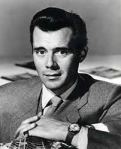
I am of an age to remember when Friday nights were a Great Night for movies. My dad stayed up super-late with me once, to watch Breaker Morant, and had to almost physically prevent me from ranting and raving about the injustice of it all, because who does high-horse morality better than a 15 year old? Anyway, the ABC went through a period of classic British films, whence my introduction to Carry On. And after Carry On came the Doctor films. And Dr Simon Sparrow just stole my heart. (Seriously! Look at those eyes!)
All of this is the long-way-around way of saying that a few years after all this, my mother bought me a biography of Bogarde. That was quite a long time ago now. I have an unfortunate habit of appreciating the books she buys me but not reading them for ages. In my defence this is a BIG book – like 700 pages big – and somehow 700 pages of biography is different from 700 pages of space opera. Because I finally, finally read it. Hooray! And it took me quite a long time (like over a week).
I vaguely remember Mum breaking it to me that he was gay; I had no idea that he went on to have such a successful career as an author, nor that his film career was quite as… fraught.
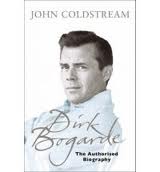 The bio had some excellent bits in it. I was fascinated by the discussion of film-making in Britain in the 50s and 60s (and a bit horrified); the idea of Judy Garland and other such bright lights going over to Bogarde’s place for Sunday lunch kinda blew my mind. But there are some problems here as well. Firstly, and most annoyingly, Coldstream makes quite a deal of the fact that in his memoirs, Tony Forwood often appears as entirely marginal, sometimes only as a manager vaguely hanging around. The reality is that they lived together for something like 50 years. Coldstream makes this part of Bogarde’s fear of being outed as gay (totally reasonable in the 50s when Britain still had its laws making homosexuality illegal), but also part of his rewriting of his personal history. My main beef with this, though, is that Coldstream doesn’t actually interrogate Bogarde and Forwood’s relationship himself. I don’t mean that I wanted to read an expose of their sex life; I mean that I was left wondering whether they actually were lovers, or had an entirely platonic relationship or… what. Coldstream fell into the same problem – not entirely ignoring Forwood, but not properly considering his significance – that he accused Bogarde of. Which means there’s this huge part of Bogarde’s life – was he gay? Was he asexual? – that is ignored. And if you’re writing a bio, that should (I feel) be either part of the discussion, or completely left out, and if the latter then that needs to be spelled out for the reader. Especially in Bogarde’s case where his drop-dead-beauty was part of his appeal as a film star, and where his sexuality has been cause for discussion for a very long time.
My other gripe with this book concerns two really weird bits. One: Coldstream sent off samples of Bogarde’s handwriting to a graphologist. That’s someone who analyses handwriting and tells you about your personality. Um, weird. Two: the biography ends with a totally bizarre story of the people who bought Bogarde and Forwood’s estate in France being superstitious about a possession of Bogarde’s bringing them bad luck. Also, um, weird.
If you’re interested in film history, this is awesome. I’ve left it with my mum and I think she’ll get more out of it because she’ll know more about the people being mentioned. If you’re interested in biography generally this actually is quite a good one – it’s perfectly readable and Bogarde really did have a fascinating life, serving in WW2 then acting in theatre and films – and oh the drama (heh) around that – then going on to writing and public appearances.
Galactic Suburbia 89
 In which we recommend books to buy as presents, books we love, books we made, and basically BOOKS BOOKS BOOKS. You can get us from iTunes or at Galactic Suburbia.
Alisa’s picks: 2012; Trucksong; A Trifle Dead; Rosaleen Love’s Twelve Planets collection; the entire Twelve Planets suite (get them while they look the same! especially Love & Romanpunk)
Alex’s picks: Temeraire by Naomi Novik; Ocean at the End of the Lane by Neil Gaiman; Shades of Milk and Honey by Mary Robinette Kowal; Left Hand of Darkness by Ursula Le Guin; House of Suns by Alistair Reynolds
Tansy’s picks: Glitter and Mayhem; Chicks Unravel Time; The Wife in Space; The Worst Witch books by Jill Murphy; Creature Court trilogy (Power and Majesty)
Culture Consumed:
Alex: Reap the Wild Wind, Julie Czerneda; Ocean at the End of the Lane, Neil Gaiman
Tansy: Flying Higher eds by Michael Damian Thomas & Shira Lipkin [download free from Smashwords], Doctor Who: Prisoners of Time 1-4, Supurbia by Grace Randolph, Elizabeth Sladen the Autobiography, The She-Hulk Diaries by Marta Acosta
Alisa: Glamour in Glass, Mary Robinette Kowal
BLATANT PLUG: Songs For Europe, two short plays about Eurovision & war by John Richards of Splendid Chaps & Lee Zachariah of the Bazura Project on this week only as part of the Melbourne Fringe.
Please send feedback to us at galacticsuburbia@gmail.com, follow us on Twitter at @galacticsuburbs, check out Galactic Suburbia Podcast on Facebook and don’t forget to leave a review on iTunes if you love us!
Reap the Wild Wind

I read this thanks to a recommendation from Helen Merrick, who I seem to recall being a massive Czerneda fan. I understand that this is a prequel series, written after the world in question becomes part of a wider galactic network. Not having read the later books, I can’t say how an already-fan would respond; but I imagine there are some awesome moments of filling-in-gaps. Because it is indeed a wonderful novel, and I do fully intend to go and find the rest of the trilogy, and probably the later series as well.
Told mostly from the adolescent (unChosen, in the parlance of her people) Aryl’s point of view, this is a story of a world that – as far as Aryl is concerned – is entirely static, as it should be. One of the characters comments on Aryl and her people living in an eternal ‘now’ – and although that’s not entirely fair, because their lives do revolve around the season of harvest, it does make sense because their knowledge of history and their expectations for the future are exceptionally limited. But this is not, overall, a bad thing: Aryl’s family and friends live full, rich and generally rewarding lives. Without interference – and of course you know there’s going to be interference – the Yena live.
Aryl lives on Cersi, a world that is home to three different sentient species. Aryl is of the Om’ray, human-types who live in Clans in disparate parts of the world and who rarely interact with each other except when one of the boys leaves on Passage, drawn by a woman who has become sexually mature (there’s some mental communication stuff which makes this basically make sense). The Oud and the Tikitik are not humaniform, and they are more technologically advanced than the Om’ray – they swap the Om’ray for some things in exchange for technology. The Agreement is meant to guarantee stability (if not stagnation) between the three. But then things change – strangers come. And strangers are not accommodated within the Agreement, which sets off all sorts of problems between the species, and within them as well.
There’s a lot of things going on within this book. Biological sexuality is not something that develops in Om’ray but seems to basically be on or off, which is intriguing and means that sexual tension isn’t really an issue (well, it is at one point, but it doesn’t overwhelm the whole story); issues of difference, and allowances for degrees of difference, are central to the Om’ray story and whether Aryl can be truly part of her Clan. In sweeping terms this is both a coming-of-age story, for Aryl, and also a first-contact story – and that part I think is done very well done, because it’s neither entirely positive nor entirely negative. Part of the story is told from the perspective of a boy from a different Clan, and this allows Czerneda to show the different perspectives of the Om’ray themselves, within their general similarities.
I think this counts as science fiction, because the strangers are aliens and there are issues of technology etc. It includes elements of fantasy, too, which I think work nicely within the story as a whole.
Reap the Wild Wind is well-paced, with an intriguing world and winsome POV characters. Very enjoyable.
You can get Reap the Wild Wind from Fishpond.
Essays, jellyfish, and the multiverse
A while back a colleague introduced me to Arts and Letters. This is a wonderful site that collects essays from around the web, most of them free to read, and – in my case – delivers them to my blog feed for idle consumption. There are a lot that come through that I just don’t care much about, but that’s ok; it’s easy enough to swipe them away as read. But sometimes there are some absolute joys in the mix. Some essays and some reviews that I know I would never have come across otherwise.
Tim Flannery’s “They’re taking over!” about jellyfish, for example. I remember reading a while back that Japan was having serious jellyfish issues, to the point where chefs were making serious attempts at turning them into delicacies so that the population could try and eat their way through them… or something… Anyway, this essay is actually a review of Stung! On Jellyfish Blooms and the Future of the Ocean
Over at Aeon, Andrew Crumey explores the idea of the multiverse through both physics and literature, showing how the former has sometimes followed the latter in positing and explaining the idea of multiple, parallel, divergent universes. Someone who references Borges and Feynman, Baudelaire and Everett in the same 2,600 words was pretty much always going to be writing an interesting essay, and that is indeed the case. The idea of the multiverse is a confronting one for a Christian, but that’s fine; it’s not like I’m not used to that. I enjoyed how Crumey meandered around ancient Greek and Roman philosophy through to 19th century literature, and tied together 20th and 21st century physics. Not being as au fait with the physics as I might like (nor, honestly, the philosophy), I can’t say whether it’s entirely trustworthy in the connections it draws – and I refuse to read the comments, because I just bet they range from ‘multiverse?? You loony!’ through to other unsavoury comments (but hey, at least it wasn’t written by a woman pretending like she understood the science, right?) – but as a keen general reader, it was certainly absorbing and persuasive.
Galactic Suburbia 88: Hugos
 In which, Hugos. Get us at Galactic Suburbia or iTunes.
Tansy, Alisa and Alex gather only minutes after the Hugo ceremony to discuss the results! Because, HELLO: Tansy won one!!
Hugo winners
The Stats, Statbadgers!
Tansy’s Hugo Post
Culture Consumed:
Alex: The Adventures of Alyx, Joanna Russ; BSG rewatch yet again; The Memcordist, Lavie Tidhar; Firebugs, Nina Kiriki Hoffman
Alisa: KickAss 2; Enchanted Glass, Diana Wynne Jones; Ugly, Robert Hoge
Tansy: Fringe Season 1, Dorian Gray Season 2, Ugly, Robert Hoge
Plugs: Splendid Chaps Nine/Women, featuring Tansy: September 15
Glitter & Mayhem released and partying, glitter skate style.
Please send feedback to us at galacticsuburbia@gmail.com, follow us on Twitter at @galacticsuburbs, check out Galactic Suburbia Podcast on Facebook and don’t forget to leave a review on iTunes if you love us!
Adventures of Alyx
No, I did not misspell my own name (although someone at work did yesterday…) – Joanna Russ called her character Alyx, and I have finally read the collection of four short stories + one novella about said adventurer.
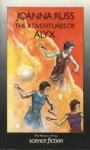
The thing you have to know about Alyx is that although the name stays the same, and some aspects of the character remain the same, trying to establish an internal chronology for these stories is likely to bust your brain. It doesn’t work, and it doesn’t have to work. Maybe it’s the same woman, maybe she’s a time traveller, maybe the name lends certain characteristics (like Julias in Tansy Rayner Roberts’ Love and Romanpunk) … or maybe Russ is playing, and it actually doesn’t matter. Although once you accept that it doesn’t necessarily work, making connections is a lot of fun.
These stories are different genre, with different approaches to narrative – what makes a narrative – so don’t go in expecting a cohesive whole. Of course, it is a whole in that Russ is doing confronting things with her female character: making her the lead, and not making romance important, and exploring reactions to women. That’s still a bold thing to do, and my edition of these stories was published in 1983; they originally came out between 1967 and 1970. I really wish I was alive to experience Russ As She Happened. And it makes me wonder who, if anyone, fills a similar niche today – and whether I am completely missing their stuff, for whatever reason.
I feel like a barbarian myself to admit that I did not love the first two stories. In fact, it took me ages to get through this slim volume because I was so not in love with the first one, and then the second, that I was worried I wouldn’t enjoy the rest. I persevered though, partly from an admittedly perverse desire to be able to say that I had read it, and partly because I knew that the stories changed up so I was hoping that I would come across stories more to my taste later on. And I did. Some of what comes below is my analysis of my own reactions to the stories, rather than a pure review. This might be dismissed as navel gazing; for me, it’s a way of working out how I work with Joanna Russ, such a powerful influence over what I’m interested in.
“Bluestocking” begins in a very self-deprecating way – “This is the tale of a voyage that is on interest only as it concerns the doings of one small, gray-eyed woman.” Not a great start? It gets subversive within moments, though, suggesting that the first man was created from the sixth finger of the left hand of the first woman… but our lady, Alyx, has all six fingers. Alyx is a pickpocket; she gets hired to look after a spoiled young woman. Then there are adventures, of a sort. There’s travelling, and bickering, and a sword fight. It is also supremely brief. I’m not sure whether it was that aspect that most didn’t work for me, but it certainly contributed – I found this story quite frustrating, with all its lacunae and its teasing and… something. “I Thought she was Afeard till she stroked by Beard” worked similarly on me. In this case, Alyx escapes an unhappy marriage; gets on board a ship and has a complex relationship with the captain; and is frustrated by the place of women in the world. I think it’s clever, but for mine there’s just not enough.
I should say at this point that there is more going on here than ‘just’ a narrative, especially in narrative connections; I know Russ is addressing Fritz Lieber, and others. I haven’t read any Lieber. Perhaps this is a fault in me, and the stories would be greatly improved with that background knowledge. But I know Terry Pratchett riffs off Lieber too, and I enjoy those stories; I know Mieville and Reynolds are riffing off others, but I still enjoy theirs too. So… perhaps it’s ok that I don’t enjoy all of Russ’ work? Maybe?
“The Barbarian” is a story that Gary Wolfe, in his essay in On Joanna Russ (… I think?? eep maybe I’m wrong…) suggests is the switch for Alyx between fantasy and SF, which is an intriguing way of seeing it. Here Alyx is again a crim-for-hire, but she doesn’t like what she’s hired to do and things go downhill from there. For me as a reader, though, things started going up. This story appealed more, although I’m not sure why. Maybe it’s a simpler story but with more flesh, more detail?
Then – next – oh, delight: “Picnic on Paradise.” This was originally published alone, as a novel; I guess it’s a novella, by today’s standards? 90 pages in my little pocketbook edition. Alyx, a Trans-Temporal Agent brought from the ancient Mediterranean world to both the future and a different planet. She’s being used to guide a disparate group of tourists across a war-ravaged planet, to keep them safe in the most horrific of circumstances: no access to their technology. There’s an incredibly profound moment at the start, where one of the women asks why Alyx is “covered up” – wearing clothes. So Alyx takes off her shift, therefore mimicking those around her, which group promptly have apoplexy. Alyx is confused, naturally; one of them says that she is wearing her history, which they are not used to. This goes a long way to demonstrating some of the rather large differences between Alyx and her charges. The story is a straightforward one of flight, and fighting for survival: getting lost, getting hungry, literally fighting (nature, each other, etc). It’s Russ, and having read We Who Are About To… I wasn’t surprised that things do not go according to plan, in a drastic way. One of the remarkable aspects is, of course, that the leader is a woman. Making the hard decisions, being contemptuous, fighting – being well-rounded. The tourists are a motley bunch: nuns, macho men, wannabe robots, high-society ladies. They too have their chance to be well-rounded, to interact especially with Alyx but also each other. This isn’t a fun story but it’s a great story, an intriguing one, and one I am so pleased to have read.
The final story in the set is a difficult one in terms of “Alyx canon,” the idea of which I rather suggest Russ would either have rolled her eyes or laughed at. Because Alyx probably isn’t in it. Her descendants might be, but if you read this by itself you wouldn’t have a clue about her. It’s also frustrating me because I know I have read it – “The Second Inquisition” – before, but I don’t know where. Some anthology, some time. Anyway… this too is science fiction, focussed on a young girl whose family is hosting a very odd stranger, who leads the girl in all sorts of directions: physically, introducing her to other, even more strange people; intellectually, introducing her to books and ideas she has never encountered; and culturally, challenging a whole bunch of assumptions within the family and society more broadly. There’s also questions about reality and imagination going on here that I think I missed the first time through. Intriguingly I think this gets a little close to the ‘galactic suburbia’ stories that Russ dismissed, since the focus is very much a suburban home with the occasional break-in of the science fictional. At any rate it certainly makes a challenging and difficult-in-a-good-way conclusion to the collection, because it doesn’t fit neatly into Alyx’s adventures. Which is as it should be, because Alyx – as a woman and as a character – doesn’t fit anywhere comfortably either. And she wouldn’t want to.
Cute things
Yup, more knitting, for babies again. The monsters are Claudes, from Rebecca Danger; the booties and cap are ones that I have knitted heaps over the last few months – they’re incredibly rewarding because they’re done SO FAST. 


 Randomly Yours, Alex