The Wise Man is wise to fear unfinished trilogies

I read The Name of the Wind a while ago, and had a bit of a rant then about how I was over big fat fantasy trilogies, for all sorts of very sensible reasons. And then I spent several hundred words frothing at the mouth about why that book was an exception to the rule that basically made me go weak at the knees (clearly Tansy’s Creature Court trilogy is also an exception, but at least in that case I know that a) the third is already written, and if it wasn’t… well, b) I know where she lives). I’ve had The Wise Man’s Fear sitting on my shelf for a good few months. I’ve half-reached for it a number of times, but each time my hand hesitated and fell on something else. Know what that other book usually had going for it? It didn’t weigh a kilo. Gentle reader, this book is nearly 1000 pages long, and it’s only one third of the story. The entirety of The Lord of the Rings (discounting the appendices no one reads (NB I mean including the one about Aragon and Arwen because you have to read those, but excluding the others)) is only just over 1000 pages long and people complain all the time about it being unwieldy! (Not me, but you get my drift.) So it is no wonder that the thought of picking up this tome was somewhat daunting. And then… then I was given a Saturday with no one in the house, rain outside the house, and a hankering to know what mischief Kvothe could get up to now. So I read for the entirety of Saturday (with a break for Doctor Who. And occasional food). And today, Monday, I have finished it off. The problem now is that the third book has not been written. I may actually go mad. (No, not literally.) (Oh boy. Oh no. I just realised that the book doesn’t actually say that this is a trilogy. What if Rothfuss pulls a Jordan?!?!) (The Goodreads blurb does call it a trilogy. My hair may be saved.)
I realised while reading that one of the reasons why this series feels so attractive is because it genuinely feels like a memoir. Partly, of course, that’s because of how it is written – as readers we are asked to identify almost as much with Chronicler, I think, sitting there listening to Kvothe, as we are with Kvothe himself. But it’s also because we get the nitty-gritty of Kvothe’s life, and the sheer size of the books contributes to it looking and feeling like a multi-volume biography. This vibe definitely works for me, overall. That said, for all the luscious and lavish detail spent on most of Kvothe’s adventures, there are a couple of incidents that are surprisingly and uncomfortably lacking in detail. It feels out of character for Kvothe and Rothfuss both, and threw me out of the reading experience. On the flipside, there is one incident in particular that is dwelt on in overwhelming and unnecessary detail, to the point of exasperation. I won’t discuss what it involved, since that would be quite a spoiler, but I do think the encounter could have been given half the words and still have been shown to be appropriately significant. It’s one of the few times that I found myself growing impatient.
We pick up the narrative with Kvothe beginning the second day of his recitation for the Chronicler. He continues to discuss his life as a student at University, with most of the same problems that he left off the first day still to tackle: what to do about Ambrose and Denna, how to get money, and how to have all his questions answered. About a third of the book is set at the University again, and it’s a tribute to Rothfuss that I didn’t find this section repetitious. Instead Kvothe genuinely progressed, with his teachers and his friends and his studies, as he ought. Eventually, other adventures beckon, and the reader is introduced to more of this world that Rothfuss has created as Kvothe travels about. I particularly liked that Kvothe visits a culture that is very, very different from his own, in the Adem. Rothfuss introduces fascinating small differences that together make a world of alienation – one of them being that women are most definitely viewed as equal to men. This is not to say that Kvothe’s regular culture is incredibly biased, but seeing the Adem made me re-evaluate “the Commonwealth” – and not in a good way. Pointing out the flaws in his main culture is a brave thing for Rothfuss to do – not that he ever claimed that it was perfect. Additionally, the Adem have a very different way of thinking about life, and these attitudes certainly made me think both about the book-world and our own; that the Adem view everyone else as barbaric certainly gives pause for thought. (It’s also interesting to reflect on the fact that Rothfuss does all of this without making them the urbane intellectual effetes that Eddings did with the Malloreans. They feel like an amalgam of Rome and Sparta, with other bits thrown in for good measure.)
Once again, along with enjoying the adventures of young Kvothe, I was really pleased by the scenes with contemporary Kvothe, or Kote. The insights provided, of his relationship with Bast on the one hand and the general bitterness and resignation he feels on the other, are a large part of what is driving me to so desperately want to find out what happens in this story. The fact that it is a memoir makes it all the agonising. I already know about his magic and his ability to get into trouble everywhere; I need to know how he comes by all of those other experiences and skills that made him the legend he so clearly is, when he is recounting the story. We start to get an understanding of Kvothe’s legend towards the end of this instalment; the nerve and subtlety at play, and the insinuations Rothfuss makes, are frankly marvellous. (Also, I really really need to know about Denna (I don’t think it’s a spoiler to say that that is in no way resolved in this book).)
So now I have to wait for the third to be written. I am unimpressed.
Love and Romanpunk: not a review
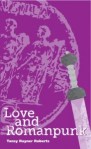
This is not a review. It can’t be, really. Partly because it’s by a friend – although I have reviewed Tansy’s work before, and that by other friends too (fortunately, I usually like it, so that’s no hardship). No, the main reason why this isn’t really a review is the dedication. It’s dedicated to meeee!! Tansy says that this is dedicated to Random Alex (heh), and that I am totally wrong for liking Marc Antony more than Octavian.
Of course, she is totally wrong about that. How could anyone appreciate a psychopathic megalomaniac, who played up his relationship with Caesar in order to capitalise on Roman sentimentality and killed opponents willy-nilly, who rewrote history to make him and his look better and changed laws to suit himself, and who was utterly ruthless when it came to his family? Especially when said ego-tripper is set in opposition to a man who evinced so much humanity that he loved a non-Roman woman and anticipated that his children with her would actually inherit from him, whose prowess in battle didn’t need to be eulogised by an imperial flunky, and whose generosity was legendary.
Ahem. So Tansy and I have some… issues. Clearly, however, she loves me despite our differences, and that’s very nice indeed. She did put me in a slightly awkward position, though, when I made her sign my copy: she said (in caps no less), that I HAVE TO LOVE THIS BOOK.
Oh yeh, no pressure.
I am, of course, a fan of Roman history. I studied at uni, and I even wrote my honours topic on Nero and his love of Greek things. Thinking about Tansy’s area of study, though – Roman imperial women – makes me realise that my study of Rome was entirely typical. That is, a bit of the Gracchi, Marius-Sulla-Caesar, a run through of the Empire… and a little bit of ‘daily life’ blah. Not a whole lot on women , really, except where they happen to be interesting either for genealogical reasons or because of their notoriety. Like Julia Agrippina Minor. I’ve always liked her.
The first story in this collection is “Julia Agrippina’s Secret Bestiary.” It gives a potted history of the Caesar family… with added monsters. I really enjoyed Tansy’s characterisation of the various members of this crazy family. She captures an essence, I think, of the various emperors and their wives/sisters/mothers that actually rings quite true. I particularly liked that although Gaius – Caligula – is shown to be a bit nuts eventually, he’s handled much more sensitively than most other fictional representations bother. Of course. And the monsters made a bizarre sort of sense; they fit in delightfully well with the overall vibe of the story.
The stories progress chronologically through what Tansy affectionately calls the Agrippinaverse. The second story is “Lamia Victoriana” – lamias being the Roman equivalent of female vampires. Here, in Victorian England, Fanny and Mary run away “with a debauched poet and his sister,” as the blurb has it, with the coda that “If it was the poet you are thinking of, the story would have ended far more happily, and with fewer people having their throats bitten out.” The blurb is, by the way, one of the most enticing and true to the story that I’ve read in a long time. It gives an accurate, and seductive, portrayal of each story, and teams that with snarky comments which perfectly fit the tart, sometimes lovingly exasperated, voice of the stories. This second story is the odd one out in some ways; it’s a great story, still, but it’s different in mood and tone from the other three. Darker.
“The Patrician” is the story written in a time most clearly like our own… if Australia had a recreated Roman city somewhere. This is in many ways the centrepiece of the collection. Clea Majora meets a stranger visiting her town, and gets drawn into an adventure even weirder than living in a town called Nova Ostia. There’s not much to say without giving away the awesome way in which the story develops. It’s brilliant. Everyone should read it. It stands by itself as well as being perfect within the context of the other stories.
Finally, the collection is rounded out with “Last of the Romanpunks.” Where the first story is basically historical fantasy, and the second riffs off the Gothic sensibilities of the Victorian era, and the third is beholden to urban fantasy, the fourth ventures into science fiction territory. Managing all four of those genres, clearly connecting the stories through characters and ideas but keeping the vibe of each distinct, is quite the feat. Anyway, Tansy decided to close the collection with a bang, since I think of this story as the most action-based of the four. And again, very enjoyable.
So… it wasn’t going to be a review, but I guess it sort of has. Oops.
Troubletwisters: a review

I am a long-time fan of both Garth Nix and Sean Williams (more so the latter’s SF than fantasy), so the idea of a collaboration between the two – aimed at children – is exciting indeed. And I was fortunate enough to hear Sean Williams speak about the act of collaboration at Natcon50, where he discussed the different things that each brought to the writing: that (I think!) Williams wrote the first rough draft, then Nix added bits and changed bits, and sent it back again… and so on. I was particularly amused to hear that the two got into some serious brinksmanship over who could be the most gross, since they are both little boys at heart, so I intrigued to read and discover what this looked like in practice. (The answer: they do indeed manage to be quite gross. I am not a fan of rats or cockroaches.)
Troubletwisters harks very strongly to the classics of fantasy written for younger readers. The main characters are twins: Jaide and Jack. (In talking about the story, Williams admitted that he has long been intrigued by twins and their use in fiction. As I see it, it’s almost like you’re getting a character for free – and it means that you always have the opportunity for your characters to discuss things, disagree about things, or be worried about someone.) Their father is away a lot, and they know nothing about his side of the family… until a disaster means that they have to go and stay with their mysterious paternal grandmother, where they begin to learn about some strange abilities. These plot devices could have felt hackneyed and stale, being by no means original; instead they feel familiar, but by no means comfortable. Williams and Nix use the twins as a means of exploring different reactions to scenarios and individuals, and there are indications that the two will have different experiences of their abilities that will be explored in later books of the series (there will be another four). The trope of leaving home and going to an alien place is as old as fiction itself; it can be, and is used here as, the catalyst for self-discovery and learning about the world. The strange relative and slightly intimidating new environment – Grandma X and her weird house – are perfect for the target age-group: visiting unknown relatives can be a very scary thing indeed.
The plot moves quickly: the twins arrive at their Grandma’s house and soon things start to go wrong. Additionally, weird things happen when they are around: a sign their mother can’t see, a freak whirlwind, talking cats…. There is, of course, a reason for this – it’s their nature – and the narrative is largely concerned with the pair beginning to learn about their abilities, and what it means to use them. Of course, they can’t simply do this is peace and quiet. Instead, they are confronted with a rather nasty villain, and it’s in dealing with this villain and its impact on their environment that they really start to learn about what it means to be “troubletwisters”. While the twins are allowed some breathing space – Williams and Nix don’t pretend 12-year-olds can simply go on throughout the night – the main action takes place over only three or four days, so it does feel a bit relentless. Since this is certainly how it feels for Jaide and Jack, that’s a perfectly reasonable feeling for the reader.
As with Nix’s Keys to the Kingdom series, which shares a certain tone with Troubletwisters, it’s unclear what country this book is set in. Grandma X lives in Portland – but not the one you’ve heard of. Reading as an Australian, I could well believe that this was set on the Victorian coast. Having visited the UK, I can imagine it set there, too, and I imagine that setting it in America would be as easy for readers there. This ubiquity is no doubt good for getting international readers; it also gives the book a certain Everyplace vibe. This could happen to anyone, anywhere.
I have two, fairly minor, quibbles with this book. The first is the naming of the twins. I quite like the names Jaide and Jack… but those names are short for Jaidith and Jackaran. These names simply do not work to my ear – Jackaran in particular seems too complicated, and I am not a huge fan of made-up names in a real-world context. I really hope that there is an explanation for the names in later books. On the same topic, but in the opposite direction, I was disappointed by the lack of originality in naming the villain (which I won’t reveal here). It seemed too mundane for something that so threatening.
Overall, then, this is a marvellous opening to what promises to be a very interesting new children’s fantasy series. It sets up the main characters as attractive and interesting, although not without their problems, as well as introducing some supporting characters who will no doubt go on to be important (did I mention the talking cats?). There is clearly a problem to be resolved – what to do about the villain – as well as a quest, in learning to use and control their abilities. Plus, of course, there’s the issue of their slightly fractured family, which will no doubt continue to be an issue that the twins have to deal with. I have faith in the two authors that this series will continue to be enjoyable, without being predictable.
This is not the podcast you’re used to
At Swancon, I got together with a number of other awesome Aussie podcasters to record a megapodcast: Helen Merrick from Pangalactic Interwebs, Jonathan Strahan from Coode St, and Kirstyn McDermott from The Writer and the Critic. We spend an hour arguing over what bits of fantasy and science fiction people should – nay, must! – read or view. It was immense fun. I did nearly lose some friends by suggesting Lord of the Rings and admitting that The Fifith Element is my favouritest movie of all time… but I think they forgave me.
You can stream our marvellous podcast over at The Writer and the Critic, or you can also get it from iTunes by going to their podcast bit there. Thanks to Kirstyn for hauling her gear over west and making us sound professional!
Galactic Suburbia 30
Sorry, let me rephrase that: DITMAR-WINNING Galactic Suburbia, episode 30 ( 🙂 ) recorded live at Swacon36|Natcon50
News
Shirley Jackson nominees
PK Dick awards
BSFA awards
SF Hall of Fame inductees
What Culture Have we Consumed?
Alex: Kraken, China Mieville; Doomsday Book, Connie Willis; Mappa Mundi, Justina Robson; Brasyl, Ian McDonald; Nightsiders, Sue Isle
Tansy: The Clockwork Angel, by Cassandra Clare, The Last Stormlord by Glenda Larke, Fun Home & Dykes to Watch Out For by Alison Bechdel, Tales of the Tower: the Wilful Eye edited by Isobelle Carmody & Nan McNab, especially “Catastrophic Disruption of the Head” by Margo Lanagan, Nightsiders (twelve planets 1) by Sue Isle.
Pet Subject: Indie Press: Alisa talks Ebooks!
Please send feedback to us at galacticsuburbia@gmail.com, follow us on Twitter at @galacticsuburbs, check out Galactic Suburbia Podcast on Facebook and don’t forget to leave a review on iTunes if you love us!
Reflections on Natcon50
Well, it was brilliant, basically.
I went over on Wednesday, to get a head start on the fun. Tehani picked me up, which was lovely of her, and then I got to spend the afternoon with Kathryn. We had dinner with Alisa and Justina Robson, one of the Guests of Honour, which was a great privilege! I managed to get a good night’s sleep, which was a good thing… Thursday involved chasing down Kathryn’s artwork, which was cool, and then we had lunch with Justina and the other Guests of Honour – Ellen Datlow and Sean Williams – and a bunch of other Swanconners. Which was awesome. Then to the hotel, and starting the real business of the weekend: catching up with lots of people. Also hanging around the Twelfth Planet Press table. Thursday night was free; there was the Opening Ceremony, which I attended and it was good, and panels, which I didn’t attend and that was fine too. The con bag was awesome – four free books!
The con proper involved a number of panels that I was both on, and attended, including a megapodcast recording where we got to tell people what books they MUST read, and films watch, and I got to shock people by saying Lord of the Rings and The Fifth Element; and a recording of Galactic Suburbia too. I presented at the Edustream, which was good, and on a panel about religion in fantasy too. I attended a number of interesting ones: Grant’s presentation on Disney films was utterly enchanting, and the “Vikings are awesome” panel was far more informed than I expected! The best, though, was probably the panel that in theory was meant to be on “the crisis of the midlist, and the rise of the celebrity author.” It featured Justina and Ellen, and two Aussie contributors. It turned into a broader discussion, at least partly about how we figure out what to read – the place of podcasts, reviewers, etc, and how to know who to trust in those arenas. It was fun, becoming quite interactive towards the end.I also thoroughly enjoyed Jonathan Strahan interviewing guest Sean Williams. They have known each other for a very long time, and rather than the conversation being full of in-jokes it meant that Jonathan knew exactly the right questions to ask for it to become an interesting discussion for the audience. Also, Sean’s concertina-pack of his books’ covers was awesome.
Most of the time, though, was spent with people. The foyer of the hotel had a large cafe/bar with lovely couches and chairs and I spent a large amount of time sitting, chatting… generally doing the things that make cons brilliant. I made a few new friends, but really it was about catching up with existing friends. It’s hard having friends all over the country that you don’t get to see very often. Twitter and blogs and Skype make it feasible to actually call them friends… but spending physical time together really shows just how much those things are not really a substitute. I had breakfast, lunch, and what passed for dinner with friends all weekend, and spent many hours into the night with them too.
The evenings were, of course, very entertaining! Friday night had a celebration of the Twelve Planets, and I was particularly thrilled to see that Tansy’s Love and Romanpunk had come back from the printer… and, even more than that, it is dedicated to meeeee! I was gobsmacked and overwhelmed to discover this. (Also, Jonathan Strahan’s Year’s Best Fantasy and SF vol 5 is dedicated to me, Alisa, and Tansy, as the Coode St Feminist Advisory Council – which is very flattering indeed.) The evening also involved a cake made by the awesome Terri, surrounded by pink cupcakes to make it look like the Twelfth Planet Press logo. Saturday night was the masquerade, which I went along to for a little while to see the costumes and then retired to a room party to continue various conversations.
Sunday night… well, that saw the presentation of the WA awards, the Tin Ducks; and the national fan-voted awards, the Ditmars. It was preceded by a cocktail party thanks to Orbit and Gollancz, which was very pleasant indeed. I am an awards junkie, so it was a lot of fun to actually attend one with friends. Um, especially when many of the awards were won by said friends. I was so very pleased that Tansy won for Power and Majesty, and backing it up with the William Atheling for her Modern Women’s Guide to Dr Who was brilliant! Alisa’s Sprawl won best collection, which was well deserved, and Cat and Kirstyn sharing Best Short Story was great. I was really, really happy for Thoraiya Dyer winning Best New Talent and Best Novella. And, yes, Galactic Suburbia won the Tin Duck for best Fan Production and the Ditmar for Best Fan Production. And Kathryn, Alisa, Rachel, Tehani, Tansy and I won Best Achievement for Snapshot2010, which feels like it was a very long time ago but was heaps of fun! And… I won for Best Fan Writer, for my reviews, which I am still utterly and totally overwhelmed by. The perceptive among the audience will notice that all of those names are female. There was one male winner: Shaun Tan, for The Lost Thing for Best Artwork… and given that short film won an Oscar, we figure that’s fair enough. So the awards ceremony was one big barrel of awesome, and we retired to the bar to toast our celebrations. And try to ignore the fact it was our collective last night together.
I came home having had more sleep than I expected but less than was necessary; 4kg of books, only a few of which I bought – most are review copies or were freebies!; 4 awards (one physical trophy, since we split the others); a reading list a mile long, and instructions that I must watch Blake’s 7; and, most importantly of course, renewed friendships. Also immense respect for and gratitude to Alisa and the rest of her committee for running a brilliant con. The hotel choice was excellent – it was a lovely venue, and the fact that the hotel didn’t believe we’d all be there to eat and drink and therefore didn’t staff the bar well enough on the Friday was certainly not their responsibility! The programme was diverse and interesting and well organised, the guests seemed like they were good choices, and although I know some people had hitches of various sorts I, at least, had a completely trouble-free con.
And now I am home.
Galactic Suburbia 29!
Diana Wynne Jones passed away.
Strange Horizons: dealing with the low numbers of female reviewers.
The Age on the poor numbers of women’s work being reviewed (in the literary “mainstream”), and coverage of a panel on the gender disparity, again in the mainstream.
Prometheus Awards nominees, from the Libertarian Futurist Society.
Authors, editors, and controversy: Running Press, Tricia Telep and Jessica Verday (links not necessarily linked to individuals).
Livejournal not so live this week.
Guest post: Aufleur and Rome
This is a guest post from the wonderful Tansy. Her second book, The Shattered City, has in theory been released recently but I’ve not found it yet (grr) 😦 . When she announced that she was going to do a Mighty Slapdash Blog Tour, I had to be a part of it – and since I got to choose her topic, I asked her to discuss the development of Aufleur, her fictional city. It’s one of the aspects I adored in Power and Majesty (the first book).
Aufleur and Rome
So, I fell in love with Rome nearly ten years ago, when an academic scholarship gave the the opportunity to spend a month there, in a little rental flat with my honey. By day, we went hunting statues of Roman imperial women, tramping across cobbled and concreted streets to various museums or archaeological sites. By night we practiced Italian recipes, copied from the restaurants we’d visited, and watched our landlady’s collection of classic Hollywood movies, or episodes of Charmed and Buffy dubbed into Italian.
Charmed is way better in Italian.
We weren’t great tourists. We barely managed to have a conversation with anyone except each other, and we didn’t shop for anything but groceries (and shiny museum books!). But we hovered in a strange, happy bubble together in the middle of an ancient city, ignoring every modern bit (I couldn’t even bring myself to visit an exhibition of my favourite Renaissance artist of all time because omg, mustn’t get distracted!) and choosing just to exist in the ancient and ruined parts of the city. Sadly these were also the bits with the most expensive sandwiches, but we survived. Later, when I began to write the Creature Court, and I needed a city, Rome was there for me. Not the real, actual city (this much became obvious when my poor mother tried to map the place) but am imaginary, dreamlike Rome, with all my favourite bits and features mushed together. Memories of walks on the Palatine and around the baths of Trajan and the Forum, and the Capitolini Musei, and along the river Tiber, and around the Teatro Argentina, swarming with cats (near which we had a lunch so accidentally expensive that we have since compared its cost to every extravagant meal we have bought in the years since) all poured into my strange, fantastical city. When Ashiol walked from Kelpie’s nest all the way to the Gardens of Trajus Alysaundre with his bare feet in Book One, I was there with him.
All this, of course, means that the city is a real thing for me, something I love, so it means something personal to me when I put it
in danger. Most of the characters in my books are either desperate to save the city, or so cynical and beaten down that they are ready to see it fall. They all have some kind of relationship with it – love, or hate, or loyalty, or resentment.
One of the first images I had in my head of Aufleur was a scene of Ashiol, standing in a wreck of a city, watching scars slide and fall off his skin at the same time as the city rebuilt itself around him…. While the scene didn’t entirely survive the final manuscript, I always knew that this would be the key point of my city, that it was damaged and destroyed and beaten every night, but that it would heal itself, brick by brick, when daylight came.
Until, of course, it didn’t any more.
=====
Tansy Rayner Roberts is the author of Power and Majesty (Creature Court Book One) and The Shattered City (Creature Court Book Two, April 2011) with Reign of Beasts (Creature Court Book Three, coming in November 2011) hot on its tail. Her short story collection Love and Romanpunk will be published as part of the Twelfth Planet Press “Twelve Planets” series in May.
This post comes to you as part of Tansy’s Mighty Slapdash Blog Tour, and comes with a cookie fragment of new release The Shattered City:

“You have a city to think of,” he said sharply. “One house shouldn’t matter. It can’t matter.”
“And that’s why you live underground, so you care about nothing?” Velody flared. “How would you feel if it was the palazzo that fell to the skybolts? If the Duchessa didn’t wake up one morning, and you knew exactly why? How many cups of wine would it take to drown that one out?”
Doomsday Book: the sf and the medieval
 This is the April book for the Women in SF Book Club. I’ve been trying to read each book a month ahead of time, here at the start of the year, because I just know I’ll fall behind at some point… and those who know me know that I am nothing if not a completionist and a perfectionist. It’s a failing. Eh.
I’ve never read a Connie Willis. I know, I know; another failing. Anyway, I picked this up from the library without knowing anything about it. The first thing I thought was OMG THIS IS HUGE (669 pages, to be exact). The second was HEY, this is actually a medieval book! I didn’t realise that… and it made me a bit wary, to be honest. I’ve just finished a masters in medieval history, and while that by no means makes me an expert in the time, it does make me wary when I don’t know how expert authors are, and whether I can trust them or not. I knew a few of my friends – especially Tansy – thought she was a wonderful author, so I wasn’t entirely dubious, but… you know…
So, I began. And to be honest, the first chapter did not work for me. I don’t mind being thrown into a world headfirst, but this was a bit nuts. And I’m not sure why, but none of the characters were immediately engaging, so I neither knew who they were nor (immediately) cared to find out. I was worried that this was going to be another book to struggle through so that I could an informed and scathing commentary when the Book Club came around (which is what will happen with Darkship Thieves tonight…ETA: now!).
But I kept reading.
At the end of the first chapter, Mr Dunworthy has seen his star pupil, Kivrin, sent off to the Middle Ages via a time machine (basically). In the second chapter, Dunworthy and his friends go off to the pub, concerned but trying to be positive about Kivrin’s chances; there’s some worry over how the whole event has been organised. And all of a sudden… I cared. I don’t know why. I can’t pinpoint a moment when the people began to matter, or when I began to be engaged with the individuals and their concerns. But I think it was in this second chapter, with the minutiae of life in Oxford; and then the third chapter, with Kivrin recalling how she got the gig to be sent back in time and then waking up in the Middle Ages. And the description of the environment, Kivrin’s reactions to it… it grabbed me by the scruff of the neck and forced me to keep reading. And keep reading. And I read the 669 pages in two days.
Some spoilers.
I really, really enjoyed the book. Obviously.
I initially expected that after the sending-back-in-time experience, there would be occasional flash-forwards to Dunworthy, but that mostly the book would be focussed on the medieval. I was wrong, of course. I’m not positive, but I think the book is almost evenly split between the near-future (from our perspective; it’s set in 2055, or so) and the past. I think I may actually have enjoyed the near-future section more than the medieval. It is riveting because there’s an illness – an influenza, perhaps the most obvious modern corollary of plague – rapidly taking hold of Oxford. When I first read the book I thought it was a much more recent publication than it actually is (1992) because of the way it imagines a population dealing with disease; it feels exactly like a book written post-swine flu. At any rate, it’s fascinating because although the disease is taking over the city, Willis is most interested in a couple of individuals and how they go about trying to ignore the disease and carry on with life – and, particularly, trying to figure out what has happened to Kivrin 700 years in the past. I enjoyed Dunworthy, and sympathised with his attempts at dealing with bureaucracy, and his concern for his student – although quite why he was just so concerned was unclear, and in fact a couple of times it made me a leedle uncomfortable, because it almost skirted the bounds of propriety. (Maybe that’s just me….)
The other reason I liked the near-future sections was for their utterly normal feel. The futuristic elements were quite muted: “the net”, whereby Kivrin was sent back in time (and others, too – it’s regarded as nearly normal); some aspects of government, such as the quarantine measures; and a few medical things that hardly warrant much attention. But it would be easy enough to ignore those, and read it as set in our contemporary world. It’s very believable and enjoyable.
Of the medieval sections I was, as mentioned above, more suspicious. I was beyond annoyed, by the way, with my copy of the book, which says on the front “Kivrin wanted to study the Black Death, not live it…” because actually NO, she was not interested in the Black Death, and by the way SPOILER!! since she only realises that she’s in the 1340s – twenty-odd years off the time she was expecting – MORE THAN HALFWAY THROUGH. Gah.
Anyway, I was pleasantly surprised with the medieval village Willis created. She didn’t try to do too much: staying in one village, with a fairly small number of people, and not really getting into the politics or anything was sensible on many levels, not least of which was allowing the reader to get to know and care about a smaller number of characters. I liked that Kivrin’s interpreting software didn’t work perfectly and that there were many surprises, large and small, about the realities of medieval life – things that historians do squabble about. Kivrin as a character didn’t really do much for me; she was likeable, and I sympathised when things went badly, but I didn’t ever entirely identify with her. Of the others, the only one for whom I felt much sympathy was the priest, Roche. The others were not developed enough for me to desperately want to understand. Perhaps the most telling part of my reading experience was that when the book flicked to the 21st century, I wasn’t that impatient to return to the 14th.
Tansy warned me that I would cry because of this book (actually, she told me to buy a box of tissues). I understand why she said this. However, I did not cry. There are probably a few reasons for this. The first might be that I was warned; the second may be that I am cold-hearted, as several people suggested! But third, and perhaps most to the point: I am a medieval historian. I know the reality of the Black Death. Nothing that happened to Kivrin, nothing that she experienced, was a revelation to me; there was no surprise in any of the events nor in people’s attitudes. I felt most sadness at some of the events in the near future. And fourth, I was also prevented from bawling because I read it too fast. I had to read it fast because I had to know what happened, but it meant that I didn’t form the emotional bond with the characters that I might have with a more leisurely read-through. Not that I’m regretting it; I thoroughly enjoyed the book and had enough of an emotional connection that I certainly regretted deaths and rejoiced at survivals. It’s also possible there’s a fifth reason that I didn’t cry: that Willis didn’t give me enough of the characters to make me want to cry. I think this is probably most true of the medieval characters; at least, they’re the ones I felt least attached to. I was closest to tears when I found that Dr Mary had died; that it happened while Dunworthy was unconscious, and that young nephew Colin has been so stoic through it all, was closest to being heart-breaking.
I think I understand why people rave about Willis. I have Blackout/All Clear on my to-read list, and it will definitely stay there… but it won’t get bumped up to must-read-or-will-cry level.
Wave your tentacles in the air
 I LOVED this book.
Major disclaimer: I am no fan of Lovecraft. That is, I have never read any of the Cthulhu texts. I had a friend in high school who really got into them, but… yeh. My aversion to horror goes waaaay back, baby. So if there are clever and/or snide references to Lovecraftian characters, ideas, or themes, they swam right over my head.
Anyway.
I had no real idea about what this book would entail, except:
1. Tansy abandoned it for apparent lack of tentacle smut;
2. The other two books by Mieville I have read (Perdido St Station and The City & the City) I have adored;
3. There would be tentacles of some sort, even if it wasn’t smut.So I had few real expectations, except that I was hoping it would be as engagingly written as his other work. On this level, I was certainly fulfilled.
Mieville’s writing style really, really appeals to me. It’s not overtly fancy and obtusely “literary” – by which I mean that snide insinuation that the author is using fancy, opaque words for no good reason; rather, I know the words he uses, and they make sense, and they tell a story. But there is SOMETHING in the construction, something in the sentences he puts together, that is utterly enchanting. He is a delight to read. This particularly applies to his dialogue. Mieville captures the essence of different characters through their words with each other; he has a talent for the rhythm of conversation, without falling into annoying attempts at getting all the slang and dropped letters in there.
My delight at the dialogue brings me to one of the really interesting aspects of Kraken. In many ways, this feels like a snarky, conflicted, love-letter to London. As a big fan of the Natural History Museum I was way more pleased than I ought to have been to see how big a role that place played. And I really enjoyed Mieville’s imagining of London as the great Heresiopolis, with its own Londonmancers looking after it, and having a really distinct and important character in the book. In theory the narrative could have been set anywhere near the coast, but Mieville makes it a convincingly London story.
The narrative? Well, it’s not the most original aspect of the novel. It boils down to an approaching Armageddon and what can possibly be done about it. There is a somewhat hapless curator, a possibly obsessive Kraken devotee, some snarky coppers, and a whole raft of Big Bad Guys all running around getting in each other’s way. There’s a twist at the very end that I didn’t see coming – but then, I rarely do, unless they are glaringly obvious. It almost all takes place in London, and from memory it takes place over a relatively short period of time, too – maybe a couple of weeks. It’s all sparked off by a giant squid specimen going missing in a rather… fantastic… manner. Things go downhill for our heroes from there, until the whole world is nearly devoured by fire. OH NOES. While I’ve read end-of-the-world stories before, it didn’t matter much. I was genuinely unsure, on and off for the whole novel, about whether or how Mieville could redeem the world from the edge of the abyss (I’m not spoiling by saying whether he does or not!)
One of the few niggling problems I had was with the female characters (surely that’s not a surprise to anyone). There were only three women of any significance, and their significance isn’t large. There’s a female copper, who I will admit to being very fond of; she has an extremely foul mouth, a short temper, and a way of figuring things out. There’s Marge (short of Marginalia…), who I initially thought was going to be totally wet but turned out to have… not “hidden reserves,” but a determination that refused to be defused, even when ostensibly the reason for keeping on going had faded. She’s cool. And there’s a Londonmancer, too, who becomes significant towards the end, but she doesn’t have that much of a role. So… yeh. Coulda had more chicks.
Overall, this was a rollicking adventure, probably more like Perdido than The City but really nothing like either of them. I don’t think it’s as good as either of them, because the narrative isn’t quite as clever. But it’s possibly more fun – depending on what you’re looking for in your genre-reading.


