Frankenstein Rex
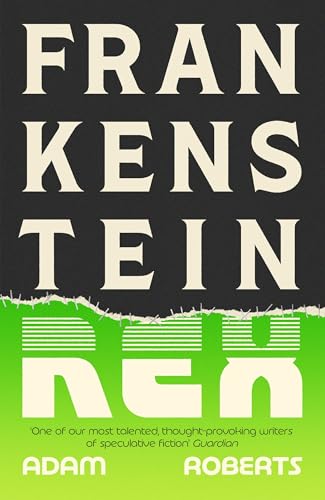
First off: if you’re reading this while the blurb still talks about immortality and seeking an heir, that blurb is WRONG. I won’t speculate about how that happened – not my business – but it’s very, very wrong. That is not what this book is about at all.
To head off any other jokes: it’s also not about a dinosaur. It is indeed a play on Shelley’s Frankenstein, and specifically the creature – and yes there’s a whole bit about the name choice.
So what is it about, then? Well, Frankenstein (the creature) has been king of the world for many, many decades. Since not long after Napoleon popped up, in fact, and it’s now just our time. Frankenstein does seem to be immortal; he’s not ageing or changing, and assassination attempts in the past have failed. Of course, that doesn’t stop other people from trying.
Frankenstein rules as a benevolent (ish) dictator. All land belongs to him – with just a couple of carve-outs, like Jerusalem and Mecca – and he leases it back; but he has strict expectations about energy efficiency etc. The lingua franca is French (heh). National sentiment is forbidden, and regarded as irrelevant by the powers that be. Decade on decade, Frankenstein swings between more liberal and more tyrannical. Someone is arrested for planning to assassinate the king… and the novel goes from there.
It’s very important I let you know that the opening chapter has some quite gruesome torture. I had to skim a couple of paragraphs after I realised what was going on. There’s nothing like it for the rest of the book, so it’s a shocking opener but not indicative of the novel as a whole.
As well as being a novel about trying to understand a would-be assassin, this is quite blatantly a book about politics. If there is literally a monster in charge, how do and should humans act? (Yes, of course there is discussion to be had about whether the creature is a monster, and you’ll note that I don’t use ‘monster’ to describe him.) Sometimes there is something darkly appealing about having one person in charge forever and ever! Change is hard and sometimes painful! … and there will always be collaborators, who are either all-in on the regime or out for whatever they can get; and there will be people who are just muddling along and putting up with it because what else are you going to do; and there will be some few who are defiant and maybe reckless and endanger both themselves and others because they think there’s a better way. Where does righteousness lie? What is appropriate? I know what I think; and Roberts manages to be a lot more nuanced than many other writers would achieve (which does not surprise me, because… well. It’s Adam Roberts. Man knows how to be complicated).
I do have thoughts about the ending; spoilers below the cut.
Continue reading →Making the Monster
 This was the second book in my birthday haul from my mother this year. The first was… not as good as I had hoped. Happily, this did not fall into the same trap.
The idea behind Harkup’s book is to look into the science that was happening around the time of Shelley writing Frankenstein, to explore what ideas influenced her. I was slightly concerned that this could go down the route that Russ identifies of suggesting Shelley was nothing but a conduit for the ideas of the time, but she does nothing of the sort. She does look into what sorts of things Shelley’s husband, father and friends were into, but only to suggest that this is how Shelley herself could have found out about these things: with Percy interested in electricity, for instance, it makes sense that they may have talked about some of the ideas being discussed by scientists, and so on. So I was relieved that this book is very much about how Mary Shelley herself knew what she did, and how she might have accessed knowledge of galvanism and resurrectionists and all of those other things that are so vital to the development of this story of the modern Prometheus.
As well as being an investigation into the science of the early 19th century, this almost inevitably also becomes a biography of Shelley – where she was when, who she encountered, how different places gave her access to ideas or inspiration, and so on. There’s also a discussion of how popular culture has dealt with the story, and the ways that film versions in particular have percolated through the popular Western mindset – and how these are often quite different from Shelley’s actual story.
Electricity, preservation of flesh after death, skin grafts, the circulatory system, evolutionary theory, blood transfusions, batteries… all of these things were being discussed in the early part of the 19th century and had an impact on Shelley’s writing. This is a fascinating introduction to the science of this period as well as being a fascinating way of thinking about Frankenstein. Harkup also does justice to Frankenstein as a way of interrogating science, and scientists.
I don’t adore Frankenstein – I’ve only read it once – but I really enjoyed this historical context.
Frankenstein
 I have now read Frankenstein. I’ve never had the impetus to read it before; I never studied Gothic literature, and it’s just never been bumped up the to-be-read list. But a few weeks ago someone at church read it, and waxed so lyrical in wanting to have a pop-up book club to discuss it (as a sequel to one last year on The Book of Strange New Things) that I agreed… and here we are.
Um, spoilers?
I do not like Victor Frankenstein.
I had a general knowledge of the story – that Victor created the monster, who then implored his creator to create a mate for him, and then the monster killed Victor’s bride. I knew there was something to do with the Arctic but I didn’t know why. So to be honest, I wasn’t really expecting to be particularly surprised by the novel. And in the broad outlines, I wasn’t, but in some of the details I certainly wasn’t.
I had no idea that the story was structured as a story within a story, with Victor relating his tale of woe to Robert as they sat stuck in the ice in the far reaches of the Arctic, who is then relating it by letter back to his own sister. I don’t think that particularly changes the story itself but it’s intriguing to see Shelley using this conceit as the excuse for why, and how, the story is being told – that she wasn’t just writing a third-person omnipotent narrator watching and relating all the events. Instead, this allows Victor to include his passionate remonstrances and remembrances, and for Robert to include his own reflections at beginning and end.
Side note: I would have liked more about Robert. Did he get home? Why was he so passionate about finding what was in the extreme north? I wanted more than just what he told his sister!
And so Victor. Continue reading →


