Forest of Memory
This book was provided to me by the publisher at no cost.
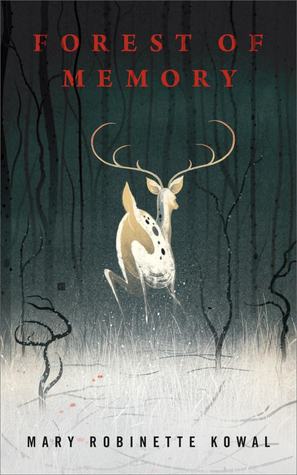 Mary Robinette Kowal takes the idea of memory and its fallibility as her central theme in this novella, and pairs it with the ever-fascinating ideas of narrative, and unreliable narrators, and their motivations.
Kowal’s narrator lives in a world of permanent connection, through her intelligent system, and a world of permanent life-casting – ideas that have a strong hold on the world of science fiction writing at the moment. I was strongly reminded of Ted Chiang’s awesome “The Truth of Fact, the Truth of Feeling.” That story is a much more rigorous exploration of the same general themes, not least because it is much longer and because it pairs those themes with ideas connecting language and meaning and memory. The two work really nicely together.
Anyway, Katya is telling a story to persons unknown who have asked for the story of three days when she was offline. (The page before the story opens has this dedication: “For Jay Lake and Ken Scholes / Who asked me to tell them a story” – which is pretty amusing in context.) She is a dealer in Authenticities, meaning old stuff with wabi-sabi (a Japanese term, she explains, of something that witnesses and records the graceful decay of life), as well as Captures on the side – that is, she sells the record of her personal experiences. The difficulty she has, of course, is that for the three days she was offline she will need to rely on her own memories, rather than asking for a replay from her i-sys. She is super aware of the possibilities here of her own unreliability, reflecting on them and looping back on herself as she considers whether or not to trust herself. It’s a wonderfully constructed piece of worry.
There’s not a whole lot of action in the story, really, and it raises enormous questions about the world in which it’s set and the reasons for why someone wants Katya’s story. I rather hope that Kowal might consider writing more stories, or a novel, set in this world and further exploring the issues raised.
The Absconded Ambassador
This novella was provided to me by the publisher at no cost.
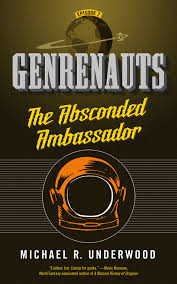 I haven’t read the first Genrenauts story, so there was a bit of a surprise in the backstory of one of the characters, but nothing game changing. Other than that, it’s a straightforward idea – especially if you’ve read the Jasper Fforde Thursday Next books, as I have (well most of them. They lost their appeal after about the fifth book): sometimes there are breaches in what’s happening in stories, or genres more broadly, and they need to be fixed before the ripples affect Earth Prime.
This story (and I think the first one too) are largely told from the point of view of a new officer – of course; it makes the storytelling so much easier. This time there’s a problem in the science fiction area, so off the crew go in the Firefly-esque mode to a Deep Space Nine-esque station, to figure out what’s going on.
I’m really happy with the theory here.
However, I wasn’t thrilled with the execution. I thought that the story forgot its genrenaut aspect too often and strayed into straight Science Fiction Action without commentary. There was some excellent commentary on the idea of the Action Hero and what that archetype is allowed to do, but that wasn’t nearly as dominant or as thoughtful as I had hoped. Additionally, it was completely unclear to me whether what was going on in the plot of the in-story story (like the play within the play) was actually a breach, and therefore a problem. This is queried once in the story itself, and I wondered whether this is an ongoing teasing thread throughout the series (there’s at least one story to come), but if that’s the case then it’s neither been set up strongly enough to be intriguing nor set up subtly enough to pack a real surprise at the eventual reveal.
For me, then, this is heavier on the promise than on the delivery.
Luna: New Moon
 This book was provided by the publisher at no cost.
Um. Wow.
Over on Goodreads, Jonathan Strahan describes it “basically The Moon is a Very, Very Harsh Mistress” which… yes. (Also makes me curious to back it up with the Heinlein….)
The short version: this is magnificent, occasionally vicious lunar science fiction, with a fascinating society, varied and variable characters, and unexpected plot twists. HIGHLY recommended. I want to read more like this.
Lustlocked
 This story was provided to me by the publisher at no cost.
An amusing, light and fluffy story.
It’s the second story to be set in the restaurant Sin du Jour, and I’ve not read the first; that didn’t seem to be too much of a hindrance. I think I missed a little bit of the tension between characters (and initially I thought the two main characters were lovers, not housemates), but the cast is reintroduced well enough that I had no trouble following the various interactions.
The basic premise is that there’s going to be a goblin wedding – well, the crown prince of goblin-dom is marrying a human – and this version of goblins is that they are the bright and beautiful… in fact most of them are Hollywood celebrities. You already know who the Goblin King is (yes, really, Wallace went There); I’m not entirely sure who the queen is meant to be: she’s described as the most famous supermodel, and my mind went to Elle Macpherson, but maybe that’s just because I’m Australian? Perhaps it could be Naomi Campbell? (ETA: Thoraiya tells me a certain Goblin King is married to supermodel Iman. Oops.) Anyway, such beautiful creatures naturally require an extravagant wedding aaaaaand then things go bad. Some of the story is around preparing for the wedding (goblins eat jewels, of course) and some of it is dealing with, um, rampaging lusty reptiles. So half almost cosy culinary fantasy, half magic/mayhem fantasy.
Don’t read this for deep philosophical reflections. Do read this for a bit of banter, a bit of snark about celebrity, and people getting themselves out of sticky situations in amusing ways. It comes out from Tor.com in January.
Ballad of Black Tom
This novella was provided to me by the publisher at no cost.
 I may not have the context with which to really comment on this story – I have a bit of knowledge of America in the 1920s but not all that much; my understanding of race relations in America is slightly better than superficial but not exactly deep. Also I have next to no knowledge of HP Lovecraft’s work
With all of that said, I really enjoyed this story, so as someone without masses of history about the period of the story that’s a pretty good recommendation.
The story is split in two, with two different narrators – which actually really surprised me, so that’s kind of a spoiler I guess. The first half is told by Tommy Tester, a young black man who makes a living by hustling, basically. He wears a musician disguise to be both seen and unseen; he gets jobs that need that sort of look. One day he encounters a wealthy white man, Robert Suydam, and things… get weird.
The second half of the story is from the perspective of a white policeman, Malone, whom Tommy encounters early on and then later. He’s not entirely a stranger to unnatural occurrences, and gets more involved in the weird stuff Tommy and Suydam conjure up than he would perhaps like.
The plot isn’t especially intricate but it’s certainly compelling enough to keep me turning the pages. On top of that is what (with all the caveats above about my knowledge of the period) I found to be a very interesting commentary on race relations. The (white) police treatment of black people in Harlem wasn’t a surprise, dealt with bluntly but with compassion I thought; Suydam’s manipulation of race resentment struck me as all too plausible (hello living in Australia in 2015). I don’t know whether the attempt to make Malone sympathetic to the plight of non-white immigrants was an attempt at not making all whites evil, or whether it reflects reality; possibly it’s a case of both being feasible? Makes the story that much more compelling, anyway.
Lastly: Ma Att? Brilliant.
Certainly recommended.Th
Manners and Mutiny
 This book was provided to me by the publisher at no cost.
Firstly? I do not love this cover. It’s far too old to be Sophronia, which I don’t remember being a problem with the other covers. The crossbow is appropriate, at least. I am also not wild about the yellow.
Fortunately I do not tend to judge books by covers; at least, not books in a series I have been enjoying and whose author I tend to trust.
Return of the Jedi
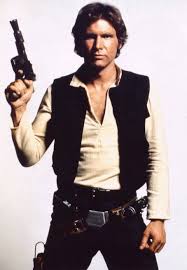 Return of the Jedi: things that were quite good:
- “The emperor is not as forgiving as I am.” Way to go making them both even MORE terrifying.
- I still like the costume progression for Luke.
- The CGI band at Jabba’s is… I’m conflicted. I like the music! BUT.
- Leia saves Han. WIN.
- OMG “I’m all right pal; I’m all right” Han and Chewbacca SO CUTE.
- Han.
- The PAIN of the beastkeeper. You made one of the supposed baddies grieve so poignantly!
- The whole rescue from Jabba is basically a heist plot. I love it.
- The imperial guard. Dead awesome.
- Yoda is the most compassionate and benevolent puppet ever in the history of puppets.
- GENERAL Solo. Heh.
- The speed bike chase is very awesome.
- Ewoks: conflicted. Cute! Resourceful!
- “It’s against my programming to impersonate a deity.”
- Han’s nobility: he apologises to Leia!
- The conflict within Vader is made genuinely more complex with deeper backstory.
- Another great gift to modern culture: “It’s a trap!”
What were you thinking, George?
- The CGI band at Jabba’s… the animation is horrid and so unnecessary.
- Also unnecessary: Jabba’s treatment of women. Ugh. Lazy writing, George. It’s not like we can be under the impression that he’s a good guy.
- Torturing droids, George? Really?
- What an ignominious end for Boba.
- “FROM A CERTAIN POINT OF VIEW,” George? You’re making Obi-Wan a relativist? a post-modernist?? Just no.
- Also: Luke’s feelings for Leia “do him credit”?!? How on earth do you figure that?! Ew.
- James: NO, not ew, Obi-Wan is talking about Luke having brotherly feelings towards his sister! Not anything bad!
- Alex: whoa. That’s thirty-odd years of grossed-out-ness being turned on its head.
- George. Look, George. Tax collectors, George? No one liked the Trade Federation in Phantom Menace, George, and the idea that they ought to appear on the bridge in this film? No. That’s the worst retconning yet.
- Apparently I imagined that this was retconning! They’ve always been there and I had either not noticed (possible) or I was assuming George was being evil because prequels! Sorry George. My mistake.
- Ewoks: conflicted. Little bit too much like you’re going with Noble Savages. Some of the markings etc are a bit too much
 like stereotypes of some earth cultures. Made me queasy.
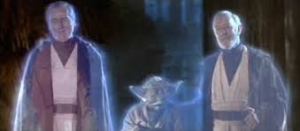
 - I cannot adequately express, George, how annoyed I am at the retconning of the funeral. The idea that it is young Anakin who appears with Obi-Wan and Yoda is just wrong. If he has genuinely been redeemed by Luke’s actions, then his old self ought to represent that. Otherwise, you are dismissing the genuineness of his return to the side of Light. And that’s not fair.
I AM SO READY for The Force Awakens.
The Empire Strikes Back
The Empire Strikes Back: Things that were quite good
- THANK YOU, George, for that great gift to modern culture: “I thought these things smelled bad… on the outside…”
- Han Solo
- The Han/Luke friendship. DAW.
- Han and Leia tension.
- James: I’m surprised by how early in the film this occurs.
- James: the music makes the film.
- Imperial walkers.
- Luke says, in the middle of a FOREST, “It’s like something out of a dream!” Wow, George. Subtle.
- “Wars not make one great.” Preach, George.
- The revelation that the emperor knows who Luke is is definitely more poignant thanks to the prequels.
- And Yoda’s hovel is more poignant too.
- This entire set of movies should be subtitled: “I’ve got a bad feeling about this.”
- Han.
- Lando!
- I’d forgotten just how echoes/foreshadowings there were in the prequels, with words and actions and scenes. It makes me forgive them a little bit more.
What were you thinking, George?
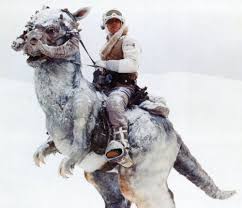
- Unconvinced by the new bits of the snow critter.
- THAT KISS GEORGE EW MY BRAIN.
- You’re continuing the assumption that cities <=> civilisation in Luke’s little comment about Dagobah, George. I know he’s still a whiny little kids, but nonetheless – unhelpful.
- You retconned Boba Fett’s VOICE, George.
- Vader goes through underlings at a rate of knots. Bad vision of leadership there.
Abaddon’s Gate: Redux
(Some spoilers below for Leviathan Wakes and Caliban’s War. READ THEM.)
The last line of Caliban’s War was an absolute killer, because I read it when it was first published which meant that the next book was about a year away and GOODNESS ME it was a cliffhanger. So I preordered this as soon as I could and happily, it arrived about a week before I went on holidays. I very carefully put it on a shelf where it wasn’t tempting me to read it… and then this week, on holidays, I cracked it open and devoured it in one day. And it was worth the wait. Oh yes. Thank you, James Corey.*
Naw. Cute. PastMe did not feel the need to reread the other two, clearly. Continue reading →
Caliban’s War: Redux
This review will contain spoilers for Leviathan’s Wake, the first in this series. As with that book, I’ve just reread this one, so this is the REDUX…

 Randomly Yours, Alex