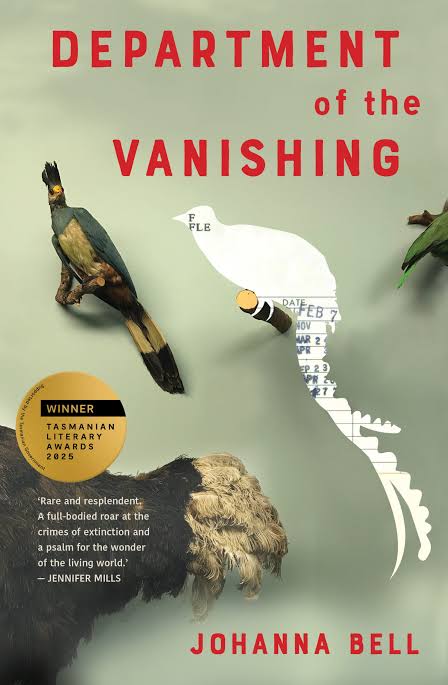
This is another book I read because of Ian Mond. If you’re interested, here’s the publisher, Transit Lounge.
Poetry is very much not my vibe. I have always worried that I just don’t get it and so almost feel I shouldn’t be allowed to read it, and certainly not comment on it. Is this ridiculous? Of course it is. Well, mostly. Am I actually afraid of some beret-wearing, cigarillo-smoking, pretentious white man tut-tutting me?
Well. A little bit. Yes.
Anyway, I’m going to comment on this book despite my fears. And it is poetry – almost all of the text is set out as couplets, with almost no punctuation. Sometimes the story is hard to follow as a result, when it’s not clear how the clauses fit together. Which is, I presume, part of the point. A lot of the time, it’s completely clear, and a delight to read.
This is not, though, just a poetic novel. It’s also playing with the idea of found footage.
Almost every poetic page has a library stamp on it: RESTRICTED, or an accession stamp, or the link. In between poetry pages, there are collages of newspaper headlines; excerpts from the narrator’s police interviews; photographs and stills from video; pages where birds sounds are turned into text; transcriptions of the narrator’s mother’s maybe-dementia ramblings; and many lists.
Some of the found footage includes excerpts from other books, and friends, I dogeared a page because I didn’t have a bookmark handy when I got to the bit about Shifting Baseline Syndrome: “a gradual change in the accepted norms for the condition of the natural environment due to a lack of experience, memory, and/or knowledge of its past condition. (Soga & Gaston, 2018).
Ava lives in a too-near-future Australia, in 2029. She works for the Department of the Vanishing, archiving references to birds that are, or are nearly, extinct. (There’s a moment where she’s allocated the pelican: where to start? With Stormboy, of course – and my mid-40s-heart gave a great big heave.) She is also caring for her ailing mother, grieving her long-lost father, and seeking connection through a series of flings. Plus, of course, all the heartache that comes with her work.
It’s almost eye-rollingly trite to call this novel is a wake-up call, but of course that’s what it is. The idea that I would no longer hear kookaburras or magpies or the various teeny little tweety-birds I hear on the regular is horrifying. Is there something I can personally do? Probably not. Maybe I should send a copy of this book to some politicians.
It’s a splendid piece of art and I hope it gets more attention.

 Randomly Yours, Alex